Huacachina: What to Do at the Oasis, What It Costs, and How to Get There
An oasis among the dunes five hours from Lima. Dune buggies, sandboarding, the Ballestas Islands and the Nazca Lines, with prices and what to pack.
Huacachina is a village of about a hundred people built around a small green lagoon in the middle of sand dunes, five hours south of Lima. You go there for two things: to ride a dune buggy over the dunes at speed, and to sandboard down them.
Most people see it in one long day from Lima, or in two days combined with Paracas and the Nazca Lines.
Where it is and how to get there
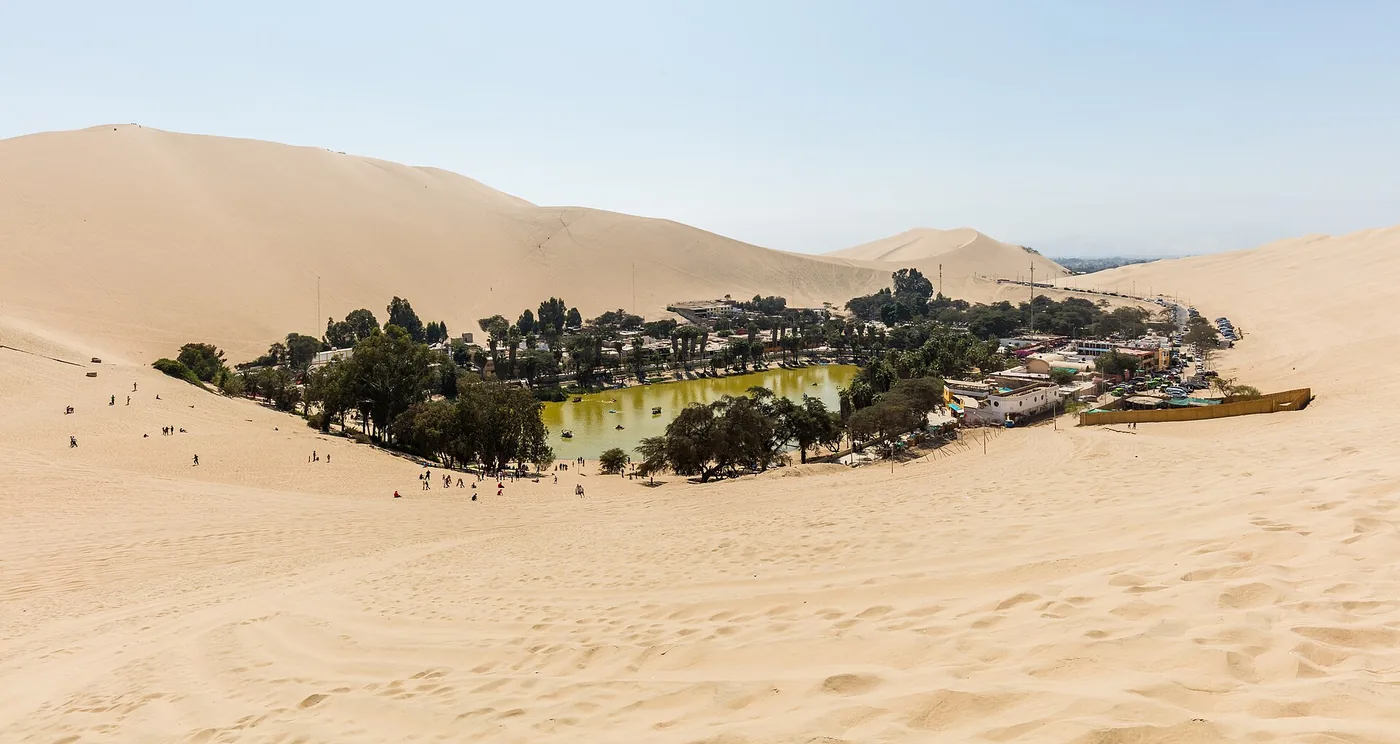
Huacachina, 4 km from Ica. The dunes around it reach more than 100 metres. Photo: Diego Delso, CC BY-SA 4.0
Huacachina sits 4 km from the city of Ica, in the Peruvian coastal desert, about 300 km south of Lima. By road it is four to five hours each way.
There is no airport and no train. The options are:
- A day tour from Lima. Leaves around 4 or 5 a.m., gets back late. It is a long day in a vehicle but you see Paracas and Ica as well.
- A two-day trip, sleeping in Paracas or Ica. This is the version that also fits in the Nazca Lines.
- A public bus to Ica, then a five-minute taxi. Cheapest, and you organise the buggy yourself when you arrive.
Our Paracas, Ica and Huacachina full day is US$207 and the two-day version with the Nazca Lines is US$307.
What you actually do there
The dune buggy
A driver takes six to eight people out into the dunes in an open frame buggy and drives it like a roller coaster: up the faces, over the crests, down slopes that look impossible from the top. It lasts around two hours and it is the reason most people come.
It is genuinely rough. If you have back or neck problems, sit near the front and say so before you get in.
Sandboarding
The buggy stops at the top of a dune and hands out boards. Most people go down lying on their front, head first, which is faster and easier than standing. Standing up is possible if you snowboard, but the sand is slower than snow and the falls are hot.
They start you on a small slope and work up. By the third or fourth dune you will be going down something that looked frightening an hour earlier.
Sunset
The last run is timed for sunset, when the dunes turn orange and then deep red. It is the picture everyone comes back with.
The lagoon
Small, green, fringed with palms, and surrounded by a strip of hotels, bars and hostels. It takes fifteen minutes to walk around. The water is not for swimming.
Paracas and the Ballestas Islands
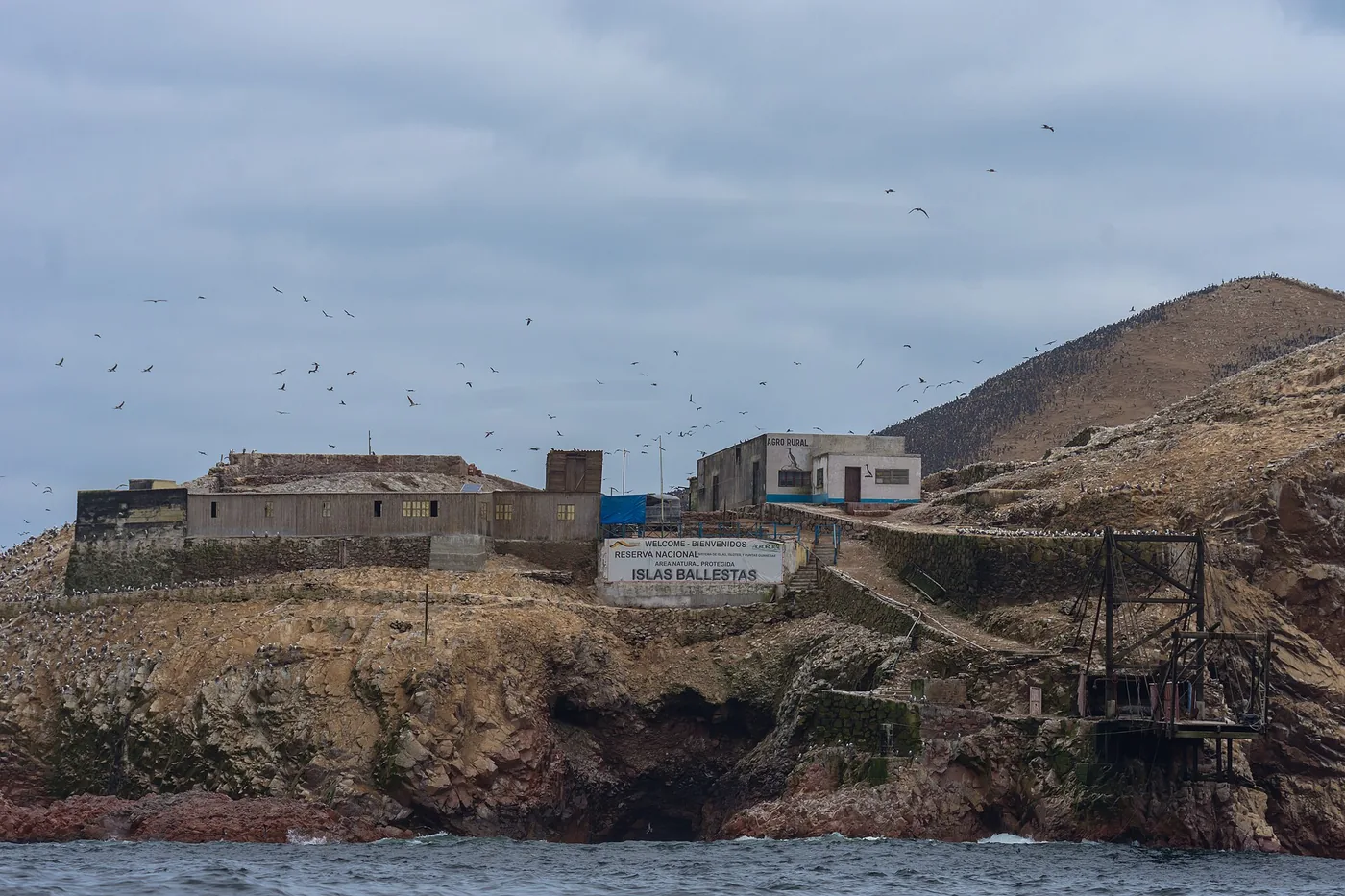
The Ballestas Islands. Sea lions, Humboldt penguins and thousands of birds, on a two-hour boat trip. Photo: Mattias Hill, CC BY-SA 3.0
Most trips to Huacachina stop in Paracas on the way, and the reason is the Ballestas Islands: a group of rocky islands two hours off the coast by boat, covered in sea lions, Humboldt penguins, pelicans and guano birds in numbers that are hard to describe until you are there.
The boats leave in the morning only, because the afternoon wind makes the crossing rough. Bring a jacket and a hat, and expect the boat to be open.
On the way out you pass El Candelabro, a 180 m figure cut into a hillside facing the sea. Nobody knows who made it or why.
The Nazca Lines
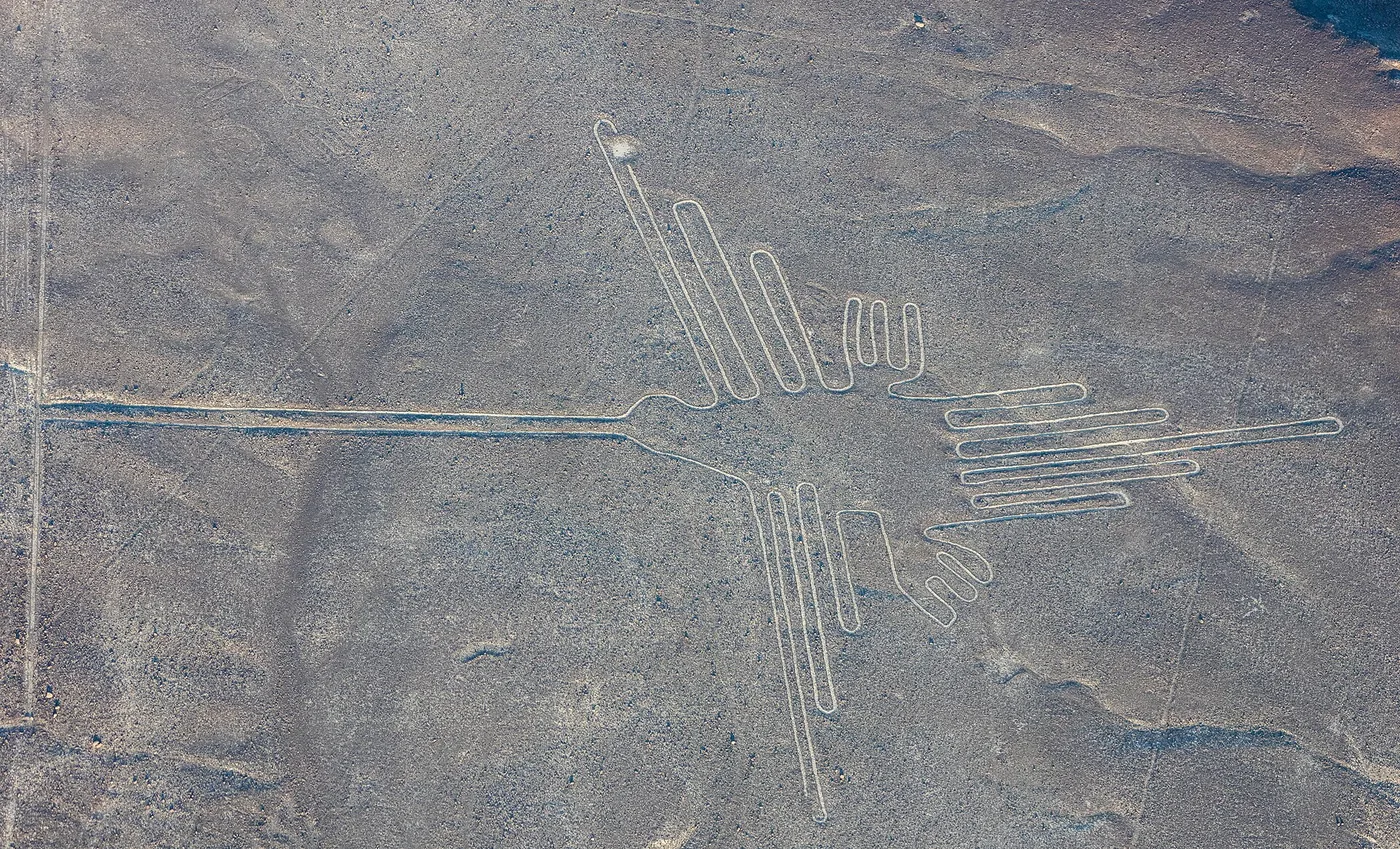
The Nazca Lines from the air. From the ground you cannot see them at all. Photo: Diego Delso, CC BY-SA 4.0
Nazca is two hours further south from Ica, which is why it only fits into a two-day trip.
The lines are geoglyphs scratched into the desert floor between roughly 500 BC and 500 AD: a hummingbird, a monkey, a spider, a condor, and hundreds of straight lines running for kilometres. They only make sense from the air.
The overflight lasts about 30 minutes in a small aircraft from Maria Reiche aerodrome. The plane banks hard to the left and then hard to the right so both sides see each figure, and that combination of small aircraft, heat and turning makes some people sick. Eat lightly beforehand.
There is also an observation tower on the Panamericana that shows two figures for a few soles. It is not the same thing.
When to go
The coastal desert is dry all year, so there is no wrong month. What changes is the temperature and the crowds.
- December to March is summer: hot, 30 °C and above, and the busiest with Peruvian visitors
- April to November is mild, 18 to 25 °C, with a grey coastal cloud called la garúa that often burns off by midday
- Weekends are busier than weekdays at the dunes, all year
The buggies run in the afternoon regardless of season, because the sunset run is the point.
What to bring
- Sunglasses that wrap around. Sand gets everywhere at speed
- A scarf or buff for your mouth and nose in the buggy
- Sunscreen, more than you think. There is no shade at all
- Closed shoes. Sandals fill with sand on the first dune
- A plastic bag for your phone. Fine sand ruins charging ports
- Warm layer for Paracas if you are doing the Ballestas boat
Do not take anything loose on the buggy. Phones fly out of them.
Is it worth it
If you like the idea of a two-hour off-road ride and sliding down a 100 m dune, yes, clearly. It is one of the few things in Peru that is pure fun with no historical homework attached.
If your trip is short and focused on Cusco and Machu Picchu, it is a long detour: four to five hours each way from Lima, for an afternoon of dunes. In that case put the day into the Sacred Valley instead.
Where it fits best is at the start or end of a Peru itinerary, while you are in Lima anyway. Several of our Peru itineraries build it in.
Frequently asked questions
Where is Huacachina? In the Peruvian coastal desert, 4 km from the city of Ica and about 300 km south of Lima. It is four to five hours by road each way.
Can you do Huacachina as a day trip from Lima? Yes, and most people do. It means leaving around 4 or 5 a.m. and getting back late in the evening. A two-day trip is more comfortable and lets you add the Nazca Lines.
How much does Huacachina cost? Our full day from Lima with Paracas and Ica is US$207 per person. The two-day version with the Nazca Lines is US$307. Booking a buggy locally in Huacachina costs a fraction of that, but you have to get there yourself.
Is sandboarding in Huacachina difficult? No. Almost everyone goes down lying face first on the board, which requires no skill. Standing up is harder than snowboarding because the sand is slower.
Is the dune buggy safe? The drivers are licensed and the buggies have roll cages and harnesses, but the ride is rough by design. Tell the driver before you get in if you have back or neck problems, and leave loose objects behind.
Can you swim in the Huacachina lagoon? No. The water is not for swimming. The lagoon is fed by underground springs and has had to be topped up artificially in recent years.
What else is nearby? Paracas and the Ballestas Islands, an hour and a half north, and the Nazca Lines two hours south. Ica itself has pisco bodegas that most tours stop at on the way.