From US$307 per person.
Paracas, Huacachina & Nazca, 2 Days
- Marine wildlife at Paracas: Cruise by speed boat to the Ballestas Islands to spot sea lions, Humboldt penguins, and thousands of marine birds at close range.
- Huacachina desert adventure: Ride high-speed dune buggies and experience thrilling sandboarding down the massive sand dunes surrounding the desert oasis.
- Optional Nazca Lines scenic flight (not included): Soar high above the desert floor to witness the world-famous, enigmatic ancient geoglyphs and appreciate their massive shapes.
- All-inclusive round-trip transit: Avoid any local transport hassle with a smooth, pre-arranged overland itinerary starting and ending right at your Lima hotel.
A complete experience that combines marine nature, desert adventure, and one of the world's greatest archaeological mysteries. This trip takes you from the Pacific coast to the heart of the Peruvian desert, sailing among wildlife, riding giant dunes, and the option of flying over the enigmatic Nazca Lines.
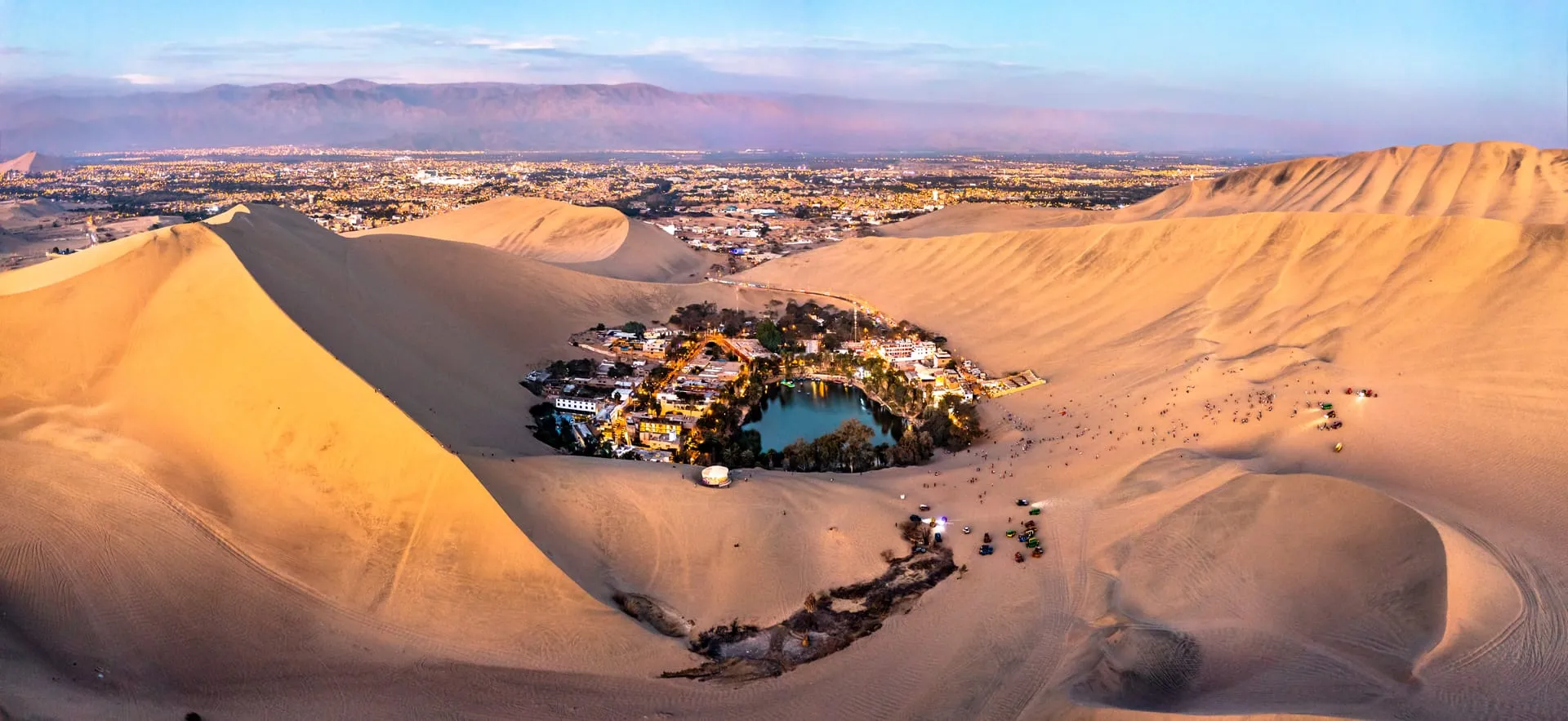
The tour ends at the spectacular Huacachina Oasis, surrounded by towering golden dunes. Enjoy a unique setting and, optionally, adventure activities such as dune buggy rides and sandboarding in the desert. This Paracas, Ica and Huacachina tour is ideal for international travelers looking to discover some of Peru's most stunning landscapes in a single day, combining adventure, nature, culture and authentic experiences.
At a glance
- Days: 2
- Highest point: 520 m
- Price: From US$307 per person
Itinerary
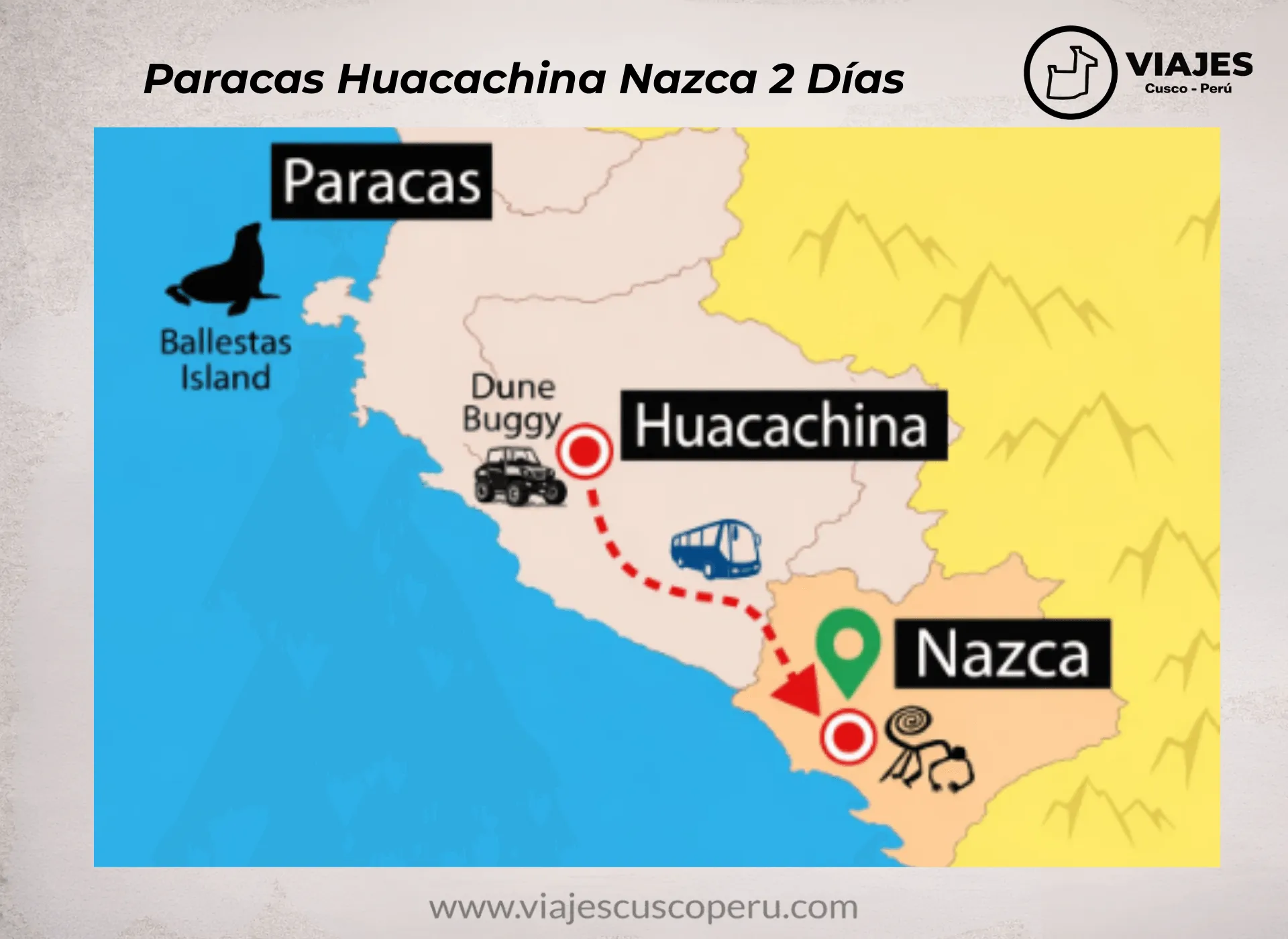
Day 1: Lima, Paracas, Ballestas Islands, Huacachina, Nazca
Altitude: 520 m · Meals: Breakfast · Overnight: Nazca (520 m)
Very early, between 04:40 and 05:00 a.m., we will begin our trip from Lima to the beautiful bay of Paracas, one of the main nature destinations on the Peruvian coast. After a box-lunch breakfast, we will board a boat to sail toward the impressive Ballestas Islands, an extraordinary wildlife sanctuary where we will observe the enigmatic Paracas Candelabra, as well as sea lions, Humboldt penguins, pelicans, boobies, and numerous guano birds in their natural habitat. Afterward we will visit a traditional winery, where we will learn about the artisanal process of making Pisco, Peru's national drink, as well as local wines, enjoying a tasting before having free time for lunch (optional).
After the maritime excursion, we will continue by road to the city of Ica and the Huacachina Oasis, a spectacular natural landscape surrounded by dunes, where you will have time to relax by the lake or experience an adrenaline-filled adventure with sandboarding or a buggy ride. In the afternoon we will continue on to Nazca, where we will spend the night.
Day 2: Nazca Lines Overflight, Return to Lima
Altitude: 520 m · Meals: Breakfast · Overnight: Nazca
Optional activity, not included in the price: the overflight takes off from the María Reiche Aerodrome in Nazca with DGAC-certified airlines. In the morning, after breakfast, we will transfer you to the Nazca airfield to board the small plane and enjoy the flyover of the incredible Nazca Lines, located on the pampa of the same name, lasting approximately 45 minutes. During the flight you will be able to observe the numerous geoglyphs depicting stylized animal and plant figures, such as the monkey, the spider, and the hummingbird, spread across a huge labyrinth of straight lines, trapezoids, triangles, and spirals etched into the earth and preserved for nearly 2,000 years. Their origin and purpose have not yet been established with certainty, and many believe these gigantic figures were drawn by the ancient pre-Inca inhabitants for astronomical or ritual purposes, or, according to some theories, even linked to extraterrestrial visitors.
At the end of this experience we will transfer to the bus terminal at 14 hrs to board the regular bus service to the city of Lima, arriving at approximately 11 pm, with transfer to your hotel
What is included
- High Quality Service and Security
- Transportation All our services are designed to offer you security, comfort and a deep cultural experience.
What is not included
- Nazca Lines overflight (optional) Optional activity, not included in the price. It takes off from the María Reiche Aerodrome in Nazca with DGAC-certified airlines.
- Airport Tax PEN 37.00 (US$ 12.00)
- Meals Not Included
- Tips for our staff (tips are customary in Peru; although our team receives a good salary, they are appreciated)
- Possible Additional Costs or Delays Beyond Our Control
Frequently asked questions
When do we visit the Nazca Lines?
The optional Nazca Lines overflight takes place on day 2 in the morning. It takes off from the María Reiche Aerodrome in Nazca with DGAC-certified airlines. The flight duration is approximately 30 minutes.
Is the light aircraft overflight included?
No. The light aircraft overflight of the Nazca Lines is an optional activity and is not included in the package price. It takes off from the María Reiche Aerodrome in Nazca with DGAC-certified airlines. It is the only way to see the lines in their entirety from the air.
What type of accommodation is used?
The tour includes 1 night in a 3-star hotel in Nazca, with breakfast on the second day. We can upgrade the hotel category upon request.
What time do we depart from Lima on the first day?
Departure from Lima is at approximately 6:00, 7:00 AM. The bus picks up passengers at hotels in the city centre or Miraflores.
What meals are included?
The package includes breakfast on day 2 and lunch on day 1. Other meals are not included, but there are good restaurants in Paracas, Ica and Nazca.
What are the Nazca Lines?
The Nazca Lines are enormous geoglyphs etched into the coastal desert of the Ica region, Peru, between 100 BC and 800 AD by the Nazca culture. They depict animals (hummingbird, monkey, spider, condor), plants and geometric shapes of up to 2 km in length, visible only from the air. They have been a UNESCO World Heritage Site since 1994.
Why are the Nazca Lines world-famous?
The Nazca Lines are one of the world's greatest archaeological mysteries: no one knows for certain why they were created (theories include water rituals, astronomical calendars or messages to the gods). Their enormity, precision and perfection without modern technology make them unique. The light-aircraft overflight to see them from the air is a once-in-a-lifetime experience.
Who created the Nazca Lines and when?
The Nazca Lines were created by the Nazca civilization between 100 BC and 800 AD, by removing the surface layer of dark stones to reveal the lighter sand beneath. The geoglyphs were discovered by archaeologists in the 20th century and extensively studied by María Reiche (German mathematician) who dedicated her life to preserving and studying them.
Is the Nazca Lines overflight safe?
Yes. The overflight operates with twin-engine light aircraft certified by Peru's Civil Aviation Authority (DGAC), with pilots having thousands of flight hours. The plane flies at low altitude (300, 450 m) in a banking flight so all passengers can clearly see the figures. Avoid flying on a full stomach to prevent motion sickness.
What is the best time to see the Nazca Lines from the air?
The Nazca Lines can be seen from the air year-round, as Nazca has virtually zero annual rainfall. October to April have better aerial visibility (less wind). July and August may have some morning haze that clears by midday. The overflight operates daily, weather permitting.
Related tours
- Lima City Tour Half Day, from US$97 per person
- Pachacamac Half Day, from US$97 per person
- Paracas, Ica and Huacachina Full Day Tour from Lima, from US$207 per person