Is Machu Picchu Worth It? Cost, Crowds and How Many Days
An honest answer: real cost, crowds, altitude and logistics, plus how many days in Peru with 5, 7, 10 and 14 day itineraries.
Yes, Machu Picchu is worth it for most travelers, as long as you give it the time it needs: at least three days in the Cusco region and, ideally, five to seven days in Peru. The entrance is S/163 for a foreign adult on a standard route, but the train, the bus and the hotels cost more than the ticket. Up to 5,600 people a day enter in high season, on one-way routes with a time limit of about 2 hours 30. Cusco sits at 3,399 meters and the citadel at 2,430 meters, so the altitude decides how fast you can move. Plan it as a quick add-on and it disappoints. Plan it with a night close to the ruins and a couple of days to adjust, and it is the highlight of the trip.
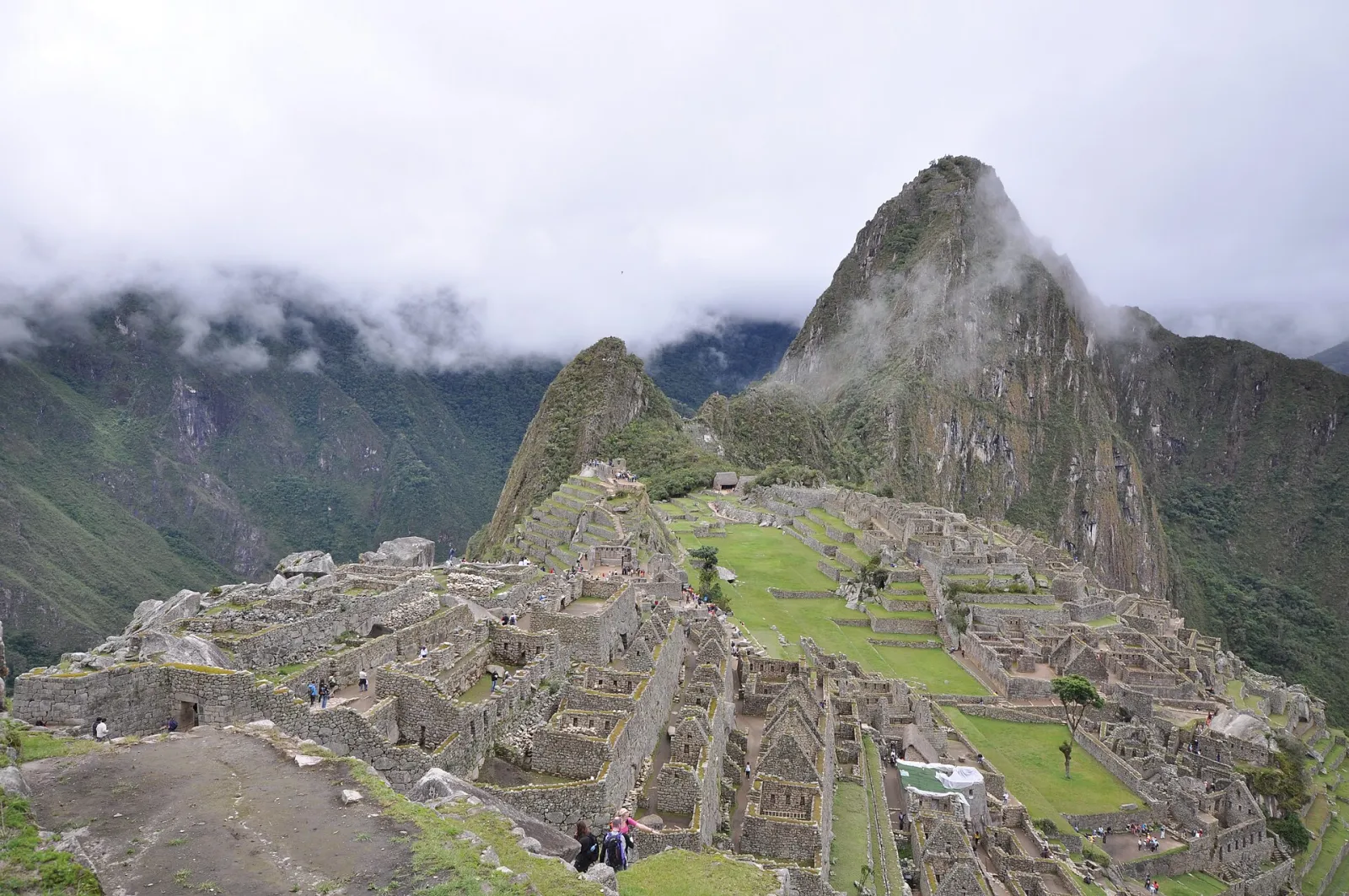
Cloud over Huayna Picchu and the citadel. Photo: Jorge Láscar, CC BY 2.0
The short version
- Worth it? For almost everyone who can walk stairs at altitude, yes. It is less worth it as a rushed day trip on your first day in Cusco.
- Ticket: S/152 plus an S/11 conservation fee for a foreign adult, S/163 in total. Routes with a mountain cost S/211.
- Crowds: a cap of 5,600 visitors a day in high season and 4,500 in low season in 2026, spread over timed entries from 6:00 to 15:00.
- Altitude: Cusco is at 3,399 m. The CDC advises against going from low elevation to above 2,750 m in a single day, which is exactly what a flight from Lima does.
- Getting there: a flight to Cusco of about 1 hour 15 minutes from Lima, a road transfer to Ollantaytambo, a train of 1 hour 30 to 2 hours, and a bus to the gate.
- Minimum time: 3 days in Cusco. Better: 5 days for Cusco only, 7 to 10 to add the coast, 14 to add Arequipa and Lake Titicaca.
What it really costs
The entrance is the cheap part. A foreign adult pays S/152 for a standard route plus the S/11 conservation fee that SERNANP has charged since May 1, 2026, so S/163. Routes that include Huayna Picchu, Machu Picchu Mountain or the Great Cavern cost S/200 plus the same fee. On top of that come the train to Aguas Calientes, the bus up to the gate, a licensed guide, and at least one hotel night in Cusco or the valley. Our Machu Picchu trip cost guide adds up every line.
If you would rather see the total in one number, these are our packages that include Machu Picchu, with prices per person and the hotels, train, ticket and guide already in:
| Package | Days | Includes | From |
|---|---|---|---|
| Machu Picchu day trip from Cusco | 1 | Train, bus, ticket, guide | US$317 |
| Cusco and Machu Picchu | 3 | City tour and Machu Picchu | US$727 |
| Cusco and Machu Picchu | 4 | Adds the Sacred Valley and a night in Aguas Calientes | US$774 |
| Cusco and Machu Picchu with Rainbow Mountain | 5 | Adds Rainbow Mountain | US$914 |
| Lima, Nazca, Cusco and Machu Picchu | 7 | Coast and Andes | US$900 |
| Lima, Nazca, Cusco and Machu Picchu | 10 | Adds Rainbow Mountain, South Valley, Humantay Lake | US$1,720 |
| Complete Peru | 15 | Adds Arequipa, Colca and Lake Titicaca | US$2,084 |
Prices for the itineraries that start in Lima are for the simplest hotel category in a triple room; the seven and ten day trips include the domestic flights. The five-day Cusco tour does not include the flight to Cusco.
The crowds: honest numbers
Machu Picchu is not empty, and anyone who promises you the citadel to yourself is selling a photo, not a visit. The Ministry of Culture caps entries at 5,600 a day in high season and 4,500 in low season in 2026. In 2026 high season ran from June 19 to November 2, plus a few holiday dates.
The system spreads those people out. Every ticket has an entry time, between 6:00 and 15:00, and a route that only runs one way, with park rangers at the control points. Standard routes give you about 2 hours 30 on site. That is enough to see the citadel properly with a guide, but it is not a slow wander with a picnic, and you cannot go back for something you missed.
What helps:
- An early entry. The first slots are only realistic if you sleep in Aguas Calientes the night before.
- The right route. Circuit 2, route 2-A, is the one that walks through the center of the city. Our guide to the circuits explains the alternatives.
- The right month. The busiest months fill up first. Our best time to visit Machu Picchu weighs crowds against rain.
- A mountain. Huayna Picchu and Machu Picchu Mountain spread people out further. See Huayna Picchu vs Machu Picchu Mountain.
The altitude problem
This is the part that most often turns a good trip into a bad one. Peru's tourism board puts Cusco at over 3,399 meters. The CDC advises travelers not to go from low elevation to above 2,750 meters in one day, and says fitness does not reduce the risk of altitude illness. A morning flight from Lima to Cusco breaks that first rule by itself, so the first day has to be light.
The good news is that Machu Picchu is lower than Cusco. The citadel is at 2,430 meters and Aguas Calientes, where you sleep before an early visit, is at about 2,040. That is why our itineraries go down into the Sacred Valley on the second day and sleep by the ruins, instead of keeping you in Cusco and sending you up a 5,000 meter mountain straight away. Our Cusco altitude guide explains how to pace the first 48 hours.
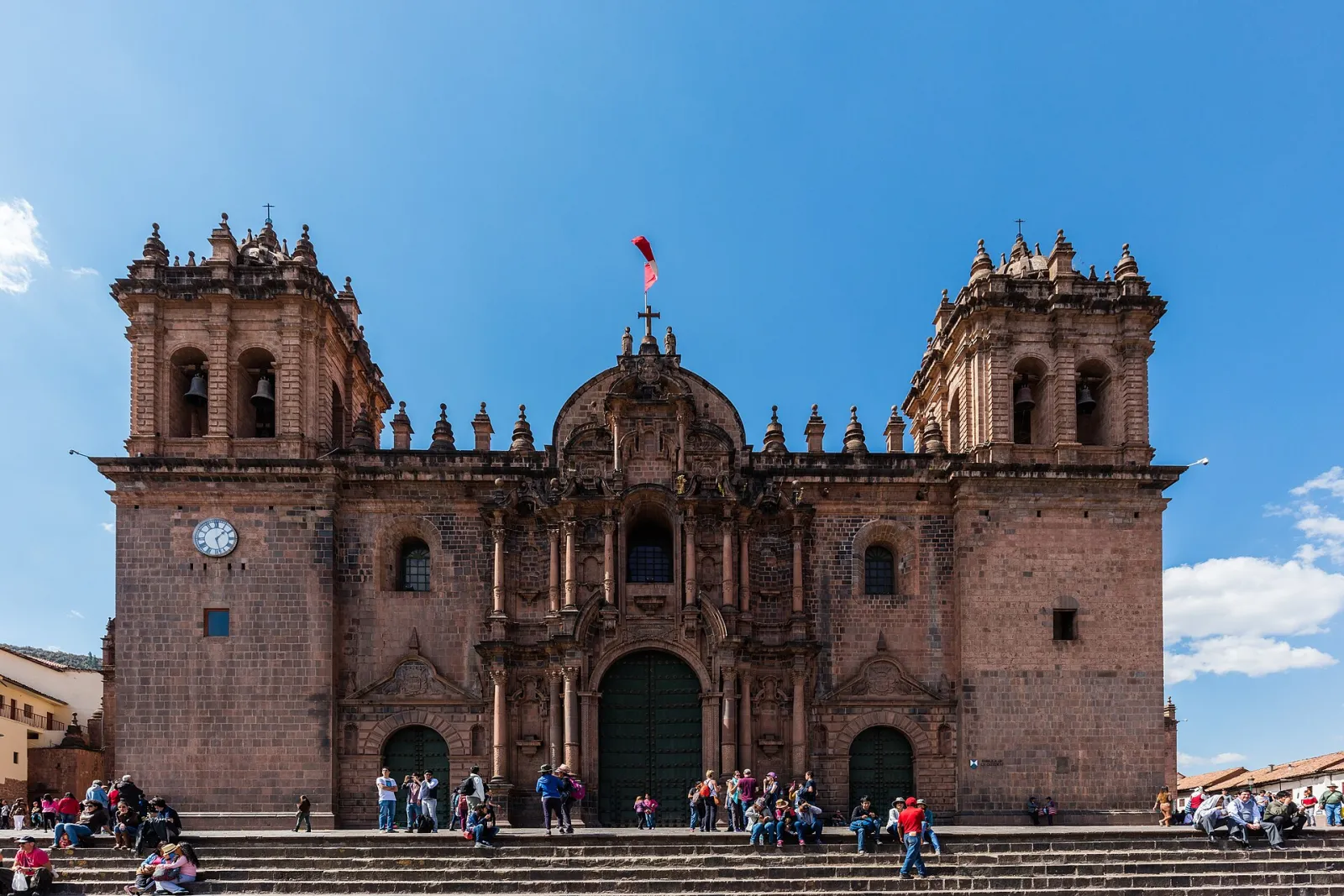
The cathedral on the Plaza de Armas. Your first afternoon in Cusco should be this slow: a short walk, water and an early night. Photo: Diego Delso, CC BY-SA 4.0
The logistics, step by step
Getting to Machu Picchu is a chain, and each link has a timetable:
- Fly to Cusco. About 1 hour 15 minutes from Lima, according to Peru's tourism board.
- Go to Ollantaytambo by road, through the Sacred Valley.
- Take the train. PeruRail puts the Ollantaytambo to Machu Picchu ride at about 1 hour 30 to 2 hours.
- Take the bus from Aguas Calientes up the switchbacks to the gate, about 25 minutes.
- Arrive on time. The gate allows 30 minutes of tolerance in regular months and 45 in the busiest ones. After that, entry can be refused.
Every link has to fit the next one, which is why the ticket and the train should be booked together. Our guide to the Machu Picchu trains compares the services, and our ticket guide explains how far ahead to book.
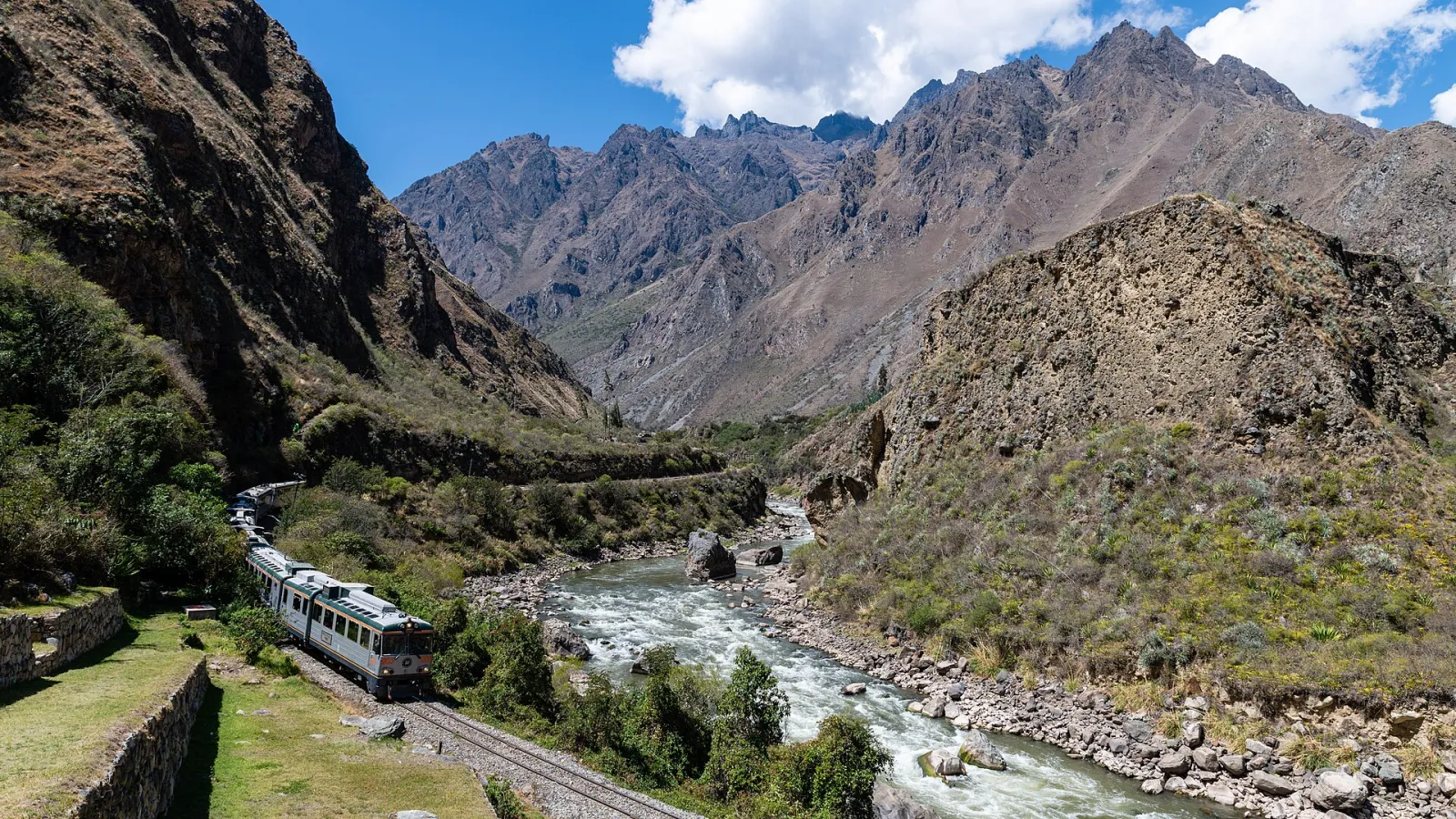
The train to Aguas Calientes follows the Urubamba river. For most visitors this ride is part of the trip, not just a transfer. Photo: Christoph Strässler, CC BY-SA 2.0
When Machu Picchu is not worth it
- As a same-day trip on the day you land in Cusco. You will be tired, short of breath and watching the clock.
- If you cannot manage stairs. The site is on a steep ridge, the routes are one-way and full of stone steps, and walking sticks are not allowed.
- If you leave the ticket until the last week of a peak month. You may end up with a route that skips the part you wanted.
If none of those apply to you, it is worth it.
How many days in Peru, and how to use them
5 days: Cusco, the Sacred Valley and Machu Picchu
Five days is the shortest trip that does Machu Picchu properly and adds one big Andean landscape. Our five-day Cusco and Machu Picchu tour runs like this: a light city tour on day one, the Sacred Valley by Chinchero, Moray and the Maras salt pans on day two with the night in Aguas Calientes, Machu Picchu on day three, Rainbow Mountain on day four, after three days of adjusting, and the flight out on day five. If you prefer to skip the high mountain, the four-day version ends after Machu Picchu.
7 days: the coast and Machu Picchu
With a week you can add the coast. Our seven-day Peru tour starts with three days at sea level: Lima, the Ballestas Islands, Huacachina and a flight over the Nazca Lines. Then it flies to Cusco for a gentle city tour, crosses the Sacred Valley, sleeps in Aguas Calientes and visits Machu Picchu on day six. It has no high mountain day, on purpose.
10 days: add the high Andes
Ten days lets you add the mountains without rushing the altitude. Our ten-day itinerary keeps the coastal start, visits Machu Picchu on day six, and only then goes to Rainbow Mountain, the South Valley and Humantay Lake. If Rainbow Mountain is on your list, read our guide to Vinicunca, Palcoyo and Pallay Punchu first.
14 days: the whole south
Two weeks is enough for the classic southern loop. Our complete Peru tour goes from Lima to Paracas and Nazca, then Arequipa and the Colca Canyon, Lake Titicaca from Puno, the Route of the Sun bus to Cusco, the Sacred Valley, Machu Picchu, Rainbow Mountain and Humantay Lake. Its last day is the flight home, so it fits fourteen nights. If you want to cross into Bolivia, the Peru and Bolivia 14 days trip continues from Titicaca to La Paz and the Uyuni salt flat. For a slower version focused on the lake, see our Cusco, Sacred Valley and Lake Titicaca itinerary.
Frequently asked questions
Is Machu Picchu worth the money? For most travelers, yes. The ticket is S/163 for a foreign adult, and the real cost is in the train, the bus and the hotels, which is why a package with everything included is easier to compare.
How many days do you need for Machu Picchu? At least three days in the Cusco region: one to arrive, one to reach Aguas Calientes and one for the visit. Five days is more comfortable.
Can you do Machu Picchu in one day from Cusco? Yes, by train, but it is a very long day and not a good idea on the day you land.
How many days in Peru is enough? Five days covers Cusco and Machu Picchu, seven to ten adds the coast and the high Andes, and fourteen covers the whole south including Lake Titicaca.
Is Machu Picchu very crowded? It has a cap of 5,600 visitors a day in high season in 2026, but timed entries and one-way routes spread people out. Early entries are the calmest.
Is the altitude a problem at Machu Picchu? The citadel is at 2,430 m, lower than Cusco. The altitude is more of a problem in Cusco itself, so the first day should be light.
Plan it with us
Machu Picchu is worth it when the pieces fit: an entry time that matches the train, a night close to the ruins, and enough days for the altitude. At Viajes Cusco Perú, the Cusco tour operator behind this blog, we put that together for our travelers. Start with the five-day Cusco and Machu Picchu tour or the Sacred Valley and Machu Picchu in two days, add the coast with the seven-day Peru tour, or walk in on the classic Inca Trail. All our options are on the Machu Picchu tours page and the Peru itineraries page.
Prices, caps, altitudes and travel times checked on October 15, 2026, against machupicchu.gob.pe, the Ministry of Culture entry schedule, peru.travel, PeruRail, the CDC and our own itineraries. Package prices are per person and can change by season.