From US$787 per person.
Lares Trek 4 Days
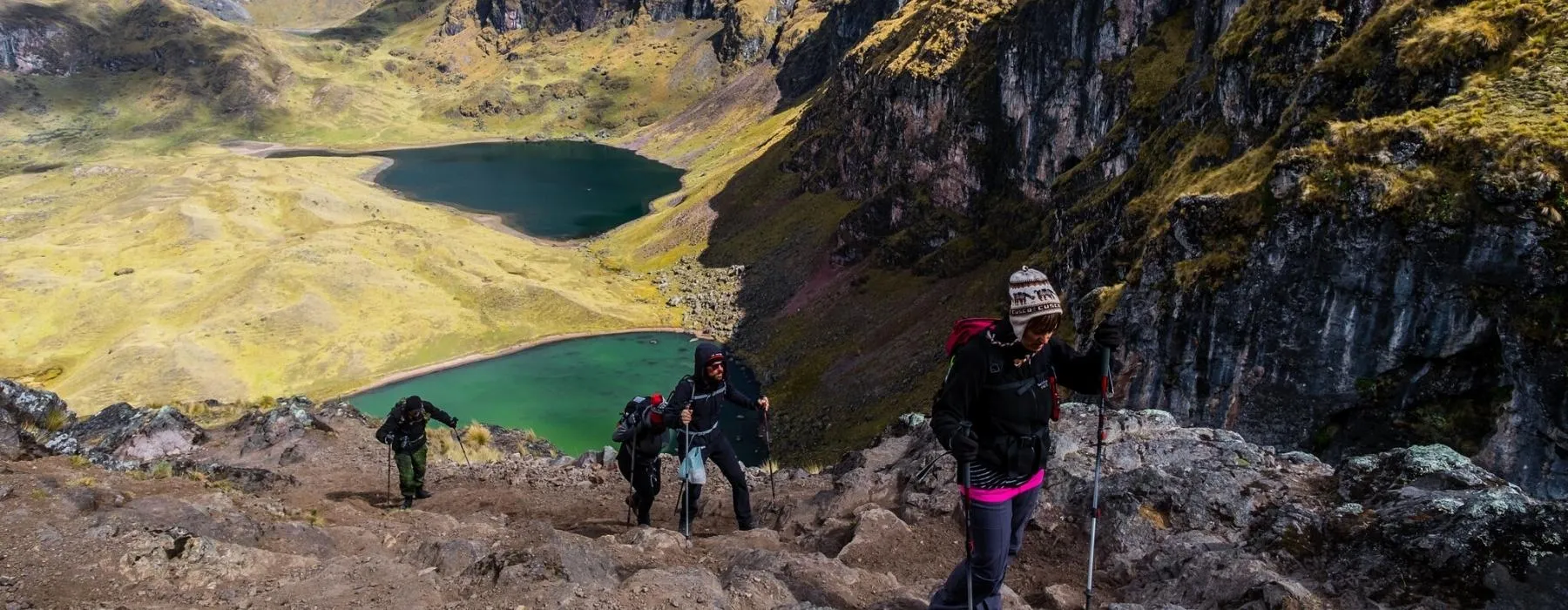
- Hike through Andean valleys with herds of alpacas and llamas.
- Crossing of mountain passes with views of snow-capped peaks.
- Visit to Quechua communities and traditional textile workshops.
- Does not require permits as limited as the Inca Trail.
- Last day at Machu Picchu with an official guide.
A deep journey through the Andes that connects nature, living culture, and spirituality. The Lares Trek is an authentic alternative to the Inca Trail, ideal for those who want to live with local communities, walk among high-altitude lagoons, and reach Machu Picchu from a less traveled route.
Over four days we will travel through the Lares Valley, visit hot springs, cross mountain passes over 4,700 m, and share with Andean families who preserve their textile and agricultural traditions. The experience culminates with the guided visit to Machu Picchu, integrating adventure, culture, and spiritual connection with Pachamama.
At a glance
- Days: 4
- Highest point: 4700 m
- Price: From US$787 per person
Itinerary
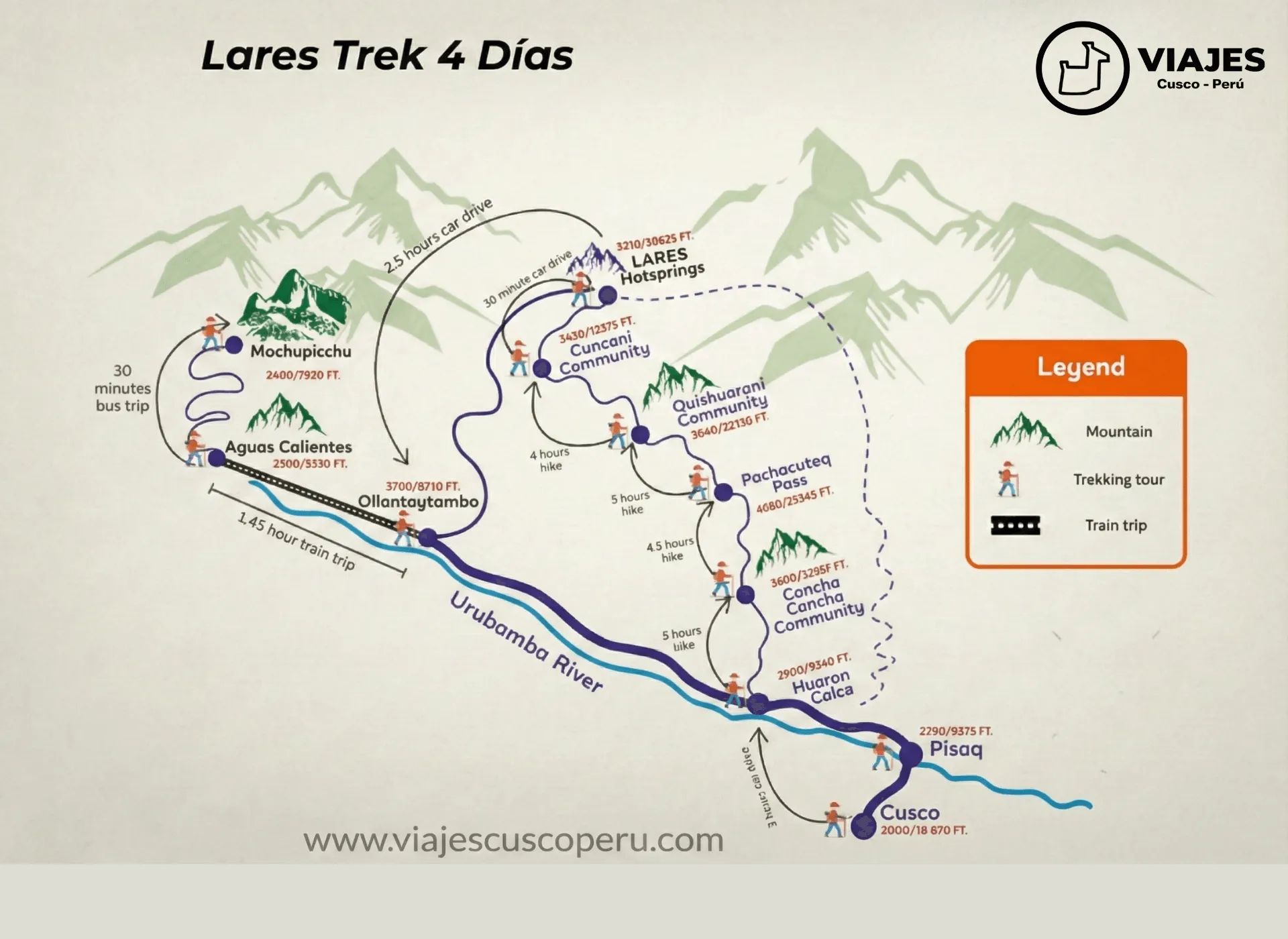
Day 1: Cusco, Lares, Cuncani, Sondor
Altitude: 2800 a 3900 m · Meals: Lunch and dinner included · Overnight: Sondor (3900 m)
Early departure (5:30 a.m.) from your hotel in Cusco in private transportation, with a stop in the Sacred Valley (2,800 m) for breakfast. We continue to the town of Lares (3,250 m), where we will enjoy a moment of relaxation in its natural hot springs, with temperatures between 28 °C and 34 °C.
Then we continue to the Cuncani community (3,700 m), the starting point of the hike. In the afternoon we will continue to our camp in Sondor (3,900 m), where we will be received by a local family who will share their daily life and textile traditions with alpaca wool.
Day 2: Sondor, Huacahuasi Pass, Lagoons, Pucara
Altitude: 3000 a 4700 m · Meals: Breakfast, lunch, and dinner included · Overnight: Pucara (3000 m)
After breakfast we will begin the hike to Huacahuasi Pass (4,700 m), the highest point of the route. The ascent takes approximately 2 hours and offers views of snow-capped mountains. We continue to the Auroray Cocha and Yurac Cocha lagoons, where we will make the stop for lunch.
Later we will cross a Queuñas (Polylepis) forest, habitat of Andean birds and high-altitude flora. We descend to the Pucara sector (3,000 m), where we will set up camp with views of the Sacred Valley.
Day 3: Pucara, Ollantaytambo, Aguas Calientes
Altitude: 2050 a 3000 m · Meals: Breakfast and lunch included · Overnight: Aguas Calientes (2050 m)
Descent to the Sacred Valley until reaching Ollantaytambo (2,850 m), considered the last living Inca town. We will visit the town and the Pinkulluna sector, admiring its Inca architecture and agricultural engineering.
After lunch, we will board the train to Aguas Calientes (2,050 m). Free afternoon to rest before the visit to Machu Picchu the following day.
Day 4: Machu Picchu, Return to Cusco
Altitude: 2430 a 3350 m · Meals: Breakfast included · Overnight: Cusco (3350 m)
Early departure to Machu Picchu by bus. Guided tour of the Inca citadel, exploring temples, terraces, and main viewpoints, with explanations about its history and meaning.
Free time to enjoy the energy of the place before returning to Aguas Calientes. In the afternoon, train back to Ollantaytambo and transfer to Cusco, closing this journey through Andean communities and the sacred citadel.
What is included
- Tickets and permits Machu Picchu entrance and Lares hot springs (optional).
- Service and logistics Private transportation Cusco, Lares, round-trip tourist train, Aguas Calientes, Machu Picchu bus, professional bilingual guide, cook and camping equipment, muleteers and mules (up to 6 kg per person), emergency horse, first aid kit and oxygen.
- Accommodation 2 nights camping, 1 night at a hotel in Aguas Calientes, and 1 night at a hotel in Cusco.
- Meals 3 breakfasts, 3 lunches, 3 dinners, and snacks during the hike.
What is not included
- Meals not included Breakfast on day 1 and lunch on day 4.
- Sleeping bag Available for rent (US$20).
- Machu Picchu downhill bus Not included (approx. US$12).
- Huayna Picchu Optional entrance, subject to availability (approx. US$70).
- Tips and travel insurance Not included.
Frequently asked questions
What is the Lares Trek and what makes it special?
The Lares Trek is an alternative 4-day trekking route that passes through Quechua communities in the Andes at over 4,400 m / 14,440 ft. It is the most cultural of all Peruvian treks: you interact with indigenous families, learn about Andean textiles and finish at Machu Picchu.
What is the difficulty level of the Lares Trek?
Moderate to high. Two mountain passes above 4,400 m / 14,440 ft are crossed with hikes of 12, 15 km per day. It is less demanding than the classic Inca Trail or the Choquequirao trek. Good fitness and 2, 3 days of prior acclimatization in Cusco are recommended.
Are indigenous communities visited on the Lares Trek?
Yes. The Lares Trek passes through Quechua communities such as Huacahuasi, Quiswarani and Patacancha, where locals wear traditional clothing and raise alpacas and llamas. It is possible to interact with local weavers and learn about their ancestral techniques.
Does the Lares Trek end at Machu Picchu?
Yes. On the last day of the trek, the train is taken from Ollantaytambo (or Aguas Calientes) to Machu Picchu to visit the citadel with a guide. Machu Picchu entry is included in the package. It is the perfect ending to the cultural trekking experience.
What is included in the 4-day Lares Trek?
Includes transport from Cusco to the starting point in Lares, bilingual guide, muleteers with pack mules, all field meals (breakfast, lunch and dinner), camping equipment (tent, mat), the Lares hot springs, Machu Picchu entry and return train.
Why is the Lares Trek ideal for those wanting a cultural experience?
The Lares Trek passes through Andean communities that have preserved their traditions for centuries. Locals wear hand-woven clothing using pre-Inca techniques, speak Quechua as their mother tongue and raise Andean animals (alpacas, llamas). It is the only trek where the encounter with living cultures is central to the itinerary, not an accessory.
Are the Lares hot springs included in the trek?
Yes. The Lares Trek includes a visit to the Lares thermal baths at the start of the route (day 1). The Lares hot springs are known for their mineral properties and pleasant temperature (38, 42°C / 100, 108°F). It is the best possible start to a mountain trek, relaxing the body before the physical demands.
What is the best time for the Lares Trek?
May, October (dry season) is ideal for clear skies and dry paths. April and November are transition months with mixed weather. December, March is rainy season with high chance of rain at mountain passes. June, August months are the most popular but also the coldest at night (below 0°C / 32°F at the passes).
Is the Lares Trek suitable for people who have never trekked before?
It requires some physical preparation but no prior trekking experience. The most demanding sections are the mountain pass crossings above 4,400 m / 14,440 ft. With 2, 3 days of acclimatization in Cusco, reasonable fitness and motivation, most people without experience complete the trek successfully.
What Andean animals can be seen on the Lares Trek?
The Lares Trek crosses Andean puna, the natural habitat of vicuñas, wild alpacas, Andean condors, Andean ducks and puna ducks. In the communities you also get up close with domesticated alpacas and llamas. The wildlife on the Lares is much more accessible than on other more isolated treks.
What is the difference between the Lares Trek and the Inca Trail? Which one to choose?
The Lares Trek is the most cultural trek in the region: it passes through active Andean communities with alpaca weavers, hot springs, and puna landscapes far from mass tourism. No permit is needed and it can be booked with little notice. The Inca Trail is the most archaeological trek: it follows the original Inca path with impressive ruins along the route but must be booked 3, 6 months ahead due to limited quota. Choose Lares if you value human connection, living culture, and flexibility. Choose the Inca Trail if what matters most to you is Inca history and walking the original stone path.
Related tours
- Choquequirao Trek 4 Days, from US$767 per person
- Classic Inca Trail 4 Days to Machu Picchu, from US$797 per person
- Huchuy Qosqo Trek 2 Days, from US$267 per person