Salkantay Trek vs Inca Trail: Which One to Choose, and Why
One needs a permit months ahead, the other needs none. One arrives through the Sun Gate, the other by train. Distance, altitude, difficulty and price, compared.
Both walks end at Machu Picchu. That is where the similarity stops.
The Inca Trail is a four-day walk on original Inca stone, it needs a permit that sells out months ahead, and it finishes by walking through the Sun Gate at dawn. The Salkantay Trek is five days, higher and harder, it needs no permit at all, and it finishes by train.
If you have the permit, take the Inca Trail. If you do not, Salkantay is not a consolation prize.
Side by side
| Inca Trail | Salkantay Trek | |
|---|---|---|
| Days | 4 | 5 |
| Distance | 43 km | about 70 km |
| Highest point | 4,215 m, Dead Woman's Pass | 4,630 m, Salkantay Pass |
| Permit | Yes, 500 a day, sells out | No |
| Can you book last minute | No | Yes |
| Arrival at Machu Picchu | On foot, through the Sun Gate | By train to Aguas Calientes |
| Ruins along the way | Many | One, at the end |
| Closed in February | Yes | No |
| Our price | US$797 | US$707 |
The Inca Trail: the road itself is the point
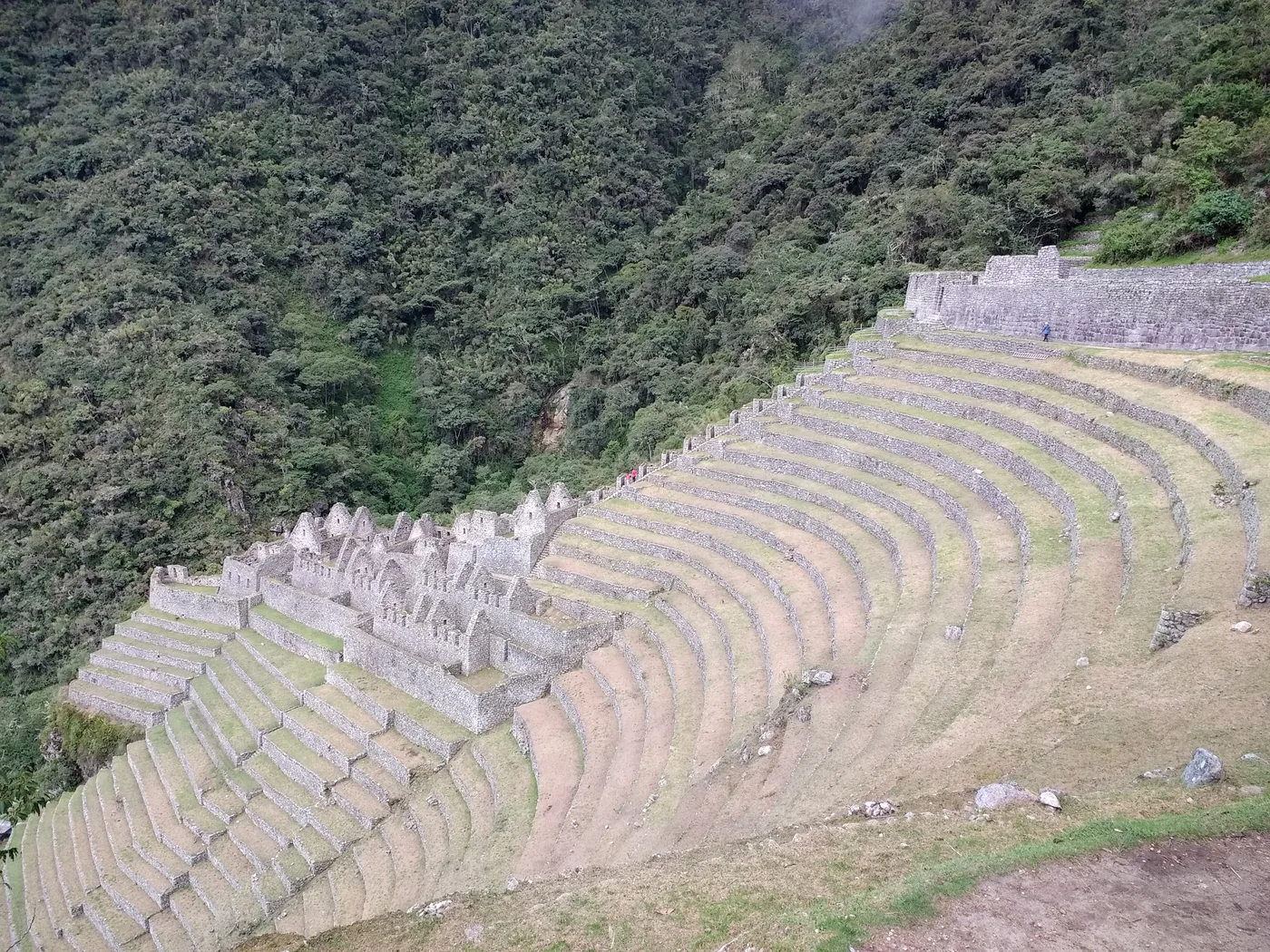
Wiñay Wayna, on the third day. There is no road to it. You either walk the Inca Trail or you do not see it. Photo: Mx. Granger, CC0
You are walking on the road the Incas built to reach Machu Picchu, and you pass through the sites they built along it: Llactapata, Runkurakay, Sayacmarca, Phuyupatamarca and Wiñay Wayna, none of which you can reach any other way.
The hard day is the second. Dead Woman's Pass, at 4,215 m, is a long climb with thin air and no shade, and most people find it the hardest thing they do in Peru.
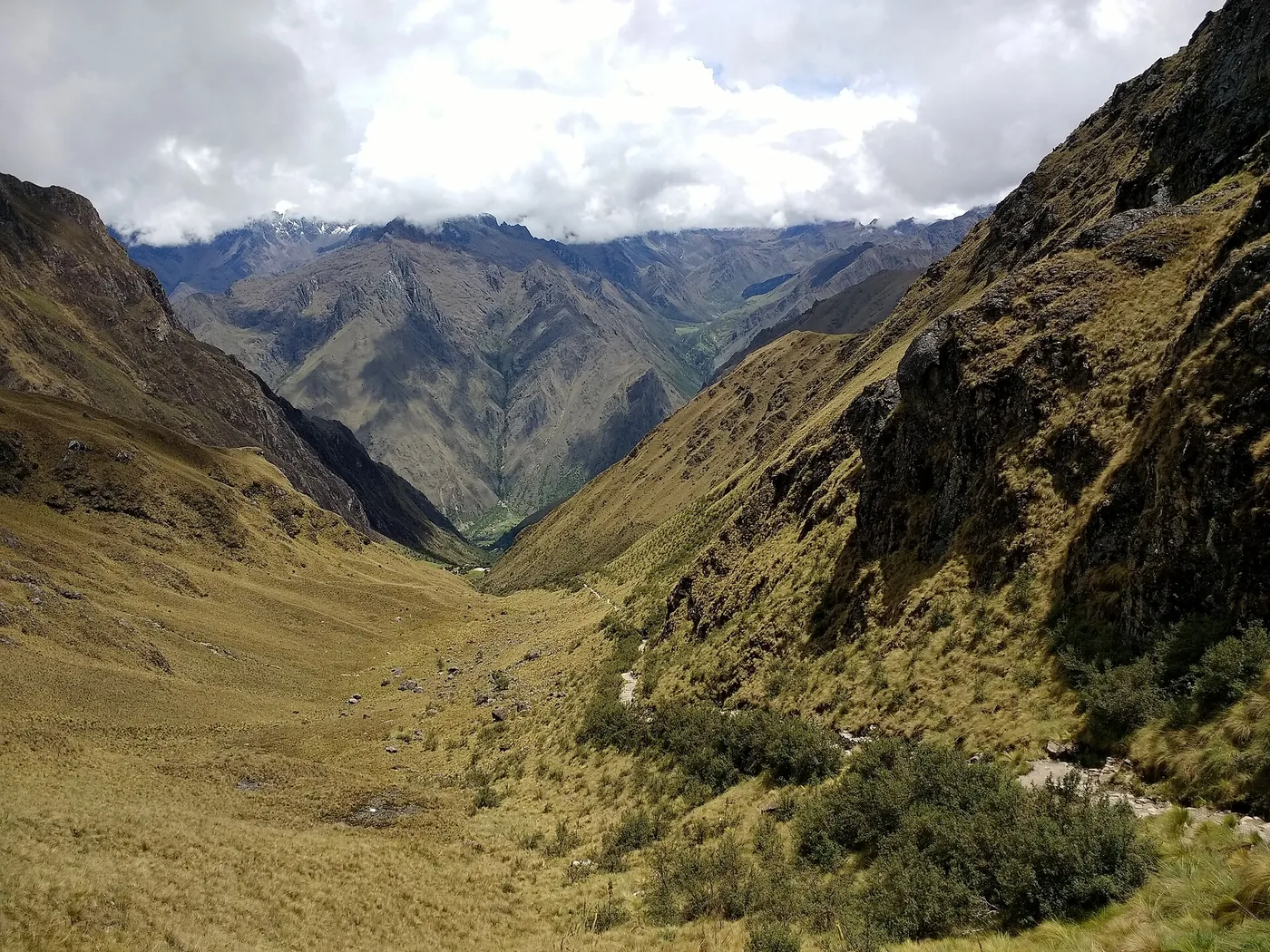
Dead Woman's Pass at 4,215 m. Everyone finds this day hard. It gets easier after it. Photo: Mx. Granger, CC0
The last morning you leave camp before dawn and walk the final hour to Inti Punku, the Sun Gate, where Machu Picchu appears below you all at once. No other route gives you that.
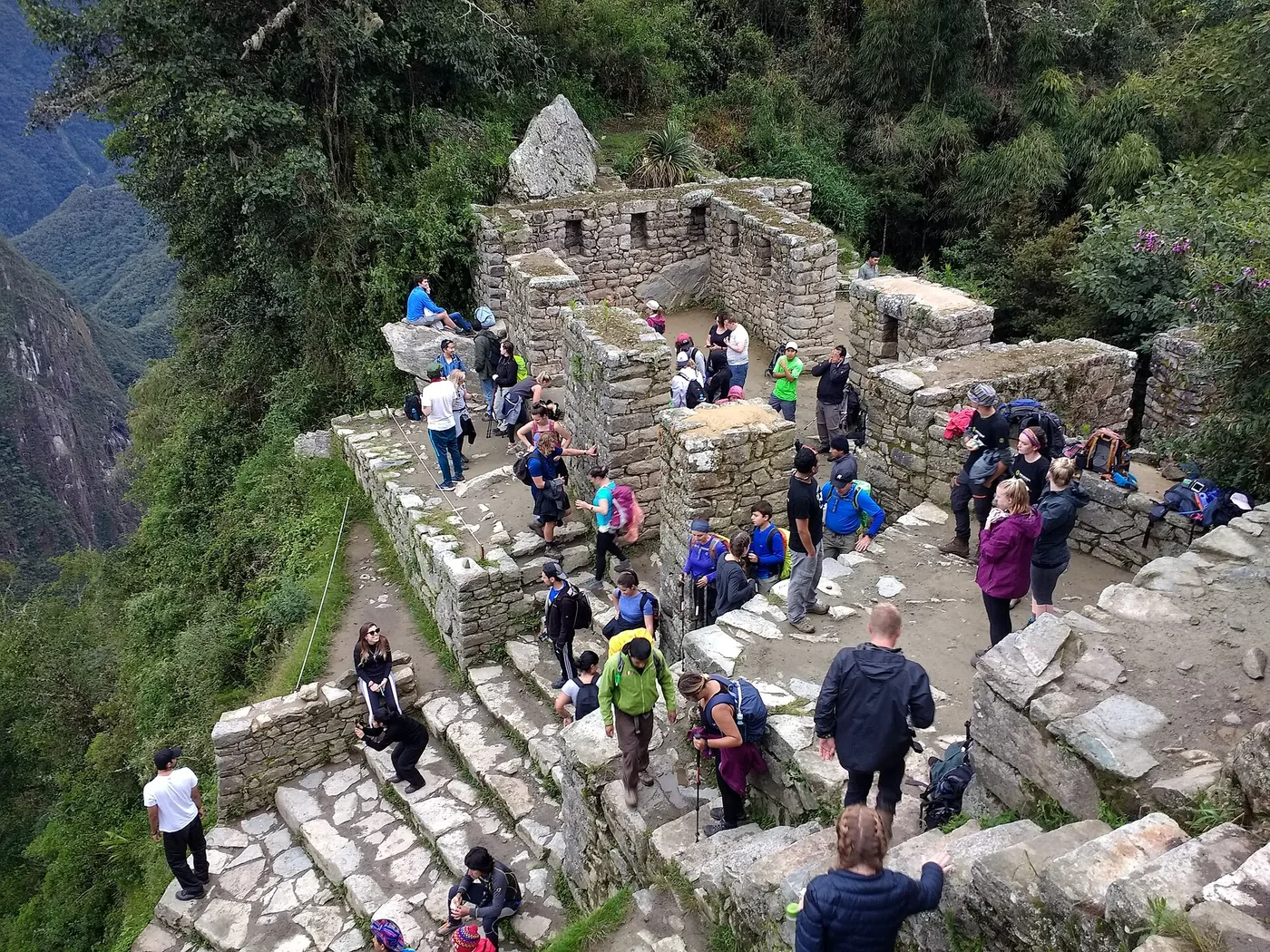
Inti Punku. This view is the reason people book the Inca Trail a year in advance. Photo: Mx. Granger, CC0
The catch
500 permits a day, and roughly 200 of them are left for trekkers after guides, cooks and porters are counted. Permits for 2027 go on sale in the first week of October 2026. June, July and August go within days. There is no waiting list and permits are not transferable, so your passport number is printed on it and cannot be changed.
The trail also closes for the whole of February every year for maintenance.
See the Classic Inca Trail, four days and our guide to permits and availability.
Salkantay: the mountains are the point
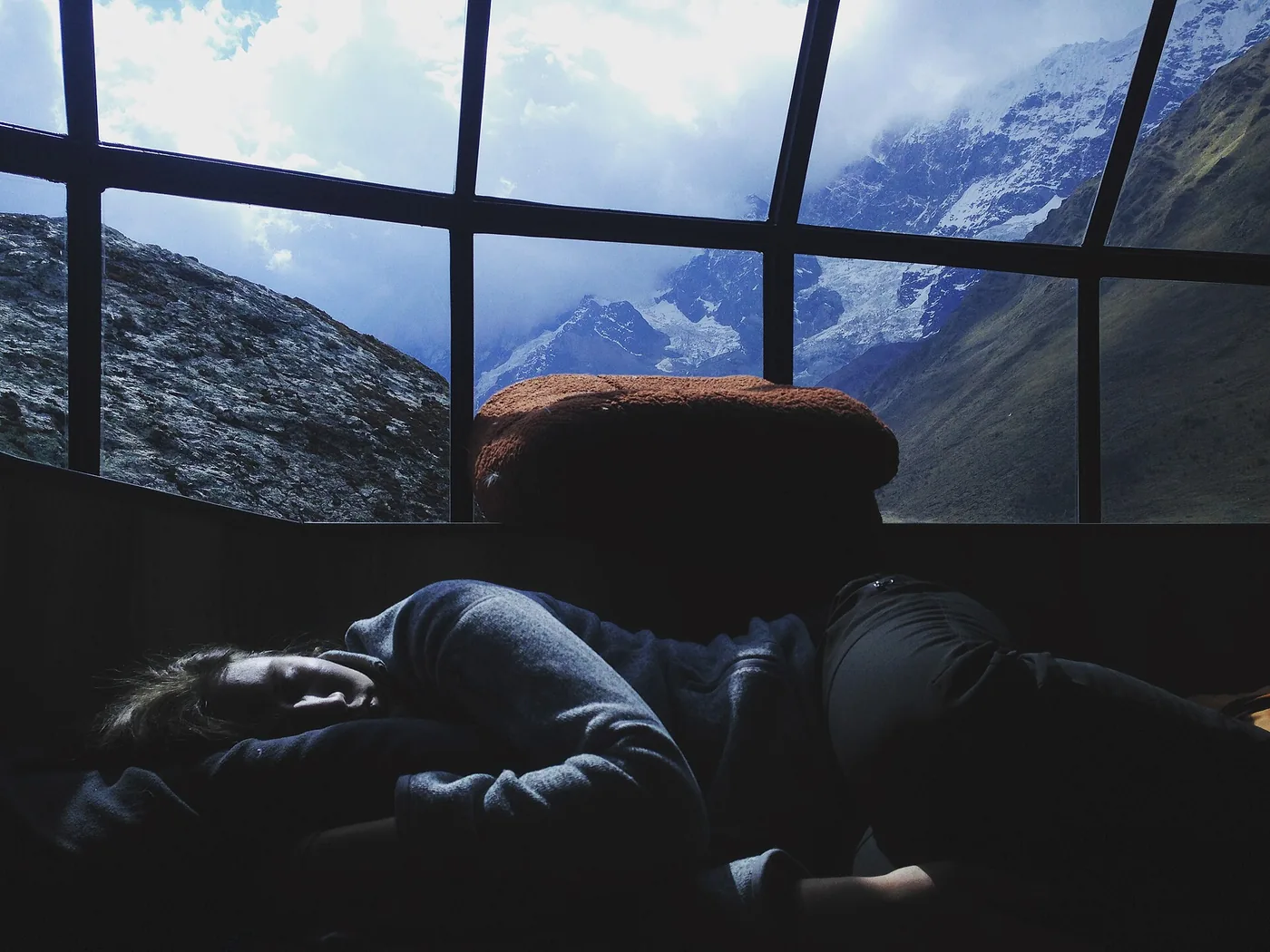
Salkantay, 6,271 m. You walk past the foot of it on day two. Photo: Maeghan Smulders, CC0
Salkantay was named one of the great treks in the world by National Geographic Adventure, and it earns that on landscape rather than archaeology.
You start in the high Andes, cross the Salkantay Pass at 4,630 m with a 6,271 m glaciated peak directly above you, and then descend for two days into cloud forest, coffee farms and banana plants. Very few treks change that much from one end to the other.
Most itineraries include Humantay Lake on the first afternoon, a turquoise glacial lake at 4,200 m that on its own is one of the best day trips out of Cusco.
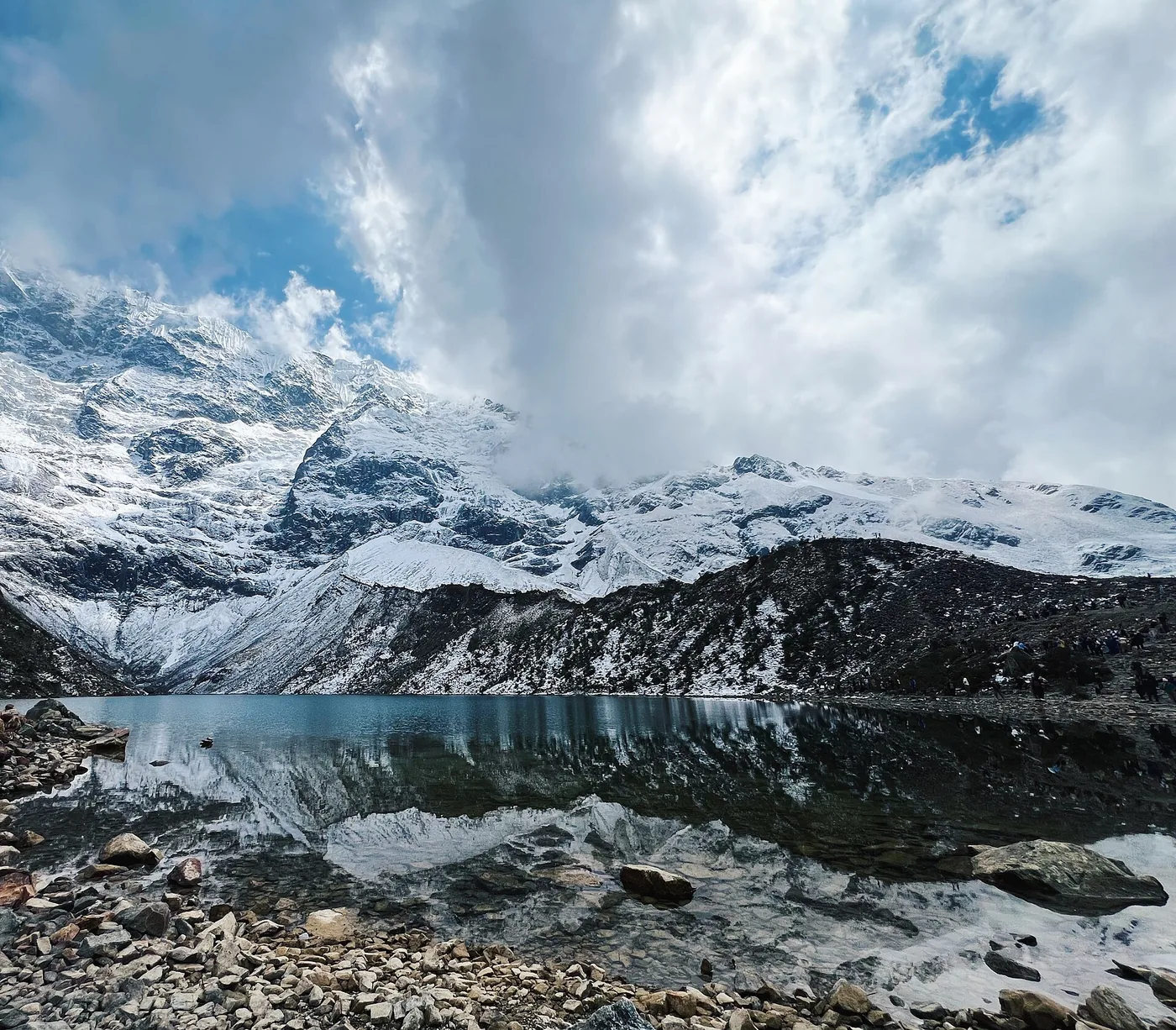
Humantay Lake, 4,200 m, usually on the first day of the trek. Photo: Snow Writes, CC BY 4.0
The last day you take the train from Hidroeléctrica to Aguas Calientes, sleep there, and visit Machu Picchu the next morning like everyone else. You do not walk in through the Sun Gate.
See the Salkantay Trek, five days.
Which is harder
Salkantay, on paper and in practice.
It is 415 metres higher at its top point, it is a day longer, and it covers more ground. Salkantay Pass is a slow, cold climb often done in the dark, and the descent that follows is long on the knees.
But the Inca Trail concentrates its difficulty. Day two is brutal, and there are thousands of stone steps, up and down, on days two and three. Steps punish knees in a way that a dirt path does not.
A useful way to decide: if steep stone stairs are a problem for you, Salkantay is kinder. If five days is more than you want to walk, the Inca Trail is shorter.
Which one to choose
Take the Inca Trail if you want to arrive on foot through the Sun Gate, you care about the archaeological sites on the way, and you can book five to twelve months ahead.
Take Salkantay if you are deciding within a few months of travelling, you want big mountain scenery, you want to see Humantay Lake as part of the trek, or the permits for your dates are gone.
Take neither if you have less than five days in Cusco or have not acclimatised. Both routes cross 4,200 m on the second day. Give yourself at least two days in Cusco first, and read our notes on altitude in Cusco.
The other options
The Inca Trail and Salkantay are not the only two.
- The Inca Jungle Trail, four days, US$607, mixes downhill cycling, rafting and zip lines with walking. It is the easiest of the group and the most fun for people who do not want five days of pure hiking.
- The Lares Trek, four days, US$787, goes through working Quechua weaving villages rather than ruins.
- The Choquequirao Trek, four days, US$767, goes to a site the same size as Machu Picchu that almost nobody visits. It is the hardest walk on this list.
Frequently asked questions
Is Salkantay harder than the Inca Trail? Yes. Salkantay is a day longer, covers about 70 km against 43, and crosses a pass at 4,630 m against 4,215 m. The Inca Trail is shorter but has far more stone steps, which is harder on the knees.
Do you need a permit for the Salkantay Trek? No. Salkantay has no permit system, which is why it can be booked days before departure. The Inca Trail is limited to 500 people a day, including staff, and sells out months ahead.
Does the Salkantay Trek end at Machu Picchu? It ends at Machu Picchu, but you arrive by train to Aguas Calientes on the fourth day and visit the site on the fifth morning. Only the Inca Trail walks in through the Sun Gate.
Which trek has better views? Salkantay, for mountains and for the change from glacier to cloud forest. The Inca Trail, for Inca sites you cannot reach any other way.
Can I do the Inca Trail in February? No. The trail closes for the whole of February every year for maintenance. Salkantay stays open, though it is the wettest month.
How much do they cost? Our Classic Inca Trail is US$797 for four days, including the permit, camping, meals, porters and the Machu Picchu entrance ticket. Salkantay is US$707 for five days. There is no cheap version of the Inca Trail, because the permit and porter costs are fixed by regulation.