Where to Eat in Cusco: Best Restaurants, Picanterías and Markets
Chicha, Cicciolina, Organika, La Chomba and Quinta Eulalia, San Pedro Market hours, cuy in Tipón, coca tea and safe eating: our guides' Cusco picks.
The best restaurants in Cusco, according to our guides, are Chicha, Cicciolina and Organika in the historic center (about US$20 to US$70 per person), plus picanterías such as La Chomba and Quinta Eulalia for cuy and chicharrón. Visit San Pedro Market between 8:00 a.m. and 1:00 p.m., and keep heavy food for after your first 48 hours at 3,399 m (11,152 ft). Below, where to eat by budget and occasion, which villages to drive to for one dish, and how to handle cuy, coca tea and street food.
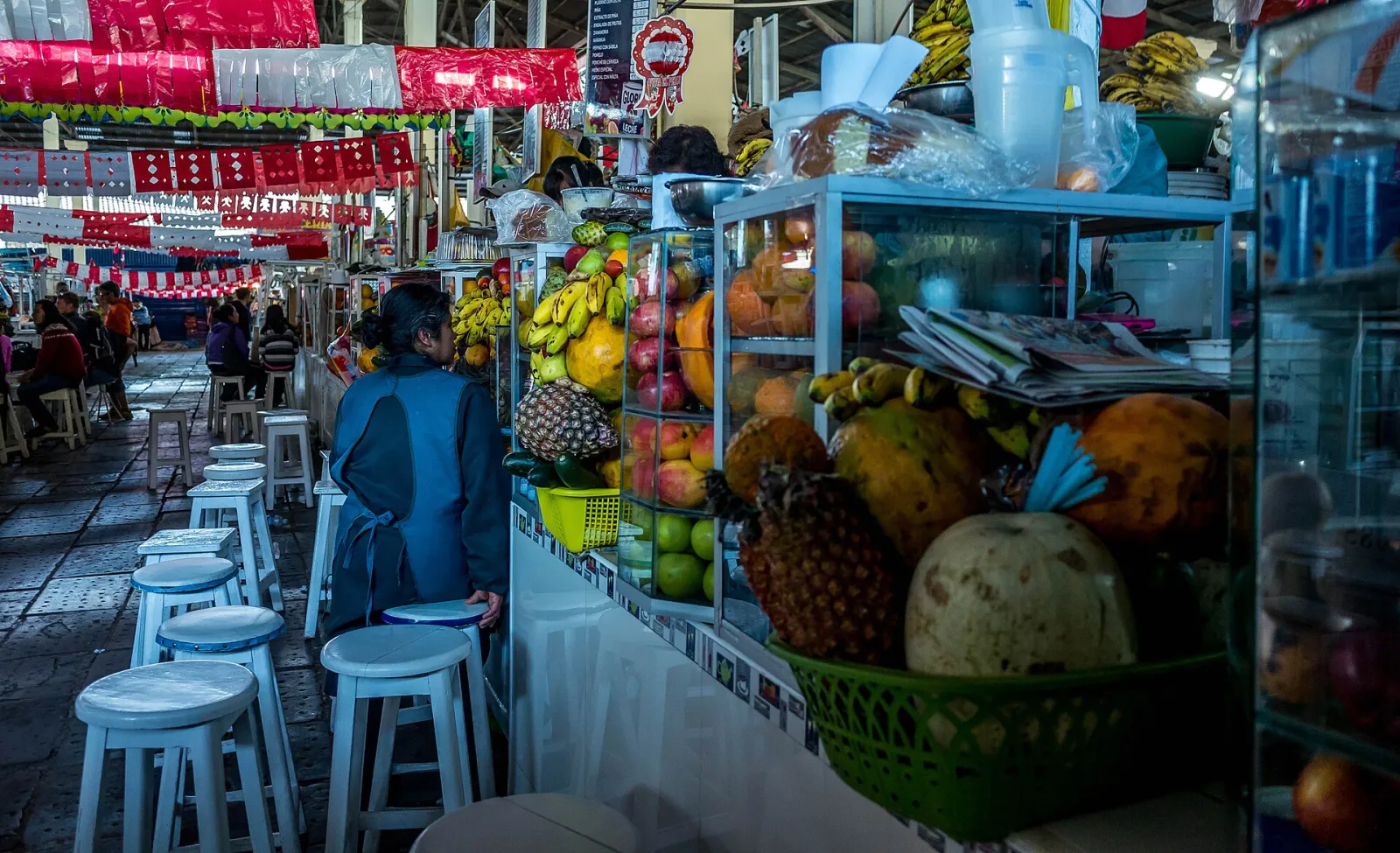
The juice aisle of San Pedro Market, where a row of stools faces glass cases of papaya, pineapple and bananas. Photo: sergejf, CC BY 2.0
The short version
- For a special dinner: Chicha (Andean cooking by Gastón Acurio) or Cicciolina (tapas and Mediterranean plates with Andean produce).
- For a lighter, cheaper meal: Organika, farm to table, now on Calle Ataúd.
- For a long local lunch: La Chomba on Avenida Tullumayo or Quinta Eulalia on Calle Choquechaca, with chicha de jora.
- For breakfast and juice: San Pedro Market, ideally between 8:00 a.m. and 1:00 p.m.
- For one dish, one town: chicharrón in Saylla, cuy in Tipón, pan chuta in Oropesa, duck in Lucre.
- First two days: soups, quinoa and hot tea. Save the fried pork and the cuy for later in the trip.
- Water: sealed bottles only, no ice from unknown places.
Quick facts
| Fact | Detail | Source, checked October 2026 |
|---|---|---|
| Cusco altitude | 3,399 m (11,152 ft) | IGP and PromPerú |
| Dinner at Chicha | US$40 to US$70 per person (about S/ 140 to S/ 240) | Agency estimate |
| Dinner at Cicciolina | US$35 to US$60 (about S/ 120 to S/ 205) | Agency estimate |
| Meal at Organika | US$20 to US$35 (about S/ 70 to S/ 120) | Agency estimate |
| Exchange rate used | S/ 3.43 per US$ | SUNAT rate of October 16, 2026, reported by Expreso |
| Pan chuta | Oropesa named National Capital of Bread, Law 31389, 2022 | Andina, Agraria |
What are the best restaurants in Cusco?
Our guides send travelers most often to Chicha, Cicciolina and Organika, all within a few blocks of the Plaza de Armas. Prices are the agency's estimate per person, converted at the October 2026 rate.
Chicha por Gastón Acurio, upstairs in a colonial house at Plaza Regocijo 261, is the Cusco restaurant of the chef Gastón Acurio, with Andean recipes cooked the modern way. Directory listings show it open daily from noon to about 10:30 p.m. Book ahead in high season.
Cicciolina, on the second floor of Calle Triunfo 393, a block from the Plaza de Armas, has a lively tapas bar and a candlelit dining room, with Mediterranean plates built on Andean produce. Two listings give daily hours of 12:30 p.m. to 9:15 p.m.
Organika used to sit on Calle Resbalosa and has moved to Calle Ataúd 154, one block from the plaza. Vegetables come from Sacred Valley farms, plates are lighter and the bill is the smallest of the three. Hours differ between listings, so check first.
For what each dish on those menus is, see our guide to Peruvian food and traditional dishes.
Which place fits which occasion and budget?
Pick by the meal you want, not by the ranking.
| Occasion | Where our guides send you | Budget per person | Tip |
|---|---|---|---|
| Anniversary or last night | Chicha | US$40 to US$70 | Reserve a table on the evening you return from Machu Picchu |
| Drinks and small plates | Cicciolina, tapas bar | US$35 to US$60 | The bar works for a late, light dinner |
| Healthy lunch, vegetarian friends | Organika | US$20 to US$35 | Easy on arrival days |
| Long Sunday lunch with locals | La Chomba, Quinta Eulalia | Not published | Share plates, portions are big |
| Breakfast on a budget | San Pedro Market counters | Not published | Go before 1:00 p.m. |
| A road trip for one dish | Saylla, Tipón, Oropesa, Lucre | Not published | Combine with the South Valley tour |
"Not published" means we found no reliable price to quote. Carry soles in small bills for markets and picanterías.
Where do Cusqueños eat? Picanterías and quintas
Cusqueños eat their big weekend meals in picanterías and quintas: long tables, chicha de jora by the jug and serious portions. In November 2015 the Ministry of Culture declared the picanterías of Cusco part of the nation's cultural heritage, and in 2019 Andina counted at least 14 of them in the historic center and its surroundings.
La Chomba, at Avenida Tullumayo 339, is about a ten minute walk from the Plaza de Armas. Our guides go for the roast lamb and the capchi de setas, a stew of mushrooms, cheese and chili. Frommer's lists chicharrón, malaya frita and cuy among its specialties and warns that most portions feed two. If plain chicha feels too strong, order a frutillada, chicha with strawberries.
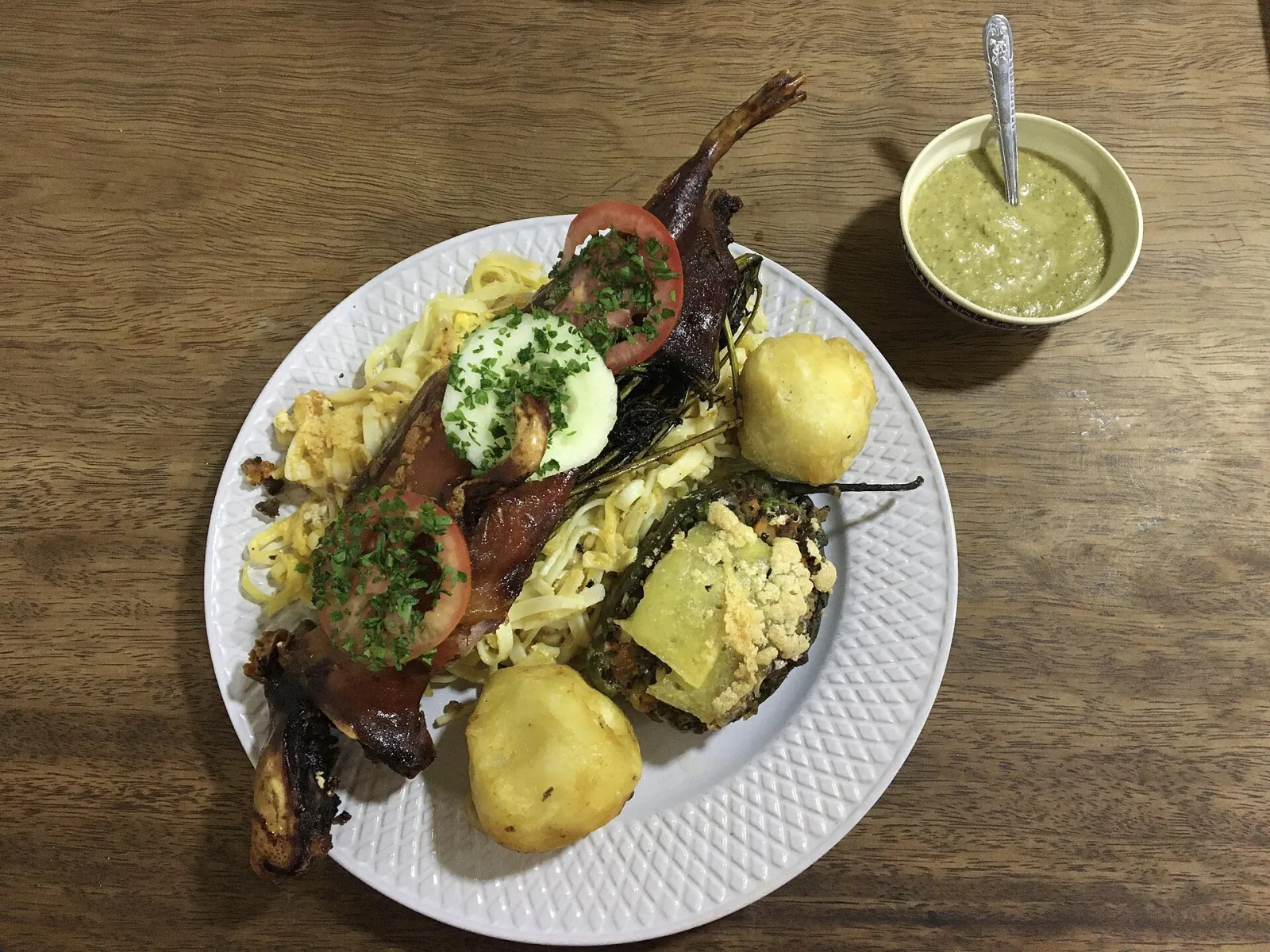
Cuy al horno at La Chomba, with noodles, potatoes, a stuffed rocoto and huacatay sauce on the side. Photo: Carlo Brescia, CC BY-SA 4.0
Quinta Eulalia, at Calle Choquechaca 384, near San Blas, has served food in its courtyard since 1941, and our guides send travelers there for cuy and chicharrón at tables around the patio.
Chicha de jora is fermented and contains alcohol. Still adjusting to the altitude? Ask for chicha morada, the purple corn drink, which has none.
Is San Pedro Market worth it, and which other markets should you visit?
Yes. San Pedro is the market to see first, and our guides schedule it between 8:00 a.m. and 1:00 p.m., when the soup counters are full and the juice ladies are calling out to every passerby. The building dates from the 1920s and was declared a monument of the nation in 2024.
Sit on a stool at a juice stall, point at fruit, and the glass comes back with a refill in the jug. Deeper inside are stacks of pan chuta, cheese counters and herb stalls with dried plants for every ache. Our Cusco walking tour, from US$27, starts in this market.
San Blas Market, up the hill, is small and calm, with vegetarian and vegan set lunches, best at the same hours. Wanchaq Market, near Avenida El Sol, is where locals buy native potatoes, Andean cheese and flowers, and our guides go on Saturday mornings.
In the Sacred Valley, the Pisac market has its big fair on Sunday, with smaller ones on Tuesday and Thursday, and Chinchero fills with produce on Sunday mornings. Our guides treat both Sunday fairs as a must. The Sacred Valley full-day tour, from US$127, stops at the Pisac artisan market and includes a buffet lunch in Urubamba. See our Sacred Valley guide.
Where can you get good coffee and chocolate in Cusco?
For coffee, our guides recommend Three Monkeys Coffee Company, which started as a cart in San Blas, and Florencia y Fortunata, in a colonial house a few steps from the Plaza de Armas. PromPerú reported that both made The World's 100 Best Coffee Shops list. For chocolate, the ChocoMuseo, at Calle Garcilaso 210 facing Plaza Regocijo, runs a 2-hour bean to bar workshop, listed by resellers from about US$27 to US$34 per adult in October 2026.
Which villages near Cusco are famous for food?
The road southeast of Cusco is a food route with towns attached, as Andina describes it, and our South Valley tour, from US$127, follows it to Tipón, Pikillacta and Andahuaylillas. Meals are not included, but the itinerary points out chicharrón, cuy and pan chuta on the way, and you are back around 4:00 p.m.
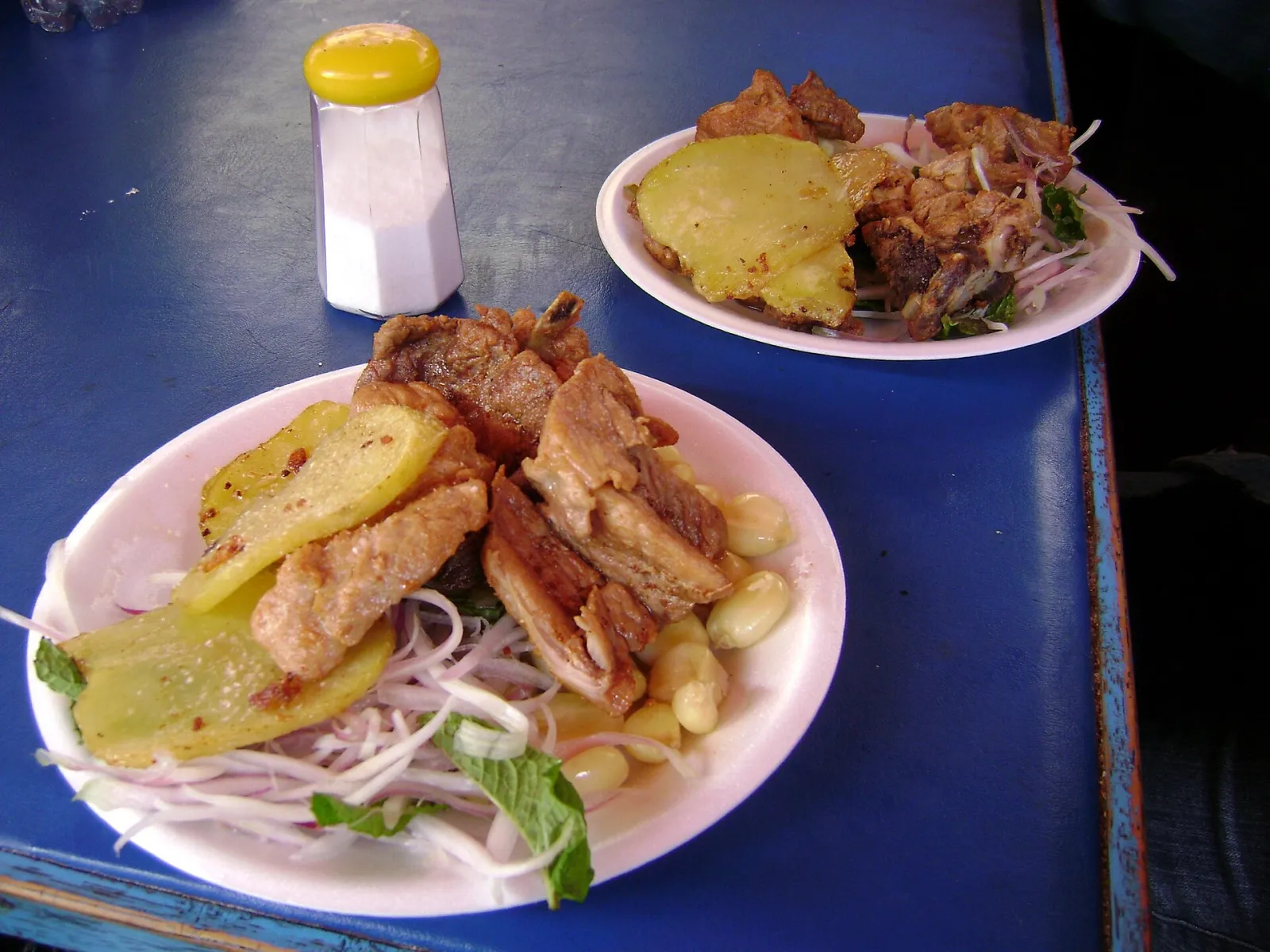
Chicharrón cusqueño: pork fried in its own fat, with potatoes, mote and an onion and mint salad. Photo: Soncco, CC BY-SA 3.0
- Saylla, chicharrón. Pork fried in its own fat, with mote (big boiled corn), potatoes and onion and mint. Andina names Saylla and Poroy for it.
- Tipón, cuy. Just past Saylla, in Oropesa district, the quintas along the road roast cuy al horno and also serve pepián de cuy and cuy chactao, the flattened fried version.
- Oropesa, pan chuta and lechón. Law 31389 named Oropesa the National Capital of Bread in 2022. Our guides pair its pan chuta, the big flat round loaf, with lechón, roast suckling pig, from the same town.
- Lucre, duck. Lucre is known for roast duck and fried trout, according to Andina.
- Cusco, adobo. Pork marinated in chicha de jora and ají panca, eaten for breakfast. RPP found it among the most requested plates at the Ttio market, in Wanchaq.
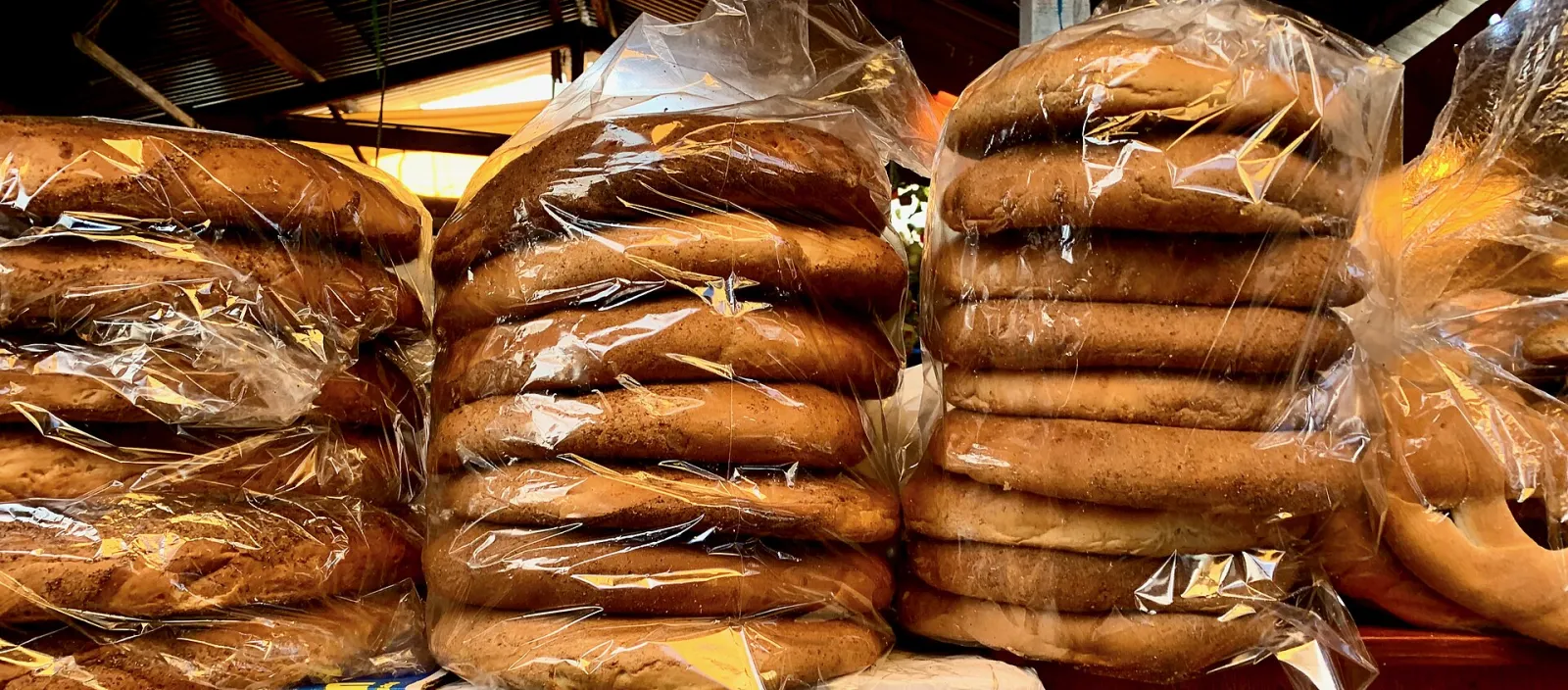
Pan chuta, the large round bread of Oropesa, stacked for sale. Photo: F Delventhal, CC BY 2.0
One dish runs on the calendar. Chiriuchu, from the Quechua chiri (cold) and uchu (chili), is the plate of Corpus Christi: cuy, corn tortilla, seaweed, cecina, rocoto and maize, all served cold, sold by local cooks around Plaza San Francisco. Corpus Christi falls 60 days after Easter, so in 2027 the feast is on May 27. The Inti Raymi season follows in June.
Should you try cuy, and how do you eat it?
Cuy is guinea pig, and in the Andes it is food, not a pet. Peru produces about 22,000 tonnes of cuy meat a year from some 24 million animals, El Peruano reported in October 2026, with Cusco among the main regions. National Cuy Day falls on the second Friday of October.
How it arrives. Cuy al horno comes roasted whole, often with head and feet, crisp skin and potatoes. Cuy chactado is flattened and fried. The meat is little and close to the bone, and tastes closer to rabbit than to anything strange. Eat it with your hands.
Where. Our guides send travelers to the quintas of Tipón, to La Chomba and to Quinta Eulalia.
How much. We found no reliable published price for a plate of cuy in Cusco, so we quote none. As a reference, El Peruano reports that a live cuy of about 850 g (1.9 lb) sells for S/ 25 to S/ 30. A roasted one costs more, so ask before ordering.
If you would rather not, try a bite from a friend's plate, or order trout.
What should you eat in your first 48 hours, and does coca tea help?
Eat light and drink hot for your first two days at 3,399 m (11,152 ft). Our guides recommend clear broths, quinoa soup (quinua lawa) and hot herbal teas, and ask travelers to avoid heavy meat, fried and fatty food and alcohol for the first 48 hours. On arrival day they suggest 2 to 3 hours of rest at the hotel before any big meal, and the agency serves a hot coca or muña tea to every arriving traveler at no charge.
Coca tea, mate de coca, is an infusion of coca leaves served in hotels all over Cusco, and muña is an Andean mint. Treat both as a custom, not a cure, and read our acclimatization guide for what actually helps. Do not pack coca tea for home: US Customs and Border Protection states that it is illegal to bring coca leaves into the United States for any purpose, including tea.
Is street food and tap water safe in Cusco?
Tap water is not safe to drink. The CDC advises sealed bottles, no ice where water may be contaminated and raw fruit only if you peel it, and says food served hot is safe.
Our guides add: brush with bottled water if your stomach is sensitive and skip unregulated street stalls. A busy market counter full of locals is not the same as a cart on the corner. If a traveler falls seriously ill on one of our tours, the guide connects them at once with their travel insurance's medical assistance. More on that in is Peru safe for tourists.
Can vegetarians, vegans and celiacs eat well in Cusco?
Yes. Organika and San Blas Market are the easy places for vegetarians and vegans. Quinoa, native potatoes and corn are naturally gluten free, and the agency builds its menus on them for vegetarian, vegan or celiac travelers, tracking every allergy declared at booking. In local places, say "soy vegetariano" or "sin gluten, soy celíaco", and check the soup with "¿la sopa lleva caldo de carne?". Celiacs should watch for soy sauce in stir-fries.
Can our guides take you on a food route in Cusco?
Yes, on request. Viajes Cusco Perú does not sell cooking classes or a fixed food tour, but our guides lead a private food route in Cusco that you arrange by WhatsApp or our contact page at least 72 hours ahead. It lasts about 4 hours and moves from a market with tastings to a specialty coffee and a traditional lunch. The average price is around US$65 per person (about S/ 225), for groups of 2 to 12, in Spanish, English, French or German. It includes the guided tastings, transport and entrance fees, and leaves out extra alcoholic drinks. For classes run by other operators, see our food experiences guide.
Frequently asked questions
What are the best restaurants in Cusco? Our guides name Chicha, Cicciolina and Organika in the center, and La Chomba and Quinta Eulalia for traditional food.
How much does dinner cost in Cusco's best restaurants? Our agency estimates US$40 to US$70 per person at Chicha, US$35 to US$60 at Cicciolina and US$20 to US$35 at Organika.
Where is Organika in Cusco now? At Calle Ataúd 154, one block from the plaza. Its old address on Calle Resbalosa is out of date.
When should I visit San Pedro Market in Cusco? Between 8:00 a.m. and 1:00 p.m., when the stalls and soup counters are fullest.
When is the Pisac market? The big fair is on Sunday, with smaller markets on Tuesday and Thursday.
Do people in Peru really eat guinea pig? Yes. Cuy is a traditional Andean meat, roasted or fried, and Peru produces about 22,000 tonnes of it a year.
Where can I eat cuy near Cusco? In the roadside quintas of Tipón, southeast of the city, or at La Chomba and Quinta Eulalia in town.
Does coca tea help with altitude? It is a local custom and a warm drink, not a cure. Rest, water and a slow first day matter more.
Can I bring coca tea back to the United States? No. US Customs and Border Protection says coca leaves are illegal to bring in for any purpose, including tea.
What typical dishes of Cusco should I try? Chicharrón, cuy al horno, adobo, pan chuta, lechón and, at Corpus Christi, chiriuchu.
Eat your way through our Cusco tours
Plan meals around our routes. The Cusco walking tour, from US$27, starts at San Pedro Market. The Cusco city tour, from US$87, leaves at 8:45 a.m. or 12:45 p.m., so lunch at Organika fits before the afternoon departure. The South Valley tour, from US$127, takes you through Saylla, Tipón and Oropesa, and the Sacred Valley full-day tour, from US$127, stops at the Pisac market. To add Machu Picchu, see the 4-day Machu Picchu and Cusco package, from US$774, or the 3-day version, from US$727. For the rest of your days, see the best things to do in Cusco and our guide to money and tipping in Peru.
Updated October 2026. Facts checked on October 21, 2026, against Andina (Cusco food route, picanterías, Oropesa), Agraria, El Peruano on cuy, RPP on adobo, the CDC, US Customs and Border Protection, SUNAT exchange rate reported by Expreso, Frommer's and restaurant listings. Restaurant picks, price ranges, market times, the first 48 hours advice and the private food route come from our guides' answers to the agency's October 2026 questionnaire. Hours change, so confirm before you go.