Peruvian Food: Traditional Dishes by Region and Where to Try Them
Ceviche, lomo saltado, cuy, pachamanca and juane: traditional dishes of the coast, Andes and Amazon, drinks, desserts, a glossary and where to try them.
Peruvian food comes from three kitchens: the Pacific coast (ceviche, causa, lomo saltado), the Andes, where Cusco sits at 3,399 m (11,152 ft), with cuy, pachamanca and more than 3,500 potato varieties, and the Amazon (juane, tacacho). Chinese and Japanese immigrants added chifa and Nikkei. In 2023 UNESCO listed ceviche as intangible heritage of humanity. Below is a map of what to order in each region, a menu glossary and a table that matches each dish to a stop on a typical Peru trip.
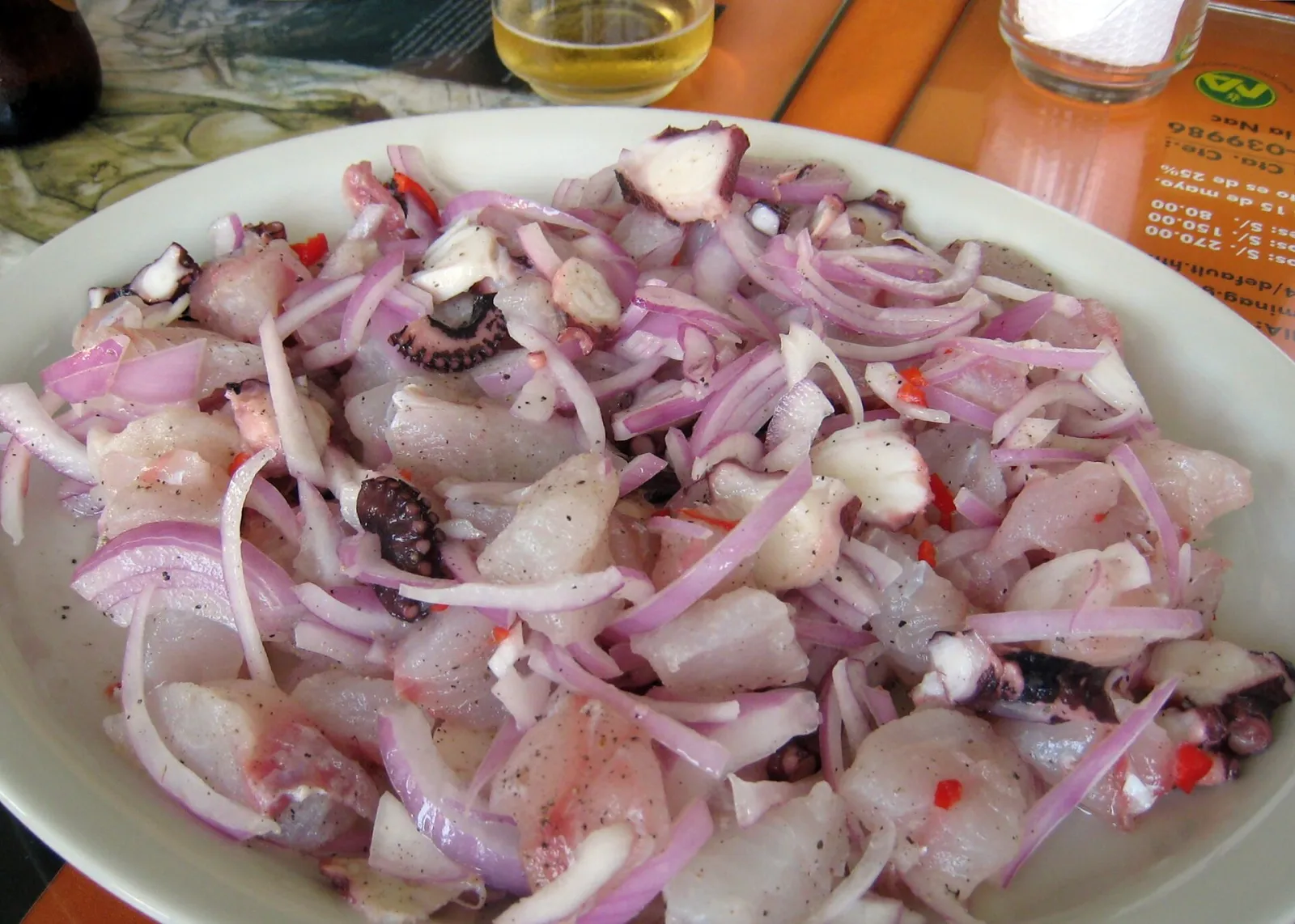
Ceviche in Lima: cubes of white fish and octopus under a heap of red onion and chili, cured in lime at the last minute. Photo: Yogma, CC BY 2.0
The short version
- Three regions, three menus. Seafood and lime on the coast, potatoes, corn, cuy and earth ovens in the Andes, plantain and leaf-wrapped rice in the Amazon.
- The national dish is ceviche: fish, lime, ají chili and salt. UNESCO inscribed its practices on December 6, 2023.
- Potatoes rule the highlands. Peru grows more than 3,500 varieties, according to Andina, the state news agency.
- Two immigrant cuisines are now Peruvian: chifa (Chinese, from 1849) and Nikkei (Japanese, from 1899).
- Drinks to know: pisco sour, chicha morada, Inca Kola and mate de coca. Never pack coca leaves for the flight home to the US.
- Spice comes on the side, in ají and rocoto sauces you add yourself.
Quick facts
| Fact | Detail | Source |
|---|---|---|
| Ceviche, heritage of humanity | Inscribed December 6, 2023 | UNESCO, via Andina |
| National Ceviche Day | June 28 | RM 708-2008-PRODUCE |
| Native potato varieties | More than 3,500 | Andina, May 2024 |
| National Potato Day | May 30 | RS 009-2005-AG |
| Pisco Sour Day | First Saturday of February | Ministry of Production, 2004 |
| Pachamanca, national heritage | Declared 2003 | Instituto Nacional de Cultura |
| National Cuy Day | Second Friday of October | Ministry of Agriculture, 2013 |
| First Japanese immigrants | 790 people, April 3, 1899 | Andina |
What is traditional Peruvian food?
Traditional Peruvian food is the cooking of three landscapes, built on native crops (potatoes, corn, quinoa, chilies) and reshaped by Spanish, African, Chinese and Japanese cooks. You feel the change within one trip. In Lima at lunch the table smells of lime and raw onion. Two days later in Cusco the same hour brings a steaming soup with chunks of potato and a sprig of mint, and nobody orders raw fish.
The coast runs on fish, lime, rice and ají amarillo, the fruity yellow chili. The Andes are farming country, so the plate is starch and slow heat: tubers, maize, broad beans, roasted meat and herbs such as huacatay (black mint). The Amazon cooks with green plantain, yuca, river fish and leaves used as wrappers. The rule for eating well is simple: order what each place grows.
Which coastal dishes should you order first?
Start with ceviche, then causa, lomo saltado, ají de gallina and anticuchos. Together they cover raw, cold, wok-fried, stewed and grilled.
Ceviche. Raw fish in cubes, seasoned with lime, ají and salt, served with sweet potato and big-kernel corn. The old Instituto Nacional de Cultura noted that coastal peoples, and people around Lake Titicaca, have eaten raw fish with ají and salt since ancient times. It declared ceviche national heritage in 2004. Peruvians eat it at lunch, never at night.
Leche de tigre. "Tiger's milk" is the milky, sour, peppery juice left after the fish cures, served in a small glass as a starter.
Causa. A cold terrine of yellow potato mashed with lime and ají amarillo, layered with tuna, chicken or crab and avocado.
Lomo saltado. Beef strips tossed at high heat with red onion, tomato and soy sauce, served with fries and rice. El Comercio's food historians trace the technique to the wok that Chinese immigrants brought after 1849, and note the dish was first called "lomo revuelto".
Ají de gallina. Shredded hen in a creamy ají amarillo sauce thickened with bread and milk, with rice, potato, olive and egg. Mild, and the dish that converts people who fear spice.
Anticuchos. Skewers of marinated beef heart grilled over charcoal. You smell them on street corners before you see them.
What do people eat in the Andes?
In the Andes people eat potatoes in dozens of forms, corn, quinoa, roasted cuy, festival plates such as chiriuchu and earth-oven pachamanca. Meals are warmer and heavier, which makes sense at 3,399 m in Cusco, where nights are cold.
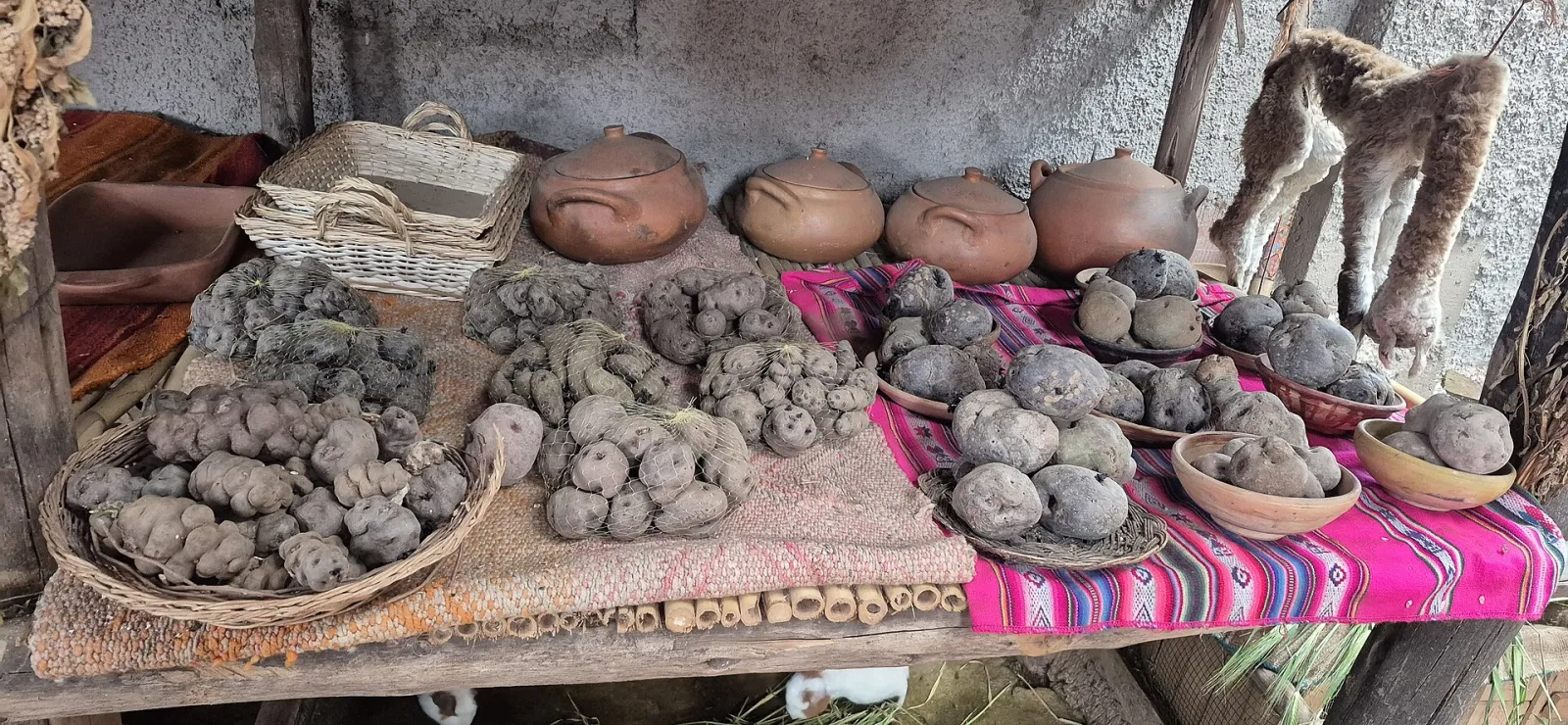
Native potatoes and dried potatoes laid out on woven cloth in the Peruvian Andes. Photo: Cathetovar, CC BY 4.0
Potatoes and chuño. Besides the 3,500 varieties Andina counts, INIA, the national agricultural research institute, holds more than 6,400 records of native potatoes. In a highland market you see purple, yellow, knobbly and striped tubers side by side, plus chuño: potatoes freeze-dried outdoors through frosty nights and sunny days, which keep for months and thicken soups.
Quinoa. FAO, the UN food agency, says quinoa originated in the Andes and was preserved by Andean peoples. The UN made 2013 the International Year of Quinoa. In Cusco you meet it as soup, salad and breakfast porridge.
Cuy. Guinea pig, roasted whole (cuy al horno) or flattened and fried (cuy chactado). The meat tastes close to rabbit, with crisp skin.
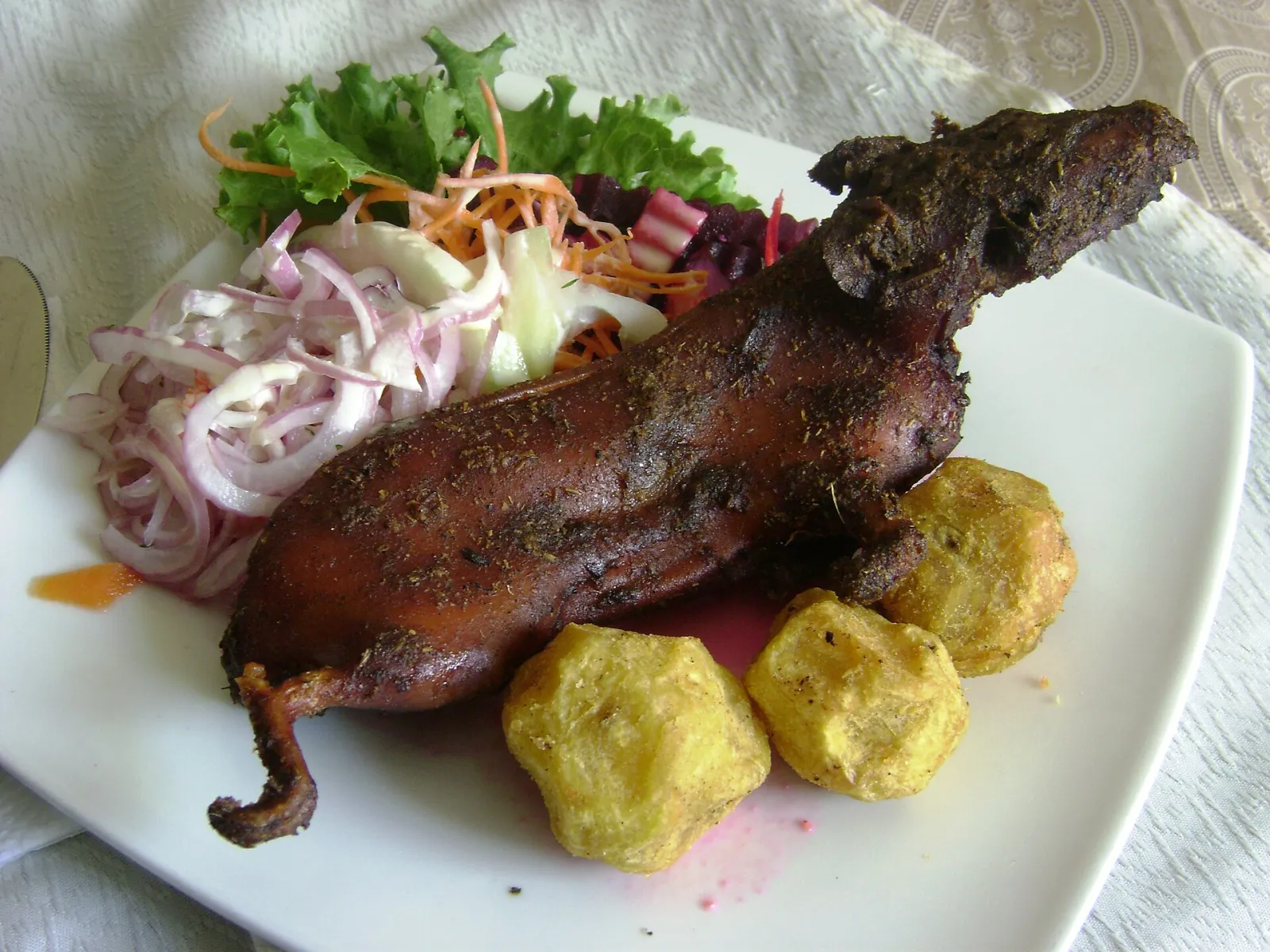
Cuy al horno with golden potatoes and salad, as it is served across the Peruvian highlands. Photo: Dtarazona, CC BY-SA 4.0
Chiriuchu. Cusco's Corpus Christi plate, eaten in June. The name joins the Quechua words chiri (cold) and uchu (chili), and it is served cold. Andina lists cuy, corn tortillas, seaweed, cecina (dried meat), rocoto and maize, sold by local homemakers around Plaza San Francisco. The Andean Parliament declared it cultural heritage in July 2024.
Rocoto relleno. A rocoto, the round red chili with black seeds, stuffed with minced meat and topped with melted cheese. Andina describes it as the classic starter of Arequipa. Even blanched, it bites.
Pachamanca. Meat, potatoes, sweet potato, broad beans and corn cooked underground on fire-heated stones, seasoned with herbs such as chincho, huacatay and muña. How a pachamanca is opened, and where travelers can join one, is in our guide to food experiences in Cusco and Lima.
What is Amazon food like?
Amazon food is rice, green plantain, yuca, river fish and wild herbs, often cooked in leaves. Two dishes travel well and appear on menus in Lima and Cusco.
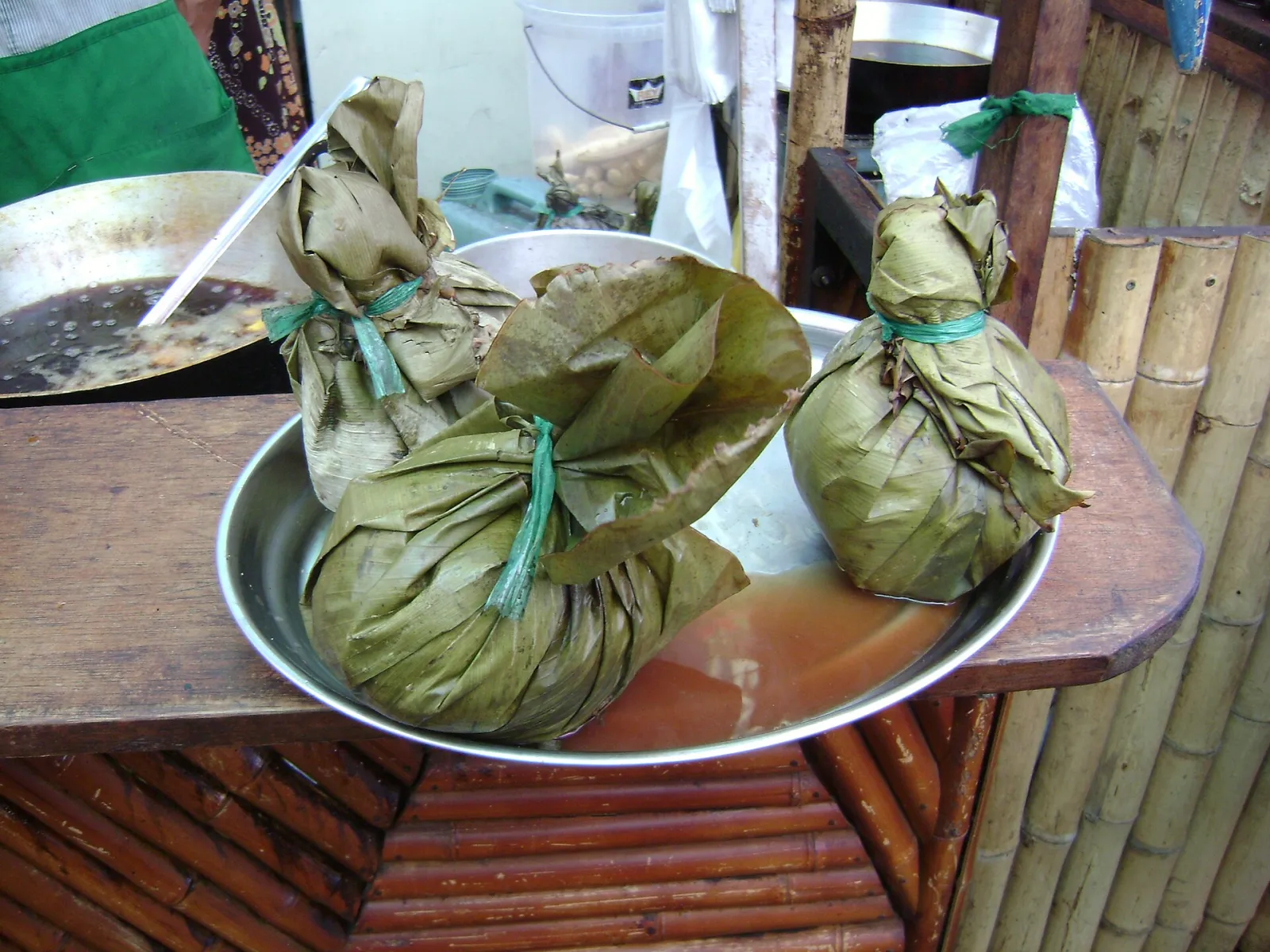
Juanes still in their leaves. You untie the bundle at the table and the steam comes out first. Photo: Dtarazona, public domain
Juane. Seasoned rice with chicken, boiled egg and olives, wrapped in bijao or plantain leaves and cooked slowly. Andina explains the name comes from "huanar", roughly "cooked slowly", and that the bundle recalls the head of John the Baptist. It is the dish of the Fiesta de San Juan on June 24, served with a sauce of ají charapita.
Tacacho con cecina. Green plantain, fried and mashed with pork fat and crackling into rough balls, with cecina (smoked dried pork) on the side. In San Martín and Madre de Dios it is breakfast.
Where did chifa and Nikkei come from?
Chifa and Nikkei come from two waves of Asian immigration to the Peruvian coast, and both are now everyday Peruvian food.
Chifa. Andina records that the first Chinese immigrants arrived between 1849 and 1874, hired to replace African workers who left the coastal plantations after slavery was abolished. According to Andina, rice only became a staple of the Peruvian diet because of them. Chifa grew from their kitchens: arroz chaufa (fried rice), tallarín saltado (stir-fried noodles) and wonton soup, with Inca Kola or chicha morada instead of jasmine tea. Peru counts more than a million people of Chinese descent.
Nikkei. The first 790 Japanese immigrants arrived on April 3, 1899, aboard the Sakura Maru. Andina describes how Japanese cooks brought their discipline with raw fish and ingredients such as hondashi, sake and mirin. One result is tiradito: thin slices of raw fish, like sashimi, dressed with lime and ají sauce at the moment of serving. Andina also credits Japanese technique for curing ceviche for minutes instead of hours.
Both cuisines feed Lima's fine dining. In The World's 50 Best Restaurants, Central in Lima was No. 1 in 2023 and Maido, a Nikkei kitchen, was No. 1 in 2025. The 2026 ceremony takes place in Lima on November 4, 2026, the first time in Peru.
What do Peruvians drink?
Peruvians drink pisco sour, chicha morada, Inca Kola and, in the Andes, mate de coca.
Pisco sour. Pisco (grape brandy) shaken with lime, syrup, egg white and ice, with drops of bitters on the foam. Declared national heritage in 2007. One at altitude feels like two.
Chicha morada. Purple corn boiled with pineapple peel, cinnamon and clove, then sweetened and finished with lime. No alcohol. Chicha de jora is a different drink: fermented corn beer, sold by the jug in chicherías.
Inca Kola. A bright yellow, very sweet soda launched in 1935 by the Lindley family, according to the business daily Gestión. The recipe is secret. It is the drink of the chifa table.
Mate de coca. Coca leaves steeped in hot water, offered in Cusco hotel lobbies for the altitude. It is legal in Peru. Do not bring leaves or tea bags home: US Customs and Border Protection states it is illegal to bring coca leaves into the United States for any purpose, including brewing tea, because they retain cocaine alkaloids. For the altitude itself, see our Cusco acclimatization guide.
Which Peruvian desserts are worth ordering?
Order picarones, suspiro limeño, mazamorra morada and alfajores, and queso helado in Arequipa.
- Picarones: rings of sweet potato and squash dough, fried and soaked in chancaca (cane sugar) syrup.
- Suspiro limeño: milk caramel under a port-scented meringue, served in small glasses.
- Mazamorra morada: thick purple corn pudding with dried fruit, often paired with arroz con leche.
- Alfajores: two crumbly cookies glued with manjar blanco and dusted with sugar.
- Queso helado: no cheese at all. Andina describes this Arequipa specialty as a frozen dessert made with milk.
Which dish should you order? A decision table
| If you like... | On the coast | In the Andes | From the Amazon |
|---|---|---|---|
| Fresh and sour | Ceviche, leche de tigre | Quinoa salad | Juane with ají charapita |
| Mild and creamy | Ají de gallina, causa | Quinoa soup | Juane |
| Grilled meat | Anticuchos | Cuy al horno | Tacacho con cecina |
| Something new | Tiradito | Chiriuchu in June | Juane at San Juan |
| A shared feast | Chifa banquet | Pachamanca | Juanes for the table |
Where can you taste each dish on a Peru trip?
You can taste most of these dishes along the classic Lima, Cusco, Sacred Valley and Lake Titicaca route. Where one of our tours stops for a meal or a market, the detail comes from the tour's own itinerary.
| Dish | Region | Where to try it on the route |
|---|---|---|
| Ceviche, tiradito | Coast | Lima at lunch, around the Lima city tour, which passes Miraflores and Barranco |
| Lomo saltado, ají de gallina | Coast, now national | The buffet lunch in Urubamba on our Sacred Valley full-day tour lists both |
| Native potatoes, chuño, quinoa | Andes | San Pedro Market, first stop of our Cusco walking tour |
| Cuy al horno, chicharrón | Andes | Lunch on our South Valley tour is not included, but the itinerary suggests both |
| Chiriuchu | Andes | Plaza San Francisco in Cusco during Corpus Christi |
| Trout | Andes | Listed on the Urubamba buffet, and the Lake Titicaca route stops for a typical lunch in Juli |
| Maras salt | Andes | Sold by producers at the pans on the Maras and Moray tour |
| Rocoto relleno | Southern Andes | Arequipa, and many Cusco menus |
| Juane, tacacho | Amazon | Amazon restaurants in Lima and Cusco |
Is Peruvian food spicy?
Peruvian food is more flavorful than fiery. Ají amarillo is fruity and moderate, rocoto is the hot one, and tables carry a bowl of chili sauce so you control the heat. Want none? Ask for your plate "sin ají". For hygiene and water advice, see our food experiences guide.
Glossary of Peruvian food words
| Word | Meaning |
|---|---|
| Ají amarillo | Yellow chili, fruity and medium hot |
| Rocoto | Round chili with black seeds, very hot |
| Huacatay | Black mint, used in sauces and pachamanca |
| Choclo | Fresh Andean corn with large kernels |
| Cancha | Toasted corn kernels, served as a snack |
| Chuño | Freeze-dried potato from the high Andes |
| Cecina | Dried, salted or smoked meat |
| Chifa | Chinese and Peruvian cooking, and its restaurants |
| Nikkei | Japanese and Peruvian cooking |
| Menú | Set lunch of soup, main course and drink |
Frequently asked questions
What is the national dish of Peru? Ceviche: raw fish with lime, ají and salt. It became national heritage in 2004 and UNESCO inscribed it in 2023.
What is the most traditional Peruvian food? Potatoes, corn, cuy and pachamanca in the Andes, all of pre-Hispanic origin, and ceviche on the coast.
What Peruvian dishes should I try first? Ceviche, lomo saltado, ají de gallina and causa on the coast, then cuy or pachamanca in the Andes, with a pisco sour.
Is Peruvian food spicy? Usually not. The heat sits in sauces on the side, so ask for "sin ají" if you want none.
Is Peruvian food healthy? It can be. Quinoa, beans, fish and potatoes are daily food, and FAO notes quinoa has more protein than most plant foods.
What is chifa? The fusion of Chinese and Peruvian cooking that began with immigrants who arrived from 1849. Fried rice and stir-fried noodles are its classics.
What is Nikkei food? The fusion of Japanese and Peruvian cooking that followed the first 790 Japanese immigrants in 1899. Tiradito is its best-known dish.
Do people really eat guinea pig in Peru? Yes. Cuy is eaten roasted or fried, mostly in the highlands, and Peru marks National Cuy Day every October.
Can I bring coca tea home to the United States? No. US Customs and Border Protection says bringing coca leaves into the US is illegal for any purpose, including tea.
What is the difference between chicha morada and chicha de jora? Chicha morada is a sweet, alcohol-free purple corn drink. Chicha de jora is fermented corn beer.
Eat your way along our routes
At Viajes Cusco Perú, the Cusco tour operator behind this blog, we do not sell cooking classes, food tours or restaurant bookings. What we can show you is where food already sits inside our itineraries. The Sacred Valley full-day tour, from US$127 per person, stops at the Pisac artisan market and includes a buffet lunch in Urubamba with vegetarian options. The Cusco walking tour, from US$27, starts inside San Pedro Market. The Maras and Moray tour, from US$167, includes a buffet lunch and time to buy salt from producers. To cross coast and Andes in one week, see the Lima and Cusco 7-day package, from US$900. Before you go, read the best things to do in Cusco and our Peru packing list.
Updated October 2026. Facts checked on October 20, 2026, against Andina (Peru's state news agency), FAO, US Customs and Border Protection, The World's 50 Best Restaurants, El Comercio, Gestión, Infobae and Peru's Geophysical Institute for the altitude of Cusco. Festival dates can move, so confirm them before you travel.