Peru Shaman and Despacho Ceremony: Andean Spiritual Guide
What a despacho is, who the paqo is, coca k'intu, August and the Pachamama, our Aymara Baptism on Titicaca, etiquette, and why ayahuasca is something else.
A despacho, or pago a la tierra, is an offering to the Pachamama, Mother Earth: coca leaves, seeds, sweets and llama fat that an Andean ritual specialist, the paqo, wraps and then burns or buries. The main date is August 1. Amantaní Island on Lake Titicaca (3,817 m / 12,523 ft) keeps a heritage-listed ritual. Nothing psychoactive is used.
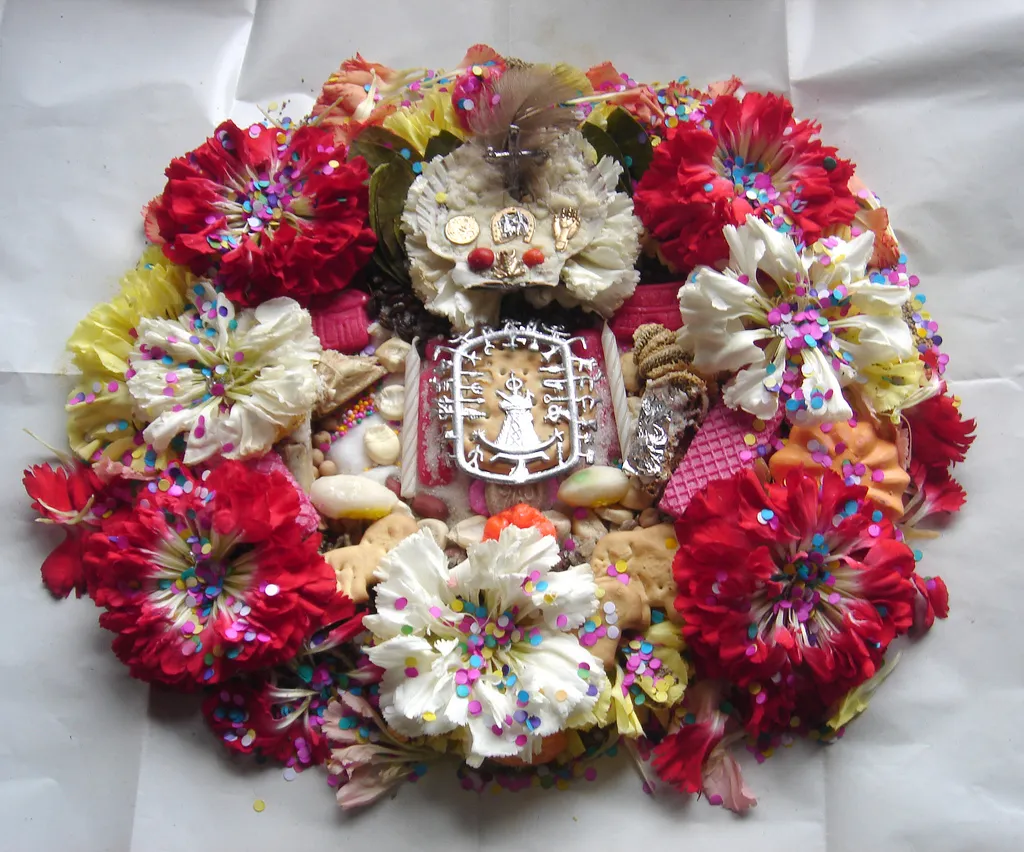
A despacho prepared in Chinchero, in the Sacred Valley, just before it was folded closed. Photo: Cielle Cindy Backstrom, CC BY-SA 2.0
Quick facts
| Fact | Detail | Source |
|---|---|---|
| What a despacho is | Offerings to the Pachamama, wrapped, then burned or buried | Andina, 2023 and 2026 |
| Who leads it | A paqo or an altomisayoq, Andean ritual specialists | Andina, May 2017 |
| Who leads ours | Zacarías Quispe Flores, Andean master and yatiri from Puno | Agency questionnaire, October 2026 |
| Our private despacho | Llachón beach, 1 to 1.5 hours, about US$170 per person, minimum 2 | Agency questionnaire, October 2026 |
| The basic gesture | The k'intu: three coca leaves held together and offered | Andina, May 2017 |
| Main date | August 1, Day of the Pachamama, with offerings all month | Andina, August 2026 |
| Amantaní ritual | Pachatata Pachamama, National Cultural Heritage since 2020, third Thursday of January | Resolution 000099-2020-VMPCIC/MC |
| Amantaní altitude | 3,817 m (12,523 ft). Ceremonial hills at 4,115 m and 4,130 m (13,501 and 13,550 ft) | MINCETUR tourism inventory |
| Psychoactive plants | None. Ayahuasca is a separate Amazonian tradition | Andina, July 2008 |
The short version
- "Peru shaman" is what travelers search for. In the Andes you meet a paqo, a ritual specialist, not a healer handing out drugs.
- A despacho is a gift. You give coca leaves and a wish. You drink and take nothing.
- August is the month. Cusco holds a big public offering at Sacsayhuamán on August 1.
- Llachón and Amantaní, on Lake Titicaca, are the Quechua-speaking communities where our mystical programs hold their ceremonies.
- Zacarías Quispe Flores, a yatiri from Puno, leads our ceremonies. He prays in Quechua or Aymara, and one of our guides translates as he goes.
- Ayahuasca is an Amazonian tradition with real health risks. We do not offer it, recommend retreats or arrange it on request.
What is the Andean worldview behind these ceremonies?
Reciprocity: the earth feeds people, so people feed the earth back. Andina, Peru's state news agency, explains that pacha means earth, world and universe in Quechua and Aymara, and that Andean towns thank the Mother Earth for food, crops and water.
Pachamama is the living earth, generous but also hungry and thirsty. The municipality of Maras, in the Sacred Valley, describes August 1 as the time "for the earth to eat, drink and smoke".
Apus are the mountains that guard a place. When paqos made an offering at the Qorikancha in Cusco in 2017, Andina reported that they raised the gifts toward Salkantay, Ausangate, Pachatusan and Huanacauri, the apus around the city.
Ayni is help given and returned. The MINCETUR tourism inventory notes that the weavers of Huilloc, near Ollantaytambo, still live by ayni and minka, communal work, as "fundamental values of the Andean worldview". Peru's Ministry of Culture calls the Amantaní ritual "the annual renewal of the relationship of reciprocity" between the hills and the people. A despacho is ayni with the earth, which is why it feels more like paying a debt than watching a show.
Who is a paqo, and is "shaman" the right word?
A paqo is an Andean priest who makes offerings for a family or a community. "Shaman" is the traveler's word. Peruvian sources say paqo, altomisayoq or sacerdote andino, Andean priest.
The 2017 Qorikancha offering was led by altomisayoq and paqos from the Q'ero Nation and the district of Ocongate, Andina reported. In July 2026 the Ministry of Culture launched a cultural and spiritual route in Hatun Q'ero, in Paucartambo, where visitors can join a Haywarikuy, the Cusco name for the offering, led by the community's own members.
On Amantaní the officiants are islanders. The Ministry's 2020 resolution explains that the community collects money and food a week ahead to buy the offering and to pay the paq'os, who act as intermediaries between the sacred beings and the people. Paying a paqo is part of the tradition, not a sign of a fake.
Who leads the ceremonies on our trips?
Zacarías Quispe Flores, an Andean master and yatiri from the Puno side of Lake Titicaca. Yatiri is the Aymara title for a ritual wise man, the role a paqo plays in Quechua villages. He has given us permission to publish his name and where he comes from, so you know before you travel who will stand in front of the offering.
He says his invocations in Quechua or Aymara, the languages the prayers belong to. One of our guides stays at your side and translates each part in real time, so you know when to hold up your k'intu, when to blow on it and when simply to stay still.
What he asks of you is short: reverence, inner quiet and a real wish to feel connected with the Pachamama. People of all ages can take part, and photos and video are allowed if you take them quietly and without stepping onto the cloth. If your own faith does not allow you to join another tradition's prayers, tell us before booking. This is a real prayer, not a show, and you can always watch from a step back.
What is our private despacho on Llachón beach like?
An hour to an hour and a half on the sand of Llachón, outdoors, with Lake Titicaca a few steps away. Zacarías unrolls his ceremonial cloth, the misha, lays the offerings on it one by one and helps you build your k'intu of three coca leaves. You hold it close to your mouth and blow your wishes into it before handing it back.
Every item has a job. The coca connects you with the earth, the seeds and grains thank it for food, the sweets make it sweet again and the coloured wool marks paths of protection. At the end he folds the bundle closed and burns it facing the lake, which he describes as a way of transforming the energy of what you offered. You will smell burning sugar and wool, and the smoke drifts out over the water.
| Our private despacho | Detail |
|---|---|
| Place | Llachón beach, Capachica peninsula, outdoors only |
| Length | 1 to 1.5 hours |
| Price | About US$170 per person, minimum 2 people |
| Included | Private round-trip transfers, every ritual item and the master's fee |
| Who can join | All ages |
| Photos | Allowed, taken with respect |
It is arranged on request, so write to us with your dates in Puno. Figures come from the agency's own answers of October 2026.
What happens in a despacho, step by step?
Every paqo has his own way. This is the sequence Peru's Ministry of Culture recorded for the Pachatata Pachamama ritual on Amantaní, with details from Andina's reports on Cusco.
- Permission. Everyone stands, takes off their hats and goes quiet while the officiant asks the Andean and Christian deities for permission to begin.
- The cloth. He spreads woven cloths, the lliclla, and lays many k'intus of three coca leaves on them.
- The gifts. Helpers add flowers and sugar sweets. The Amantaní table also holds llama fat and wool, incense and wine. In Cusco, Andina lists coca, llama or alpaca fat, huayruro seeds, maize, wine, sugar and sweets.
- Prayers in Quechua, while coca is shared among those present.
- Wine and smoke. The bundle is blessed with incense and sprinkled with red wine, then passed to each authority, who kisses it.
- Fire or earth. It burns until only ash is left. In the August community version Andina describes, it goes into a hole about 50 cm (20 in) deep, wrapped in a lliclla, burned and covered with soil.
- The signs. White ash means a good year, the Ministry notes. Dark ash or black stains mean a bad one.
- Sharing food. On Amantaní everyone eats together: potatoes, dried oca, broad beans, chuño and small quinoa breads.
As a visitor you mostly stand quietly, give your k'intu and accept what is shared.
Why three coca leaves? The k'intu
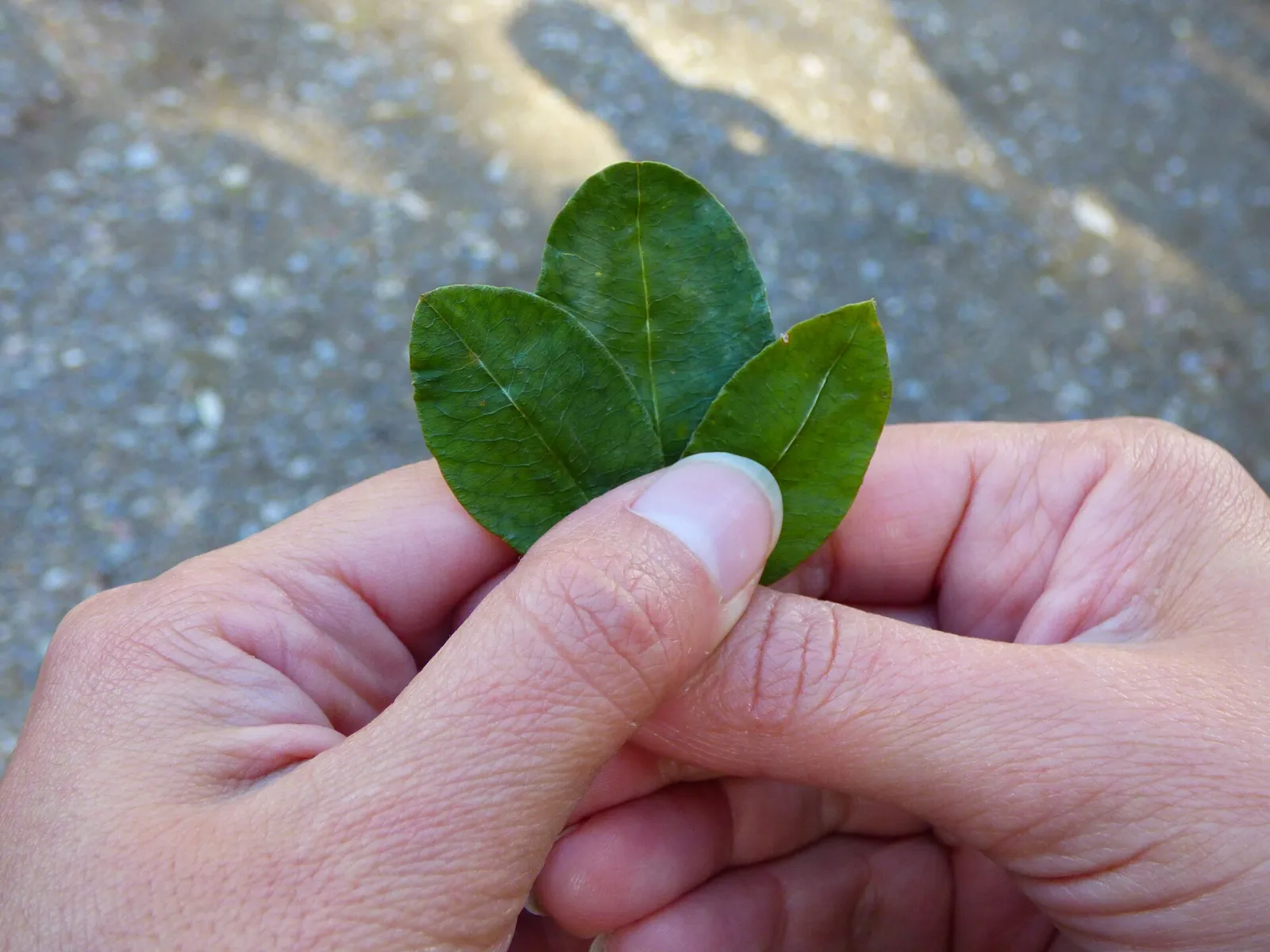
A k'intu of three coca leaves, the smallest offering you can make. Photo: Raffanat, CC BY-SA 4.0
The k'intu is the unit of an Andean offering: three leaves of the sacred plant held together, as Andina puts it. At the Qorikancha, the mayor of Cusco and visitors in the crowd held up their k'intus, spoke their wishes and handed them to the altomisayoq, who wrapped everything in a small cloth for the fire.
When a paqo hands you leaves, pick three whole, green ones, put them together like a small fan and think of what you want to ask or give thanks for. Then hand them back with both hands. At the end, Andina adds, the paqos read the coca leaves, so you may see the officiant study how a handful falls.
Why is August the month of the Pachamama?
Because the earth wakes up for planting. Andina reports a belief from Puno that the Pachamama rests from June 21 and wakes on August 1, hungry and thirsty. The Maras municipality adds that August is when furrows are opened for the new seeds.
| Where | What happens in August | Source |
|---|---|---|
| Sacsayhuamán, Cusco | The "giant" Haywarikuy on August 1, with about 2,000 people giving offerings in 2023 | Andina, 2023 |
| Juliaca, Puno | Families search the Unocolla river for flat stones that stand for money | Andina, 2023 |
| Caylloma, Arequipa | Herders hold pagos to the earth for their animals all month | Andina, 2026 |
| Amantaní, Puno | From August 1 musicians tour the island collecting seeds for three days | MINCETUR inventory |
For our ceremonies, Zacarías prefers the whole of August, above all August 1, and the June solstice, close to the date the Puno belief gives for the start of the Pachamama's rest. He considers Llachón beach and the summit of Pachatata the two places with the strongest energy.
Andina also notes how deeply the ritual has blended with Catholic faith. If you are in Cusco in June, our Inti Raymi guide covers the festival season.
What is the "Aymara Baptism" in our packages?
A purification in the lake at Llachón, a despacho on the hill of Pachatata, a night with a family on Amantaní and a thanksgiving to the water at the Uros the next morning, all led by Zacarías Quispe Flores. It takes the middle days of our 8 to 12 day packages and runs all year. This is how it unfolds, as the agency described it in October 2026.
Morning, Llachón. After breakfast in Puno a boat takes you to Llachón, on the Capachica peninsula, for what our itinerary calls "a purification ceremony and connection with Pachamama and Mamacocha", the lake as mother. With a guide beside you, you wade into the cold water. Zacarías immerses each person one at a time while smoke from the sahumerio, a burner of incense and herbs, drifts across the shore. When you walk out, he hangs a necklace of fresh flowers or roses around your neck.
Afternoon, Pachatata. The boat sails on to Amantaní. You climb Pachatata, where Zacarías makes a despacho, the itinerary's "Andean ceremony of gratitude to the universe guided by an Andean master". Dinner and the night are with a local family. Our itinerary used to give 4,130 m (13,550 ft) as the day's high point. We now use 4,115 m (13,501 ft), the figure MINCETUR gives for Coanos, the Pachatata hill. MINCETUR puts the nearby Pachamama hill at 4,130 m. Either way, walk slowly.
Next day, Uros and Cochamacho. After breakfast you sail to the Uros floating islands for the Cochamacho, a ceremony "full of music, dances and traditional costumes" in gratitude to the waters of the lake. The group chooses a padrino, a godfather, who carries everyone's offering: flowers, fruit, special food and small symbolic gifts. You all dress in local costume, sicuri panpipe players play beside you, and the group boards a boat and lowers the offering into the deep water.
Your Aymara name. Zacarías gives each participant a symbolic name in Aymara, and we hand you a certificate from Viajes Cusco Perú. It is a keepsake of the day. It does not make anyone a shaman.
Weather. The baptism runs all twelve months. From January to March, the rainy season on the lake, we plan each day around the forecast.
About the name. The program says Aymara, the people the Ministry of Culture places mainly in six provinces of Puno, and Zacarías is an Aymara yatiri. Llachón and Amantaní, though, speak Quechua: Andina calls Llachón a "Quechua-speaking community", and the Amantaní ritual is prayed in Quechua. That is why he prays in Quechua or Aymara, and your guide explains both cultures.
What it is not. This is a ceremony arranged for visitors and led by Zacarías, not the islanders' own January ritual. The two hilltop enclosures used for that one stay closed the rest of the year, the Ministry says.
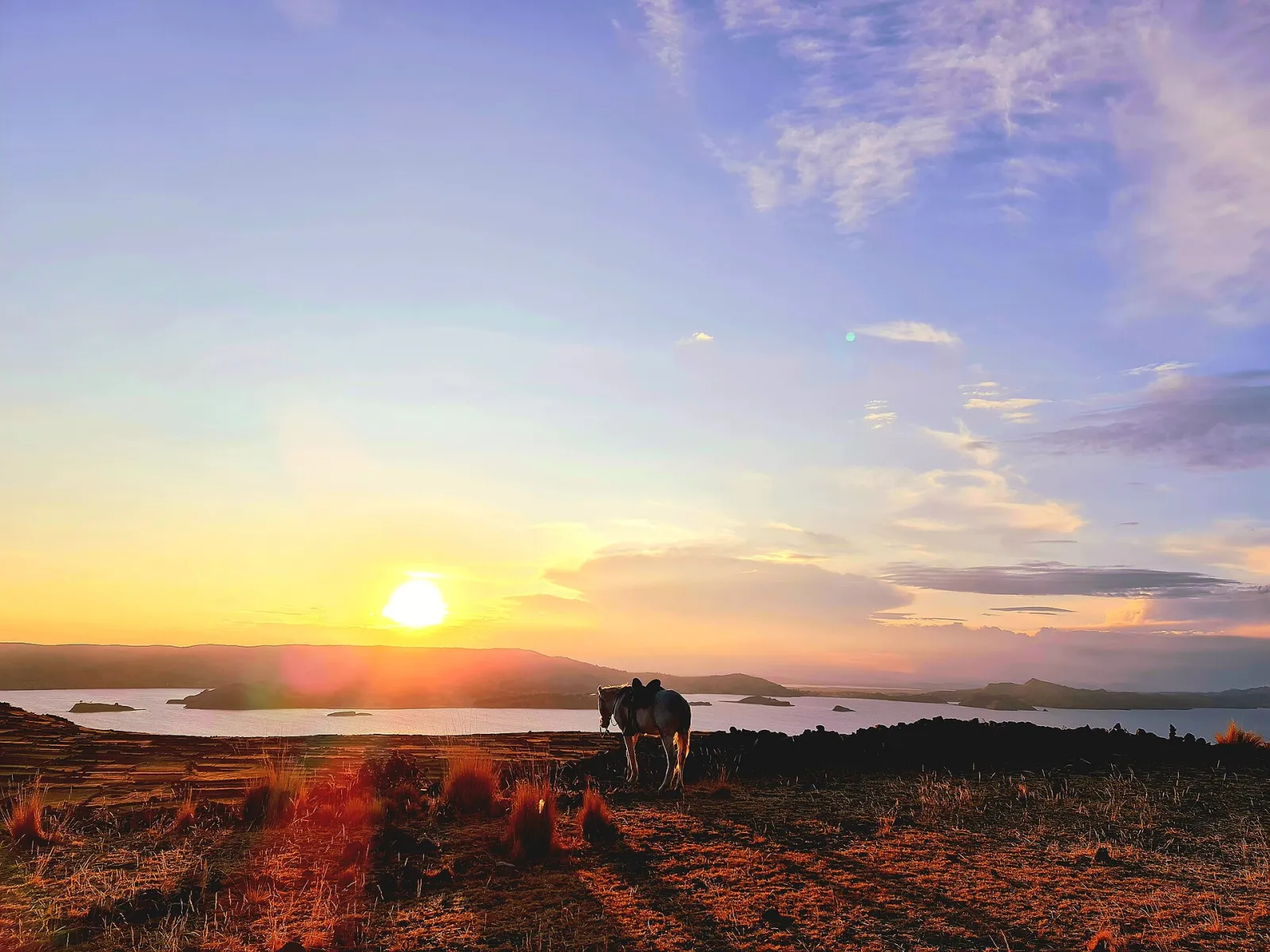
Late afternoon on Pachatata, Amantaní. Bring a warm layer for the walk down in the dark. Photo: Abelchristian111, CC BY 4.0
| Package | Days | From (per person) | Spiritual moments in the itinerary |
|---|---|---|---|
| Aymara Baptism Cusco to Puno | 5 | US$917 | Llachón ceremony, Pachatata, Amantaní homestay, Cochamacho |
| Aymara Baptism Lima, Cusco and Puno | 8 | US$1,097 | The same, plus Lima, Paracas and Huacachina |
| Aymara Baptism in 10 days | 10 | US$1,347 | Adds a Sacred Valley community day opened with a harmonization ceremony |
| Complete Aymara Baptism | 12 | US$1,377 | Adds the community day and the Home of the Gods |
The agency places the full rite, with the immersion, the Aymara name and the certificate, in the 8 to 12 day packages. The 5-day itinerary also lists Llachón, Pachatata, Amantaní and the Cochamacho, so ask us which parts your departure includes.
Titicaca is higher than Cusco, so read our Cusco altitude guide and our Lake Titicaca guide before you book.
How cold is the lake, and do you have to go in?
Very cold. Titicaca lies higher than Cusco, the air is thin and dry, and the water does not warm up much even on a bright morning. The immersion is short, but it is a real shock to the body.
- Bring a towel and a full set of dry, warm clothes to put on as soon as you walk out.
- See your doctor before the trip if you have a heart condition or any other health problem. Cold water and high altitude together are not something to try without medical advice.
- Ask us before you book if you can join the baptism without going into the water. We would rather confirm it for your trip than promise it here.
- Give yourself a few days in Cusco or Puno first, so the altitude is not added to the cold.
How do you take part respectfully?
Follow the paqo, stay quiet while he prays and treat the offering as his work, not a photo prop.
- Ask before photographing. Never film the prayers without a clear yes. On our ceremonies Zacarías allows photos and video, taken quietly.
- Hat off when he asks the mountains for permission.
- Do not touch the table unless you are invited to add something.
- Leave stones where they are. Stacked stones and hilltop altars are offerings.
- Stay outside closed enclosures, like the two ceremonial centers on Amantaní.
- Dress for the cold. Hilltop ceremonies end at dusk. Our Peru packing list covers layers.
- Thank discreetly. If you want to give more than your tour pays, do it afterwards. Our guide to money and tipping in Peru explains what is normal.
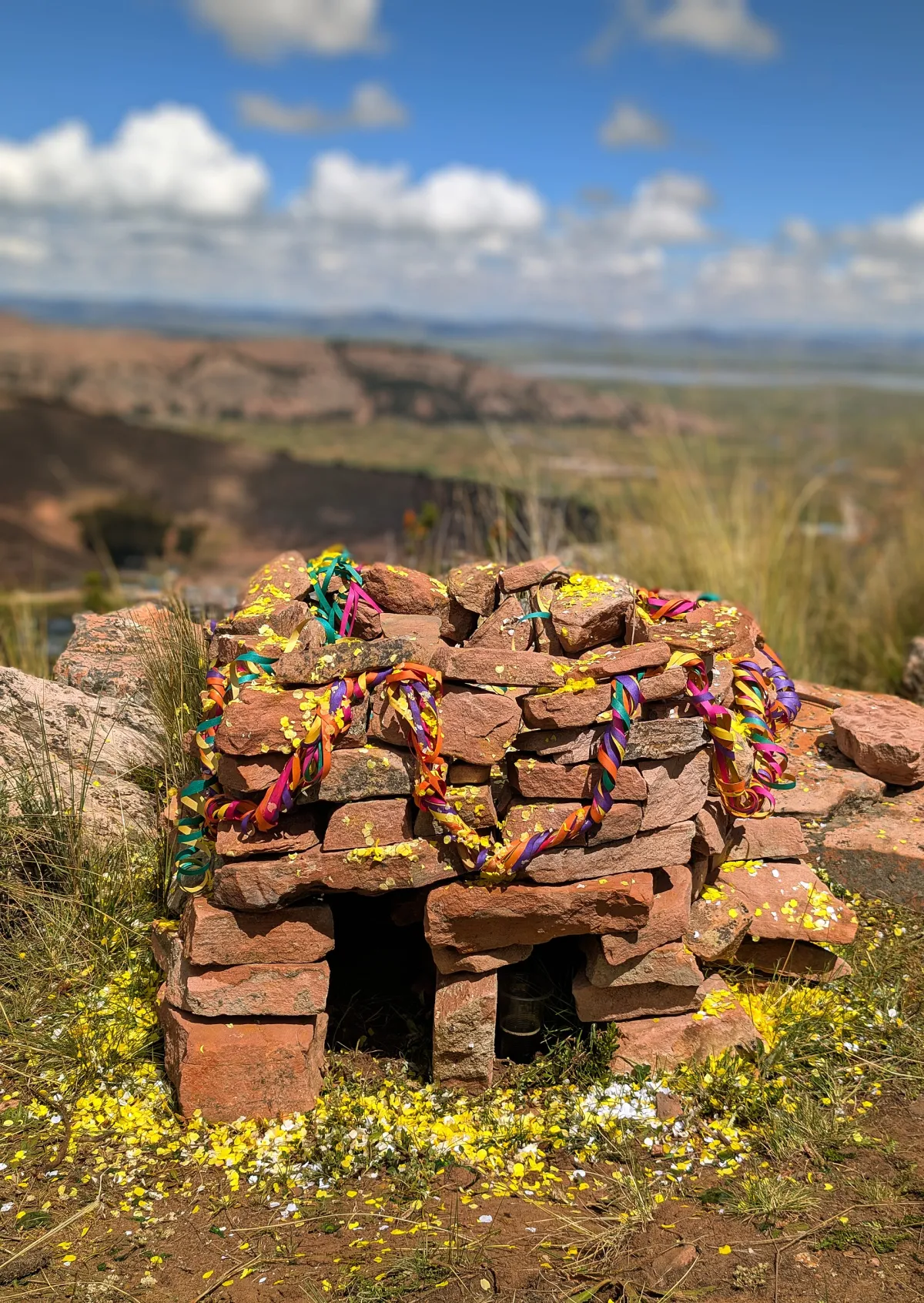
A stone altar on the summit of Cerro Pokopaka, decorated after a pago a la tierra. Look, but do not touch. Photo: H.dav.are, CC BY 4.0
How can you tell a real ceremony from a staged one?
Look at who leads it, what is promised and what is added. A real offering is run by someone from a named community who explains each element. Warning signs:
- It promises a cure. A despacho asks for a good year. Nobody honest guarantees healing.
- It comes with a psychoactive add-on. Ayahuasca or San Pedro "after the despacho" mixes traditions that have nothing to do with each other.
- Nobody can name the community the officiant comes from.
- It sells you a title, such as a "shaman" certificate after one afternoon.
- The price grows halfway through the ceremony.
| Despacho, pago a la tierra | Ayahuasca ceremony | |
|---|---|---|
| Tradition | Andean highlands, Quechua and Aymara peoples | Native communities of the Amazon |
| What you consume | Nothing. You give coca leaves | A psychoactive brew containing DMT |
| Led by | A paqo or altomisayoq | Amazonian traditional practitioners |
| Main health concerns | Altitude and cold | Vomiting, racing heart, drug interactions, reported assaults and deaths |
| Offered by us | Yes, in our mystical programs | No |
Is ayahuasca part of Andean spirituality?
No. Ayahuasca comes from the Amazon. In 2008 Peru's National Institute of Culture declared the traditional knowledge and uses of ayahuasca by Amazonian native communities national cultural heritage, to protect that sacred use from "decontextualized, consumerist" Western uses with commercial aims.
The health side is serious. The US National Institute on Drug Abuse explains that DMT from Amazonian plants is used to make the tea called ayahuasca, lists nausea, vomiting and a racing heart among short-term effects of psychedelics, and warns of interactions with medicines that raise serotonin. The US State Department's Peru advisory warns that people in ayahuasca and kambo ceremonies have reported sexual assault, rape, theft, serious injuries and even death.
Our policy is simple. We do not offer or recommend ayahuasca or San Pedro, also called huachuma, for medical safety and liability reasons. When a traveler asks, we say no kindly and explain that our ceremonies are about connection with nature and Andean meditation. We do not recommend any retreat either. For general safety, see whether Peru is safe for tourists.
Frequently asked questions
What is a despacho ceremony? An Andean offering to the Pachamama and the mountains. A paqo arranges coca, seeds, sweets and fat on a cloth, prays and burns or buries the bundle.
Is a despacho the same as a pago a la tierra? Almost. Pago a la tierra is the ceremony, and the despacho is the bundle offered in it. In Cusco the offering is also called Haywarikuy.
What is a Peruvian shaman called in the Andes? A paqo, or an altomisayoq for the highest rank. Peruvian sources usually say Andean priest.
When is the Day of the Pachamama? August 1, with offerings through the whole month. Cusco holds a large public one at Sacsayhuamán that day.
Do you take any drugs in a despacho? No. You hold and give coca leaves, and nothing psychoactive is consumed.
Can tourists join a pago a la tierra? Yes, when a paqo or a community invites visitors, as on the Hatun Q'ero route or in our mystical programs. Community rituals like Amantaní's in January are not tourist events.
What is the Aymara Baptism? A ceremony in our 8 to 12 day packages led by yatiri Zacarías Quispe Flores: an immersion in the lake at Llachón, a despacho on Pachatata, a night on Amantaní and the Cochamacho at the Uros.
Who leads your ceremonies? Zacarías Quispe Flores, an Andean master and yatiri from Puno. He prays in Quechua or Aymara and one of our guides translates in real time.
Do I have to go into the cold lake? Ask us before booking if you can join without the immersion. Anyone with a heart or other health condition should see a doctor first.
Are Llachón and Amantaní Aymara communities? No, both speak Quechua. Andina calls Llachón Quechua-speaking, and the Amantaní ritual is prayed in Quechua.
How high is the Pachatata ceremony? We use 4,115 m (13,501 ft), the MINCETUR figure for Pachatata. Some sources give 4,130 m (13,550 ft), the height of the nearby Pachamama hill. Acclimatize in Cusco first.
Do you offer ayahuasca? No, nor San Pedro. It is a separate Amazonian tradition with risks reported by US authorities, and we kindly decline every request.
Join an Andean ceremony with us
At Viajes Cusco Perú, the Cusco tour operator behind this blog, our spiritual programs are cultural: coca, music and gratitude, led by yatiri Zacarías Quispe Flores, with one of our guides translating each step. We do not run plant-medicine ceremonies or promise healing, and the certificate you take home is a keepsake of your Aymara name, not a title.
Start with the Aymara Baptism from Cusco to Puno in 5 days, from US$917 per person, with Machu Picchu, Llachón, Pachatata and a night on Amantaní. The complete 12-day version, from US$1,377, adds a Sacred Valley community day and the Home of the Gods tour, also sold alone from US$117 as an introduction to the Andean worldview. In Puno, the Aymara Route day tour, from US$127, visits the Inka Uyo temple and Amaru Muru. With only a day or two in Puno, ask about a private despacho on Llachón beach, from about US$170 per person. See all our mystical activities, and to stay with families rather than visit them, read our guide to community tourism in Peru.
Updated October 2026. Facts checked on October 20, 2026, against Peru's Ministry of Culture (Resolution 000099-2020-VMPCIC/MC, the July 2026 Hatun Q'ero route note and the Aimara people record), MINCETUR inventory records for Isla Amantaní and Huilloc, Andina (2008, 2017, 2022, 2023, 2026), the Maras district municipality, the US National Institute on Drug Abuse and the US State Department's Peru advisory as quoted by OSAC. Package details come from our own itineraries and from the agency's answers to our October 2026 questionnaire.