Things to Do in Peru: 10 Experiences and How Many Days
Machu Picchu, Sacred Valley, Cusco, Rainbow Mountain, Titicaca, Lima, Paracas, Nazca, Arequipa and the Amazon: days and how to plan.
The ten experiences that justify a trip to Peru are Machu Picchu, the Sacred Valley, Cusco, Rainbow Mountain, Lake Titicaca, Lima and its food, Paracas and Huacachina, the Nazca Lines, Arequipa with the Colca Canyon, and the Amazon. Together they need about three weeks; a first trip of 7 to 10 days fits four or five of them. The geography decides the order. Lima sits on the coast, Cusco at 3,399 meters, Lake Titicaca at more than 3,800, and the Rainbow Mountain trail climbs past 5,000. Flights connect the regions in 1 hour 15 to 1 hour 40 from Lima, and the road from Lima to Ica takes about 4 hours. Below is what each experience is like, how many days it really takes, and how to put them together without fighting the altitude.
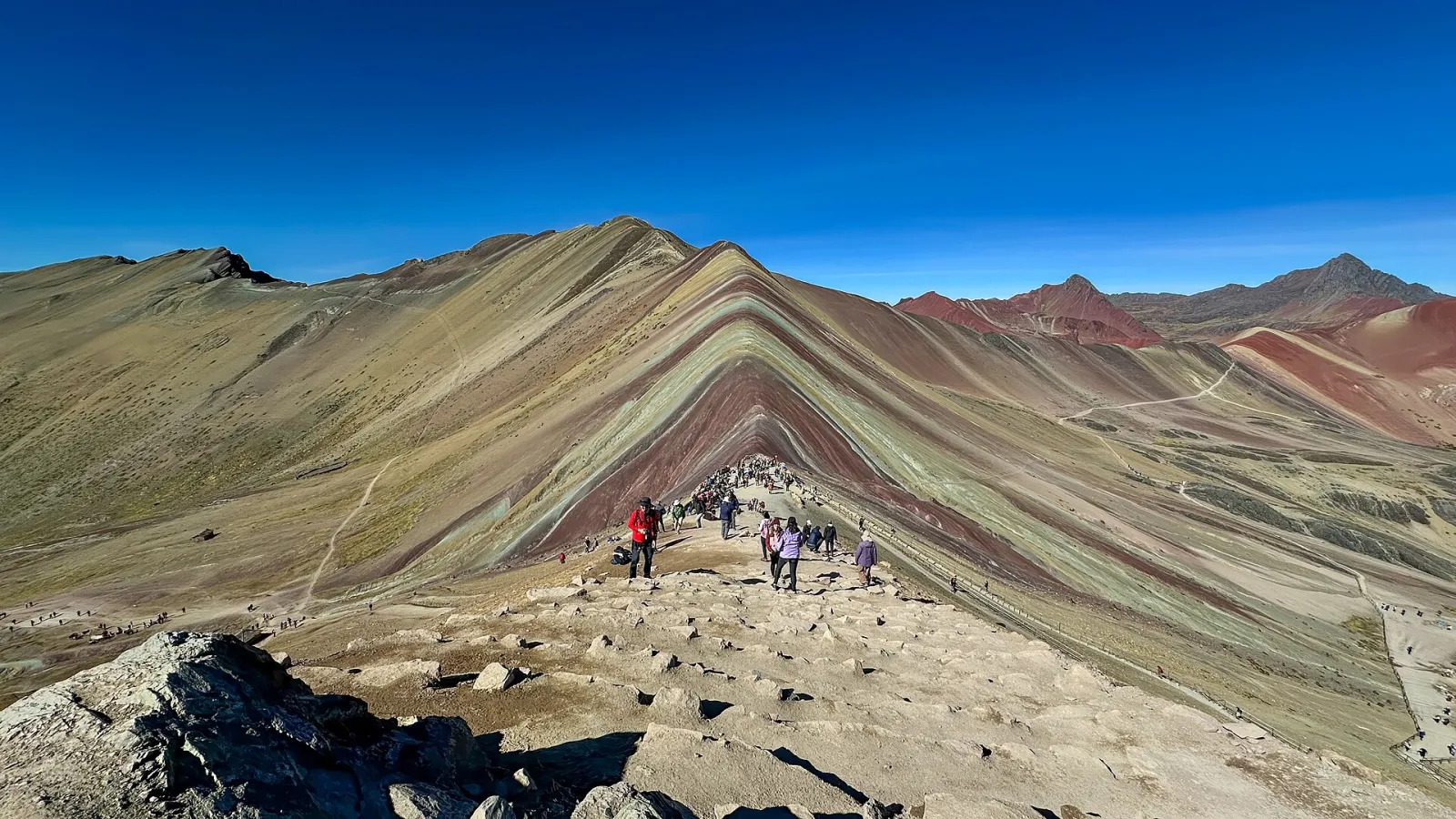
Vinicunca, the Rainbow Mountain, southeast of Cusco. Photo: Steve FUNG, CC BY-SA 4.0
The short version
- Can't miss: Machu Picchu and Cusco. Almost every first trip is built around them.
- Best second region: the coast (Lima, Paracas, Huacachina, Nazca) if you want contrast, Lake Titicaca if you want more Andes.
- Altitude order: start low, on the coast or in the Sacred Valley, and leave Rainbow Mountain for the end of your time in Cusco.
- Minimum days: 4 to 5 for Cusco and Machu Picchu, 7 to add the coast, 10 to add a high mountain, 14 to add Arequipa and Titicaca.
- Travel times: Lima to Cusco is about 1 hour 15 minutes by air, Lima to Arequipa about 1 hour 15, Lima to Juliaca (for Puno) about 1 hour 40, and Lima to Puerto Maldonado about 1 hour 40.
- What to skip if short on time: the Amazon and Arequipa, which each need their own flights and days.
How many days each experience needs
| Experience | Days it needs | Base and altitude | Our tour |
|---|---|---|---|
| Machu Picchu | 1 to 2 | Aguas Calientes, 2,040 m; citadel 2,430 m | 2 days by train |
| Sacred Valley | 1 | Between 2,040 and 3,762 m | Full day |
| Cusco | 2 | 3,399 m | City tour |
| Rainbow Mountain | 1 | Trail above 4,600 m | Vinicunca day trip |
| Lake Titicaca | 2 to 3 | Puno, about 3,827 m | Peru and Bolivia tours |
| Lima and food | 1 to 2 | Sea level | Lima city tour |
| Paracas and Huacachina | 1 | Coast | Full day from Lima |
| Nazca Lines | 1, usually with Paracas | Nazca, about 520 to 590 m | 2 days with Nazca |
| Arequipa and Colca | 3 | Arequipa 2,335 m; Chivay 3,633 m | Complete Peru |
| Amazon | 3 to 4 | Puerto Maldonado, lowland jungle | Not in our catalog |
1. Machu Picchu
You come up from Aguas Calientes on the bus, show your passport at the gate, climb a few stone steps and the whole city opens below you, with Huayna Picchu standing behind it. It is crowded and timed, and still the moment most people remember.
The practical facts: the citadel sits at 2,430 meters, tickets are sold for a circuit, a route and an entry time, and up to 5,600 people a day enter in high season. A foreign adult pays S/163 for a standard route. Doing it as a day trip from Cusco is possible but long; sleeping one night in Aguas Calientes lets you take an early slot without stress. Our Machu Picchu tickets guide explains the routes, and is Machu Picchu worth it looks honestly at cost and crowds.
Days: 1 from Cusco, 2 with a night in Aguas Calientes.
2. The Sacred Valley
The valley of the Urubamba river, between Cusco and Machu Picchu, is where the Inca world feels closest: the market and ruins of Pisac, the fortress and grid of streets of Ollantaytambo, the circular terraces of Moray and the white salt pans of Maras. Our itineraries move between 2,040 and 3,762 meters here, so it is also the gentlest place to spend your first days at altitude.
The smart move is to cross the valley on the way to Machu Picchu instead of going back and forth: tour it during the day, then take the train from Ollantaytambo in the afternoon. Our Sacred Valley full day covers the main sites, and the Sacred Valley and Machu Picchu in two days chains both. The Sacred Valley guide goes site by site.
Days: 1, ideally the day before Machu Picchu.
3. Cusco
Peru's tourism board puts Cusco at over 3,399 meters, and you feel it on the first staircase. The city rewards a slow pace anyway: Inca walls under colonial churches, the Qorikancha sun temple, the Plaza de Armas with its cathedral, and above the city the huge stones of Sacsayhuamán. On the first afternoon, do the half-day city tour and little else.
Our Cusco city tour is the classic half day, and the walking tour is the low-effort option for day one. For the rest, see the best things to do in Cusco and our Cusco altitude guide.
Days: 2, spread around the rest of the trip.
4. Rainbow Mountain
Andina, the Peruvian state news agency, places Vinicunca a little more than 100 km southeast of Cusco, with a climb of 90 to 120 minutes. Andina gives 5,200 meters for the summit. We use 5,036 m (16,522 ft), because sources vary and that is the figure we adopt across this site. On the day you leave Cusco before dawn, walk up a valley grazed by alpacas, and reach a ridge where the slopes are striped red, ochre, green and purple, with the snow of Ausangate behind. It is hard because of the altitude, not the distance.
There are calmer alternatives. Andina puts Palcoyo at 4,971 meters with a 45 to 60 minute walk, and Pallay Punchu at about 4,650 meters. Our guide to Vinicunca, Palcoyo and Pallay Punchu compares them, and we run day trips to Vinicunca and Palcoyo.
Days: 1, never in your first two days at altitude.
5. Lake Titicaca
From Puno, boats head out to the Uros, the islands the Uros people build from totora reeds, and further on to Taquile, an island known for its weaving. The light is hard and blue, the air is thin, and the lake looks like a sea. On our itineraries the lake day runs between 3,812 and 3,950 meters, so arrive already acclimatized from Cusco.
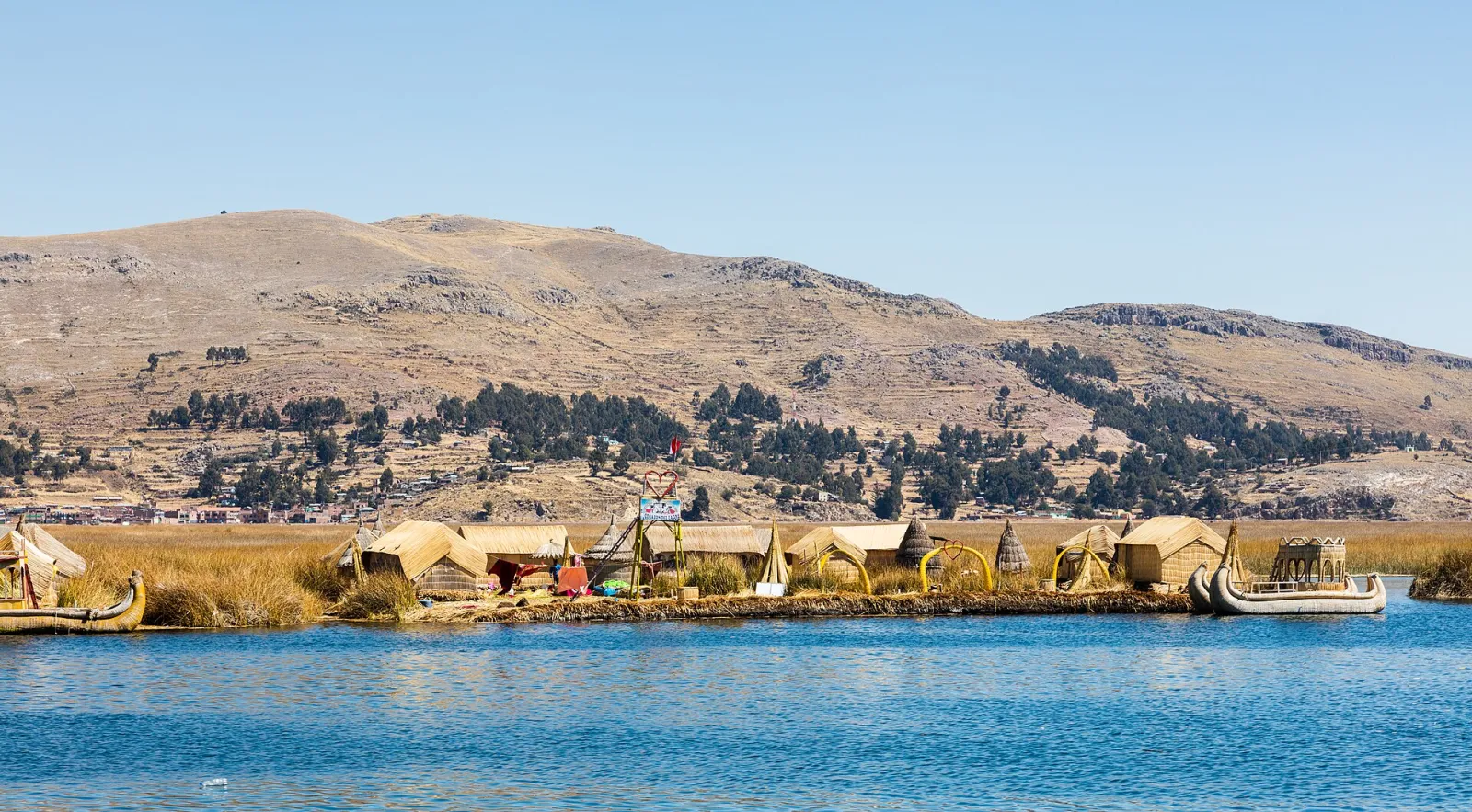
One of the Uros floating islands, built from totora reeds. Photo: Diego Delso, CC BY-SA 4.0
Getting there: Peru's tourism board puts the flight from Lima to Juliaca at about 1 hour 40 minutes, then about 40 minutes by road to Puno. From Cusco, our itineraries take the Route of the Sun tourist bus. The Aymara Route adds the villages on the south shore, and our Peru and Bolivia tours continue across the border. For a ready-made plan, read our Cusco, Sacred Valley and Lake Titicaca itinerary.
Days: 2 to 3, including the journey from Cusco.
6. Lima and Peruvian food
Peru's tourism board calls Lima the culinary capital not only of Peru but of South America, and the city is built for eating: ceviche at lunch, a cooking class where you learn causa limeña, a long dinner in Miraflores or Barranco. Between meals there is the colonial historic center, about 20 minutes from Miraflores, the cliffs over the Pacific, and the pre-Inca sanctuary of Pachacamac south of the city.
Our Lima city tour covers the center and the coastal districts, and the Pachacamac half day adds the ruins. All options are on the Lima day trips page.
Days: 1 to 2, usually at the start of the trip, which also keeps you at sea level for longer.
7. Paracas and Huacachina
Peru's tourism board puts Ica about 4 hours from Lima by road and the boat to the Ballestas Islands at about 1 hour from the coast. The islands are the wildlife day: sea lions, Humboldt penguins and thousands of seabirds on the rocks. Then the landscape turns to desert, and Huacachina appears: a green lagoon ringed by palms in the middle of huge dunes, where the afternoon is for dune buggies and sandboarding.
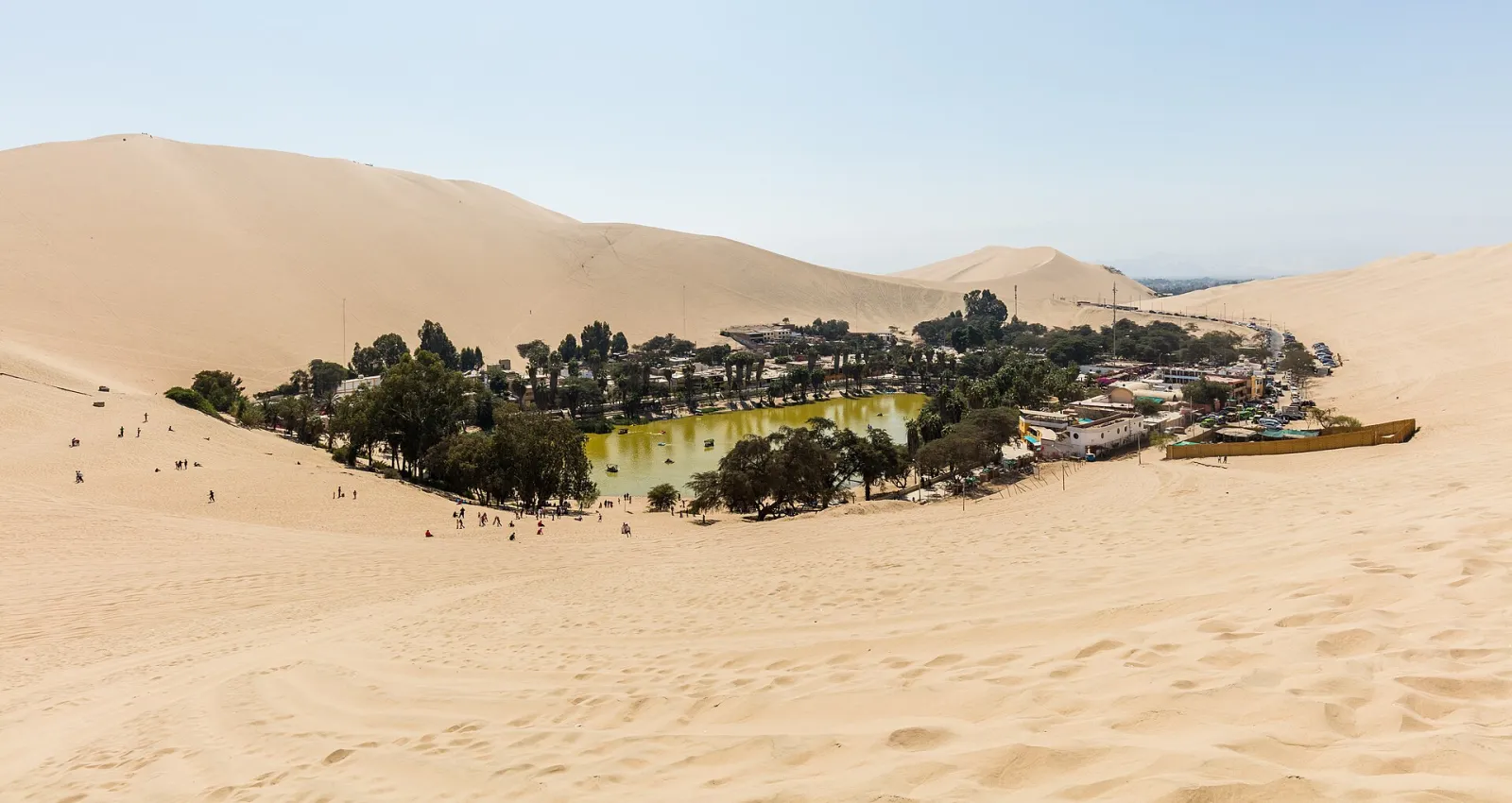
The Huacachina oasis seen from the dunes. Photo: Diego Delso, CC BY-SA 4.0
It is doable in a day from Lima, but be honest with yourself about the length: our Paracas, Ica and Huacachina full day runs 15 to 16 hours door to door, about nine of them on the road. Our Huacachina guide has the details.
Days: 1 as a day trip, better 2 with a night in Ica or Nazca.
8. The Nazca Lines
The lines only make sense from the air. You fly in a light aircraft and the figures and long straight lines appear on the desert floor below. On our itineraries the overflight lasts about thirty minutes. It sits naturally after Paracas and Huacachina: night in Nazca, flight in the morning, back to Lima.
Our Paracas, Huacachina and Nazca in two days does exactly that, and the Paracas, Pisco, Huacachina and Nazca version adds a pisco stop.
Days: 1, attached to Paracas.
9. Arequipa and the Colca Canyon
Peru's tourism board dates Arequipa's founding to 1540 and counts more than 500 colonial mansions in its historic center, built in pale volcanic stone under volcanoes. From there the road climbs through the Salinas y Aguada Blanca reserve, up to about 4,000 meters on our itinerary, and drops to Chivay at 3,633 meters, the base for the Colca Canyon. The next morning, at the Cruz del Cóndor viewpoint, you wait at the edge of the canyon for the condors to ride the thermals.
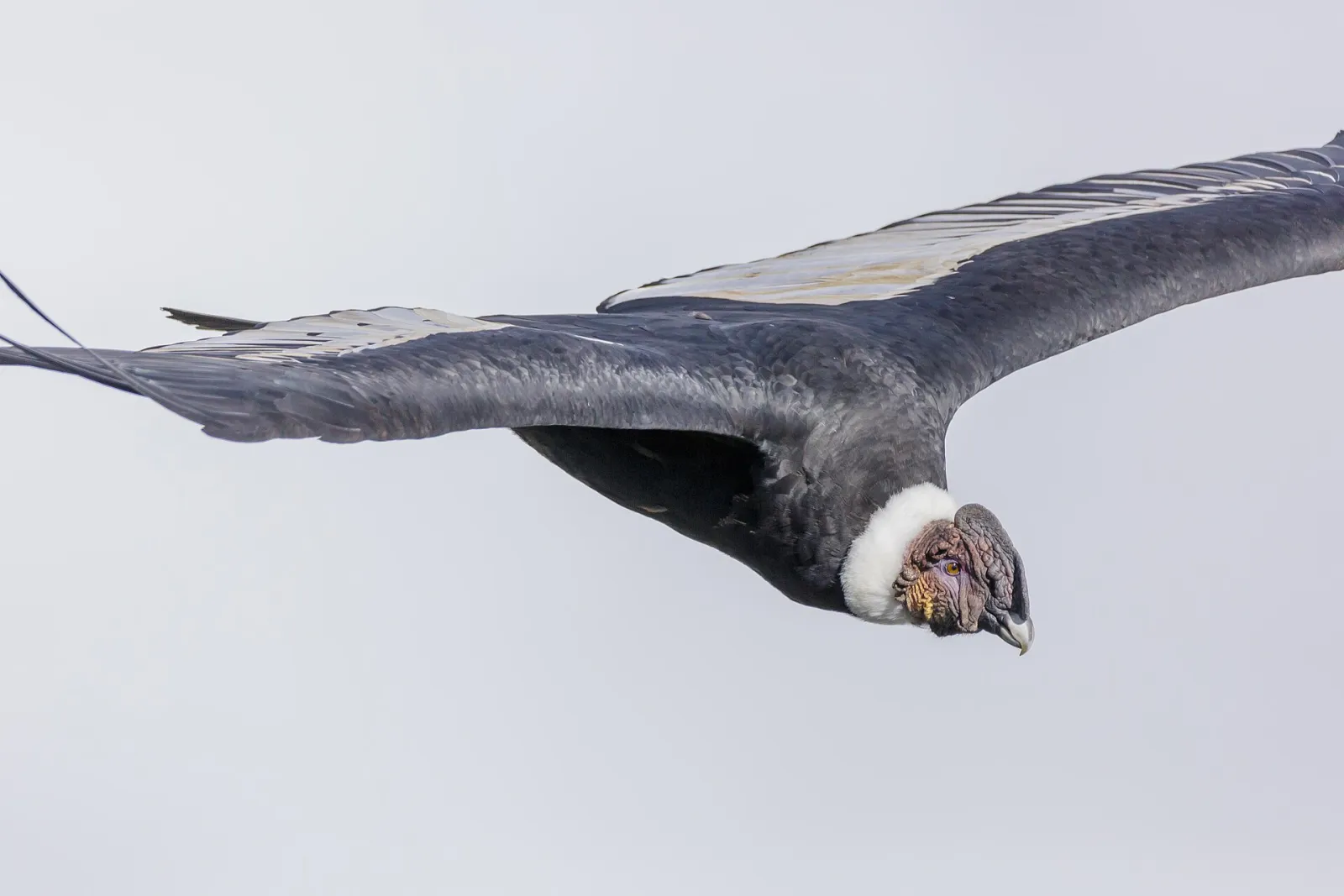
An Andean condor over the Colca Canyon. Photo: Thomas Fuhrmann, CC BY-SA 4.0
The flight from Lima to Arequipa takes about 1 hour 15 minutes. The best way to fit it is on the way to Titicaca: our complete Peru tour goes Nazca, Arequipa, Colca, Puno and then Cusco, so the altitude rises step by step.
Days: 3, including the Colca.
10. The Amazon
Peru's tourism board puts Puerto Maldonado about 1 hour 40 minutes by air from Lima, and the protected areas around it are among the richest on the continent: it counts nearly 1,000 bird species in Bahuaja Sonene National Park, and Manu National Park has been a World Heritage Site since 1987. We are a Cusco operator and do not sell Amazon tours, so to be clear: add three to four days and a separate flight if the jungle is on your list.
Days: 3 to 4, with flights in and out.
How to fit them into one trip
- 5 days: Cusco, the Sacred Valley, Machu Picchu and one high mountain. Our five-day Cusco and Machu Picchu tour ends with Rainbow Mountain on day four, after three days at altitude.
- 7 days: three on the coast (Lima, Paracas, Huacachina, Nazca), four in Cusco, the valley and Machu Picchu. That is our seven-day Peru tour.
- 10 days: the same plus Rainbow Mountain, the South Valley and Humantay Lake, in our ten-day itinerary.
- 14 days: add Arequipa, the Colca and Lake Titicaca with the complete Peru tour, or swap the coast for Bolivia with the Peru and Bolivia tours.
The rule behind all of them: sea level first, then the valley and Cusco, and the highest day at the end. Before you go, check our Peru packing list and is Peru safe for tourists.
Frequently asked questions
What is the number one thing to do in Peru? Machu Picchu. Most first trips are planned around it, with Cusco and the Sacred Valley on either side.
How many days do you need to see Peru? Five days covers Cusco and Machu Picchu, seven to ten adds the coast and a high mountain, and about two weeks covers the south including Arequipa and Lake Titicaca.
What should I do first in Peru, the coast or Cusco? The coast. Starting at sea level and going up gradually makes the altitude much easier.
Is Rainbow Mountain worth it? Yes, if you are acclimatized. The summit is at 5,036 m (16,522 ft) by our figure (Andina gives 5,200 m), so do it at the end of your time in Cusco, never on day one or two.
Can I see the Nazca Lines and Huacachina in one day from Lima? Paracas and Huacachina, yes, in a 15 to 16 hour day. Adding the Nazca overflight needs a second day.
Is Lake Titicaca worth adding? If you have at least ten days, yes. It needs two to three days including the trip from Cusco.
Build your Peru trip with us
The best Peru trip is the one that puts these experiences in the right order. At Viajes Cusco Perú, the Cusco tour operator behind this blog, we design that for our travelers. Our Peru itineraries combine the coast and the Andes, our Peru and Bolivia tours add Titicaca and beyond, and our Lima day trips cover the coast. If you only have a few days, start with the Sacred Valley and Machu Picchu in two days, and browse all our tours for the rest.
Altitudes, travel times and tour details checked on October 15, 2026, against peru.travel, Andina, machupicchu.gob.pe and our own itineraries. Prices and schedules can change by season.