Sacred Valley Peru Guide: Sites, Ticket and How Many Days
Pisac, Ollantaytambo, Chinchero, Maras and Moray. The S/70 two-day tourist ticket, how many days to stay and how to pair the valley with Machu Picchu.
The Sacred Valley is the stretch of the Urubamba River valley between Pisac and Ollantaytambo, about 30 km from Cusco and several hundred meters lower: Pisac town sits at 2,950 m and Ollantaytambo at 2,851 m, against 3,399 m in Cusco. Its four main Inca sites, Pisac, Ollantaytambo, Chinchero and Moray, are all covered by one ticket, the Cusco Tourist Ticket Circuit III, which costs S/70 for foreign visitors and is valid for two days. One full day is enough for the highlights; two days let you add the salt pans of Maras and sleep in Ollantaytambo before the train to Machu Picchu.
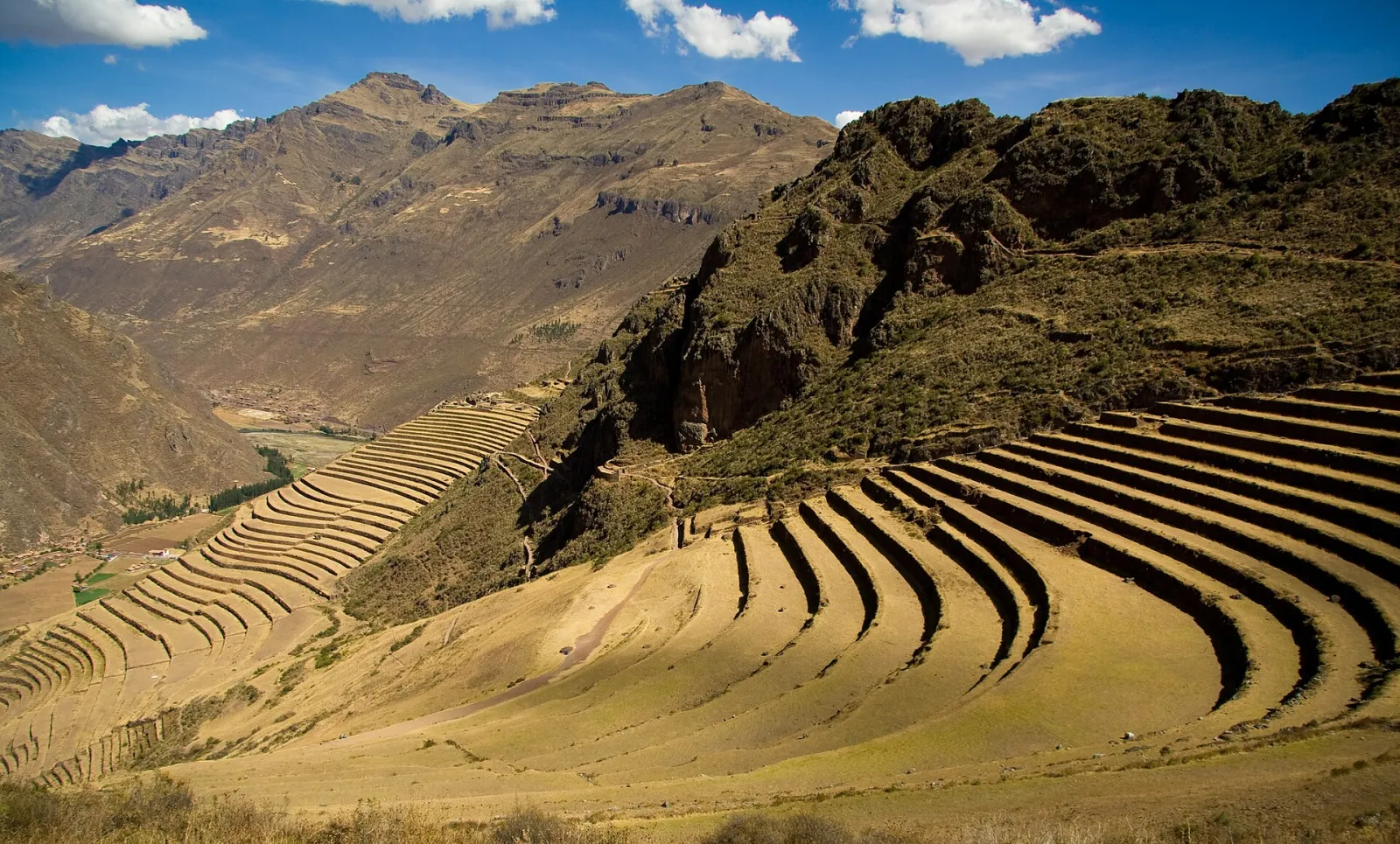
The terraces of Pisac, curving around the mountain above the town. Photo: Ricardo Sánchez, CC BY 2.0
The short version
- What it is: the Urubamba (Vilcanota) river valley between Pisac and Ollantaytambo, lined with Inca terraces, towns and ruins.
- Distance: Pisac is 32 km from Cusco, about 50 minutes by road. Ollantaytambo is 58 km further down the valley from Pisac.
- Altitude: lower than Cusco. Pisac town 2,950 m, Ollantaytambo 2,851 m. Chinchero, on the plateau above, is the exception at 3,785 m.
- Ticket: the Cusco Tourist Ticket Circuit III (Pisac, Ollantaytambo, Chinchero, Moray) costs S/70 for foreigners and is valid two days. Sold in person only.
- Not on the ticket: the Maras salt pans charge their own entrance.
- Days: one full day for the classic route, two days to add Maras, Moray and a night before the train.
- Machu Picchu link: trains leave from Ollantaytambo, about 1 hour 30 minutes to Machu Picchu.
What the Sacred Valley is
Leave Cusco by road and within an hour you drop off the high plain into a deep valley with the river at the bottom. That is the Sacred Valley of the Incas. The river is called Vilcanota upstream and Urubamba as it runs on toward Machu Picchu. Along its banks the Incas built terraces, storehouses, temples and fortified towns.
The IGP, Peru's geophysical institute, describes the climate around Cusco as temperate and moderately rainy, with the rains running from December to May and frosts common in June and July. The valley floor is several hundred meters lower than the city, which is why some travelers spend their first nights here rather than in Cusco. Our Cusco altitude guide explains why starting low helps.
Pisac: terraces and the Intihuatana
Pisac is the first stop on our full-day tour, 32.4 km from Cusco by paved road, around 48 minutes according to the official tourism inventory. There are two parts. Down by the river is the colonial town with its plaza and market. High above, on the mountain called Apu Inti Huatana, is the Inca site, reached by a road of 9.3 km from the plaza.
The archaeological park spreads over about 4 km of ridge, according to the inventory. What you see from the car park is the famous view: the 40 terraces of Acchapata, stacked in an inverted triangle down the slope. Walking along the ridge you pass the round towers the Incas used as lookouts and water works, and five separate sectors with temples, patios and houses. At the top stands the Intihuatana, the solar temple, whose finely cut walls line up with the sunrise at the June solstice.
The site sits at about 3,300 m, while the town is at 2,950 m. It is open daily from 7:00 a.m. to 6:00 p.m.
Urubamba: the middle of the valley
Urubamba is the provincial capital and the town where our full-day tour stops for lunch. None of the tourist-ticket sites is in the town itself, but it works as a hub: from here the road climbs 21 km to Chinchero in about 20 minutes, and runs 22 km to the turnoff for Maras and Moray. That central position makes it a practical base for two or three nights.
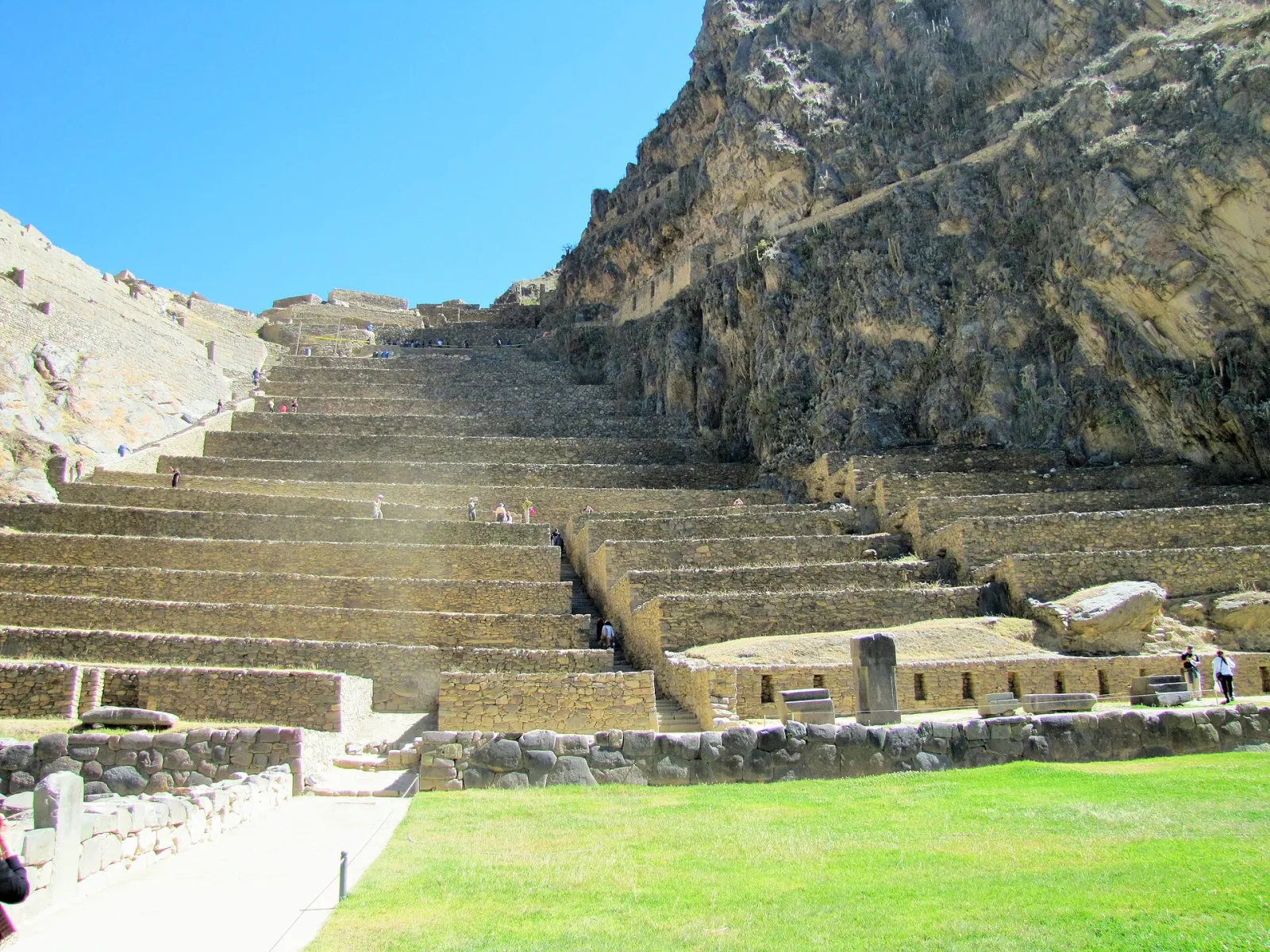
The terraces of Ollantaytambo, climbed by a long stone staircase to the temple sector. Photo: Chuck Moravec, CC BY 2.0
Ollantaytambo: the fortress town
Ollantaytambo stands where the Patakancha stream meets the Urubamba, at 2,851 m. The inventory describes it as a fortified city built by the Inca Pachacútec, later used by Manco Inca as a stronghold during the Spanish conquest. It was a military, religious, administrative and farming center at once, with storehouses for food and places for observing the sky.
You climb a long stone staircase up the terraces to the temple sector, and from the top the town and the valley spread out below you. It is one of the busiest sites in the region: the Ministry of Culture counted 290,655 foreign and 253,182 Peruvian visitors in 2023. Opening hours are 7:00 a.m. to 4:30 p.m., so it is worth arriving early. In June the town stages the Ollantay drama, an Andean play performed at the site.
Ollantaytambo is also where many travelers board the train to Machu Picchu. Inca Rail gives about 1 hour 45 minutes by road from Cusco to the station, and about 1 hour 30 minutes by train from Ollantaytambo to Machu Picchu. We cover the town in depth in our upcoming Ollantaytambo guide.
Chinchero: weavers and the high plateau
Chinchero is the exception in the valley: it sits on the plateau above, at 3,785 m, 30 km from Cusco by road. The inventory dates its Inca construction to Tupac Inca Yupanqui, around 1493, as a place of rest near Cusco, with lakes, farmland and views of the snow peaks Salkantay, Chicón and Verónica.
The archaeological park covers 43 hectares and has two parts: an urban sector around the main square, with the colonial church and the house of Mateo Pumacahua, and a farming sector of terraces spreading down the slope. It is open from 7:00 a.m. to 5:00 p.m. Chinchero also has a textile market, a stop on our full-day tour. If you are short on acclimatization, keep in mind this is the highest stop of the day.
Maras and Moray
These two sit on the plateau between Chinchero and Urubamba, 8 km apart.
Moray (3,385 m) is one of the strangest Inca sites in Peru. The inventory describes three large circular depressions lined with concentric terraces that step down to the bottom; the main one has twelve levels. Research by John Earls measured temperature differences between the levels, and the site is often interpreted as a place for testing crops in different microclimates, though its exact function is still debated. It is open from 8:30 a.m. to 5:00 p.m. and is part of the tourist ticket.
The Maras salt pans (Salineras de Maras) are a hillside of evaporation pools fed by a salt spring, with the water distributed by gravity through small channels. The inventory traces salt production here back to pre-Inca cultures. The pans are linked to the peasant communities of Maras and Pichingoto and charge their own entrance, which is not part of the tourist ticket. From the town of Maras it is 6.6 km by road, about 20 minutes, or 3.7 km on foot, about 45 minutes.
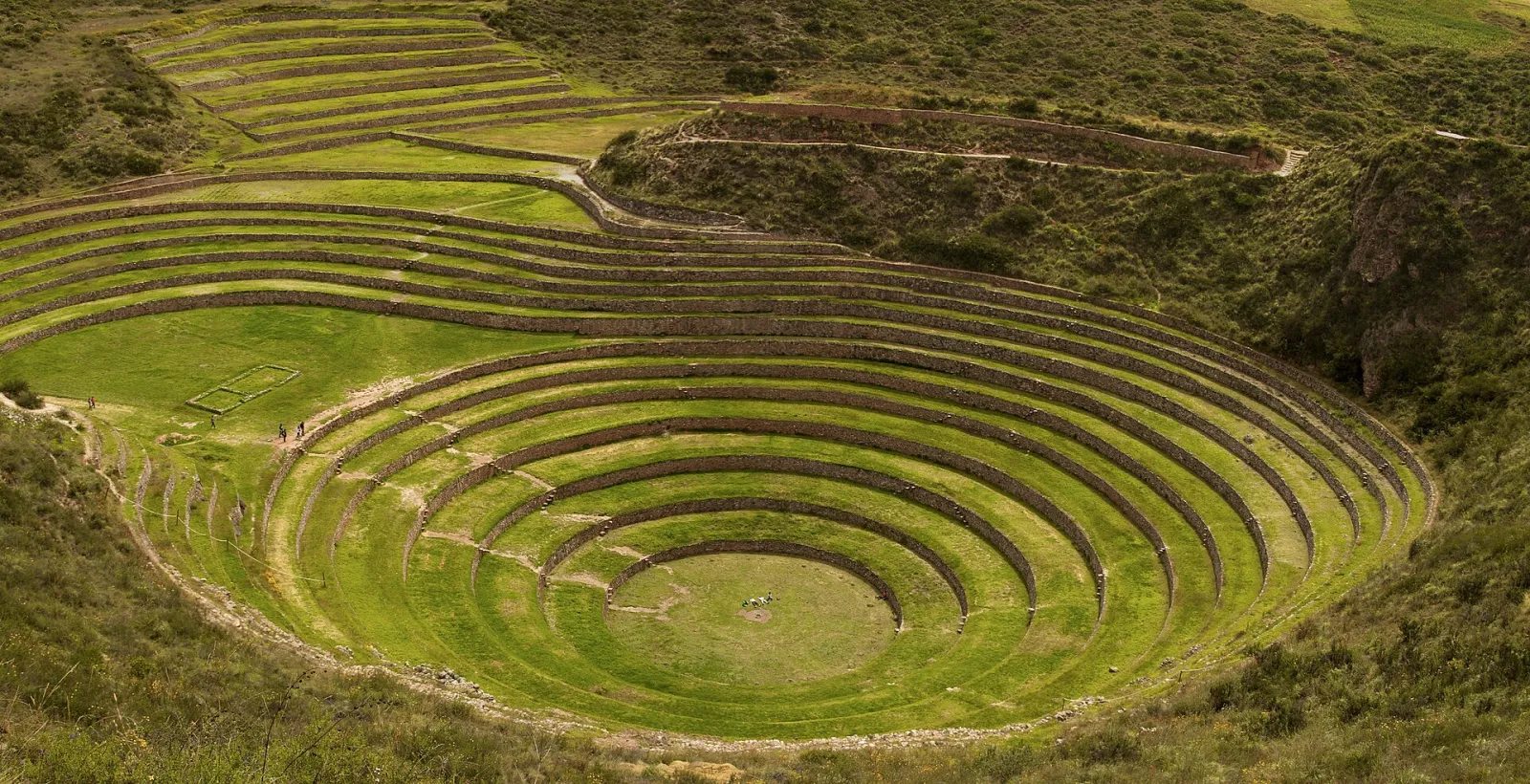
The main depression at Moray, with its rings of terraces. Photo: Sucram Yef, CC BY 2.0
Our coming Maras and Moray guide goes into both in detail. If you would rather see them on wheels, our Maras and Moray ATV tour rides between the two.
The Cusco Tourist Ticket (Boleto Turístico)
You cannot buy a single entrance to Pisac or Ollantaytambo. The valley sites are sold only through the Boleto Turístico del Cusco, managed by COSITUC, the committee that runs it. These are the prices COSITUC publishes for 2026:
| Ticket | Foreign visitors | Peruvians | Sites | Validity |
|---|---|---|---|---|
| Circuit III, Sacred Valley | S/70 | S/40 | Pisac, Ollantaytambo, Chinchero, Moray | 2 days |
| Integral (all circuits) | S/130 | S/70 | 16 sites, including the four above | 10 days |
| Integral, students | S/70 | S/40 | 16 sites | 10 days |
What COSITUC's own FAQ says about using it:
- Sold in person only. There is no online sale. Buy it at the central counter on Avenida El Sol 103 in Cusco, open daily 7:30 a.m. to 6:00 p.m., or at the sites themselves.
- Validity starts the day you buy it, so buy it on the day you start visiting.
- It is personal. Your name is on it, and you show ID with it.
- Children: under 9 free; from 10 to 17, the student ticket with an ID document.
- No discounts for groups or for Andean Community nationals.
Which one to buy? If you will also visit Sacsayhuamán and the ruins around Cusco, the integral ticket at S/130 covers both and costs less than two partial tickets. If the valley is your only stop, Circuit III is enough. In August 2026 COSITUC announced that Congress had published a new Tourist Ticket law that keeps COSITUC in charge in Cusco and provides for a gradual move to a digital ticket, so check the counter for any change.
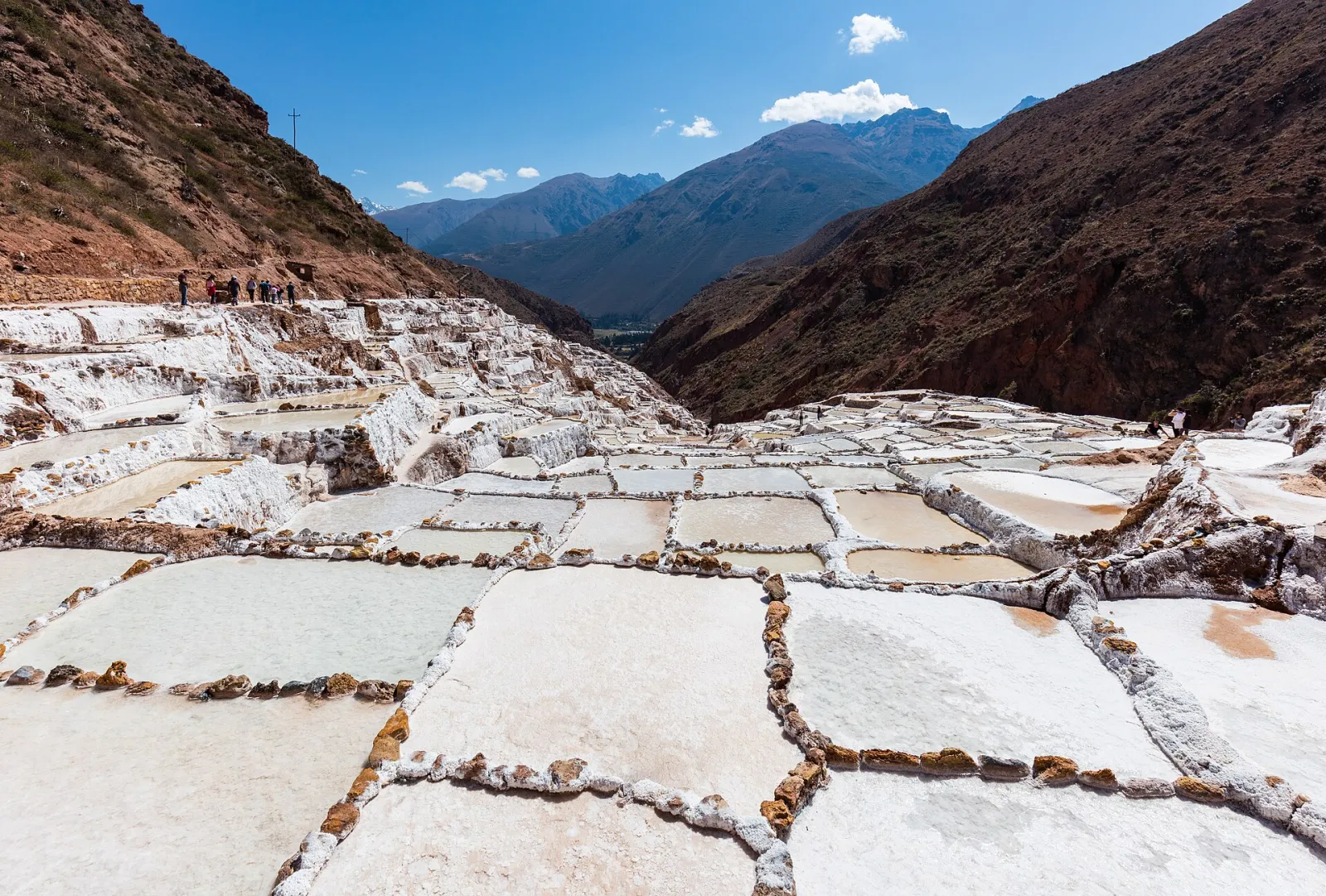
The salt pans of Maras, a separate entrance from the tourist ticket. Photo: Diego Delso, CC BY-SA 4.0
How many days in the Sacred Valley?
| Time | What fits |
|---|---|
| 1 day | Pisac, lunch in Urubamba, Ollantaytambo, Chinchero on the way back to Cusco |
| 2 days | Day 1 as above with a night in the valley; day 2 Maras and Moray, or the train to Machu Picchu |
| 3 days | All of the above at an easy pace, plus time in the Pisac market and a walk around Ollantaytambo's old town |
One full day covers the classic loop. Our Sacred Valley full-day tour leaves Cusco at 8:00 a.m., spends about two hours at Pisac, an hour and a half at Ollantaytambo and an hour at Chinchero, and is back around 7:00 p.m. It is a long day, and it leaves out Maras and Moray.
Two days is the better plan for most travelers, because it lets you sleep low and finish at Ollantaytambo, where the train leaves. COSITUC estimates that the full set of 16 sites on the integral ticket takes at least three days.
How to combine the Sacred Valley with Machu Picchu
The valley and Machu Picchu fit together naturally because the train runs from Ollantaytambo. The smoothest order is:
- Arrive in Cusco and go straight down to the valley, which is lower, for one or two nights.
- Visit Pisac, Chinchero, Maras and Moray over those days.
- Take the train from Ollantaytambo to Aguas Calientes, about 1 hour 30 minutes.
- Visit Machu Picchu the next morning, then return to Cusco by train and road.
- Finish in Cusco, by now acclimatized, for the city and Sacsayhuamán.
This is the logic of our Sacred Valley and Machu Picchu in two days: the valley on day one, the train from Ollantaytambo and a night in Aguas Calientes, Machu Picchu with a guide on day two. Before booking, check the Machu Picchu train guide and buy your Machu Picchu tickets early. For a longer route that adds Lake Titicaca, see our Cusco, Sacred Valley and Titicaca itinerary.
Frequently asked questions
What is the Sacred Valley in Peru? It is the Urubamba river valley between Pisac and Ollantaytambo, near Cusco, with Inca sites such as Pisac, Ollantaytambo, Chinchero and Moray.
How far is the Sacred Valley from Cusco? Pisac, at the start of the valley, is about 32 km from Cusco, under an hour by road. Ollantaytambo, at the far end, is about 1 hour 45 minutes away.
How much is the Sacred Valley ticket? The Cusco Tourist Ticket Circuit III costs S/70 for foreign visitors, according to COSITUC. It covers Pisac, Ollantaytambo, Chinchero and Moray for two days.
Is the Maras salt mine included in the tourist ticket? No. The Maras salt pans charge their own entrance, separate from the Cusco Tourist Ticket.
How many days do I need in the Sacred Valley? One full day covers Pisac, Ollantaytambo and Chinchero. Two days let you add Maras and Moray and sleep in the valley before the train.
Is the Sacred Valley lower than Cusco? Yes. Pisac town is at 2,950 m and Ollantaytambo at 2,851 m, against 3,399 m in Cusco. Chinchero, at 3,785 m, is higher.
Can I buy the Sacred Valley ticket online? No. COSITUC sells it in person only, at its counter on Avenida El Sol in Cusco or at the sites.
Explore the valley with us
At Viajes Cusco Perú, the Cusco tour operator behind this blog, there are several ways to see the valley with us. The Sacred Valley full-day tour, from US$127 per person, covers Pisac, Ollantaytambo and Chinchero with lunch in Urubamba. The VIP Sacred Valley tour, also from US$127, travels in smaller groups. To link the valley straight to the citadel, book the Sacred Valley and Machu Picchu in 2 days, from US$627, or the Maras, Moray and Machu Picchu in two days, from US$527. All our one-day options are on the full-day tours page, and for the rest of your time in the city, see the best things to do in Cusco.
Sites, altitudes, distances, hours and ticket prices checked on October 15, 2026, against COSITUC's official rates and FAQ, the MINCETUR tourism inventory records for Pisac, Ollantaytambo, Chinchero, Moray, the Maras salt pans and the town of Maras, the IGP climate page for Cusco and Inca Rail's route information. Ticket prices are set by COSITUC and can change, so confirm them at the counter.