From US$147 per person.
Ausangate 7 Lakes
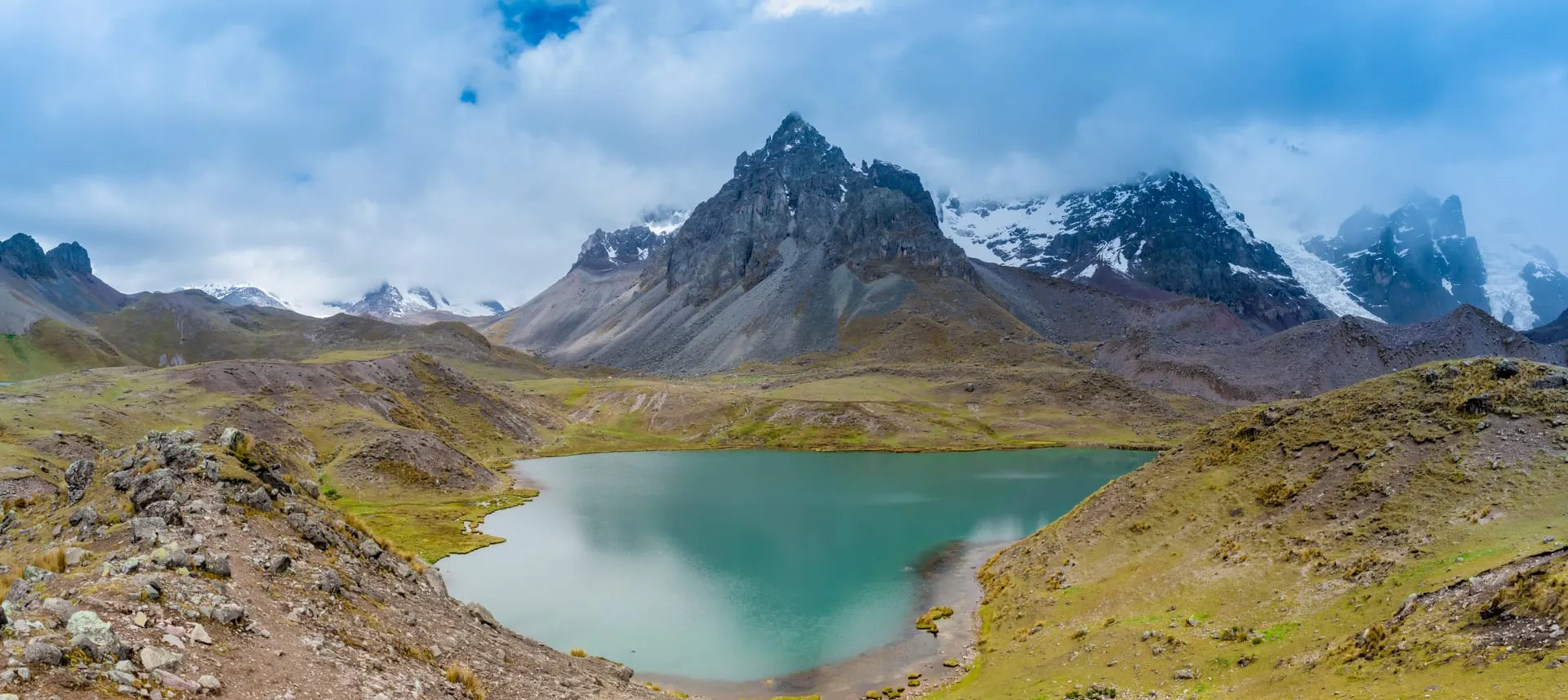
- 7 multicolored lakes circuit: Hike among stunning glacial lagoons featuring vibrant shades of turquoise, green, and deep blue water.
- At the base of the sacred peak: Enjoy massive, spectacular panoramic views of Mount Ausangate, the highest and most sacred mountain in Cusco.
- Soothing natural hot springs: Finish your challenging high-altitude trek by relaxing your muscles in the medicinal thermal pools of Pacchanta village.
- Andean wildlife & heritage: Spot hundreds of alpacas and llamas in their natural habitat while hiking along native herding communities.
Discover one of the most breathtaking landscapes in the Peruvian Andes with the Ausangate 7 Lakes Tour, an experience designed for travelers seeking adventure, nature, and unique scenery away from the traditional tourist routes. At the foot of the majestic Ausangate Snow-Capped Mountain (6,384 m), considered a sacred mountain by Andean communities, you will trek a spectacular circuit of glacial lakes in intense shades of turquoise, emerald, deep blue, and crystal clear, surrounded by snow-capped peaks, vast highland plains, and high-Andean wildlife. This tour is an excellent alternative for those who want to experience trekking in Cusco and discover one of Peru's best-kept secrets.
The Ausangate 7 Lakes Tour is an ideal experience for travelers from Europe, the United States, and Canada who want to connect with nature and discover an authentic, sustainable, and uncrowded destination. Along the route, you will share the trail with alpacas and llamas in their natural habitat, enjoy incomparable panoramic views, and, at the end of the hike, optionally relax in the Pacchanta hot springs while admiring the imposing Ausangate. If you are looking for an unforgettable hiking experience in Peru, combining adventure, Andean culture, and world-class scenery, this tour is one of the best options to include in your trip to Cusco.
At a glance
- Days: 1
- Highest point: 4800 m
- Price: From US$147 per person
Itinerary
Day 1: Cusco Ausangate 7 Lakes Cusco
Altitude: 4100 a 4800 m · Meals: Breakfast and lunch · Overnight: Cusco (3400 m)
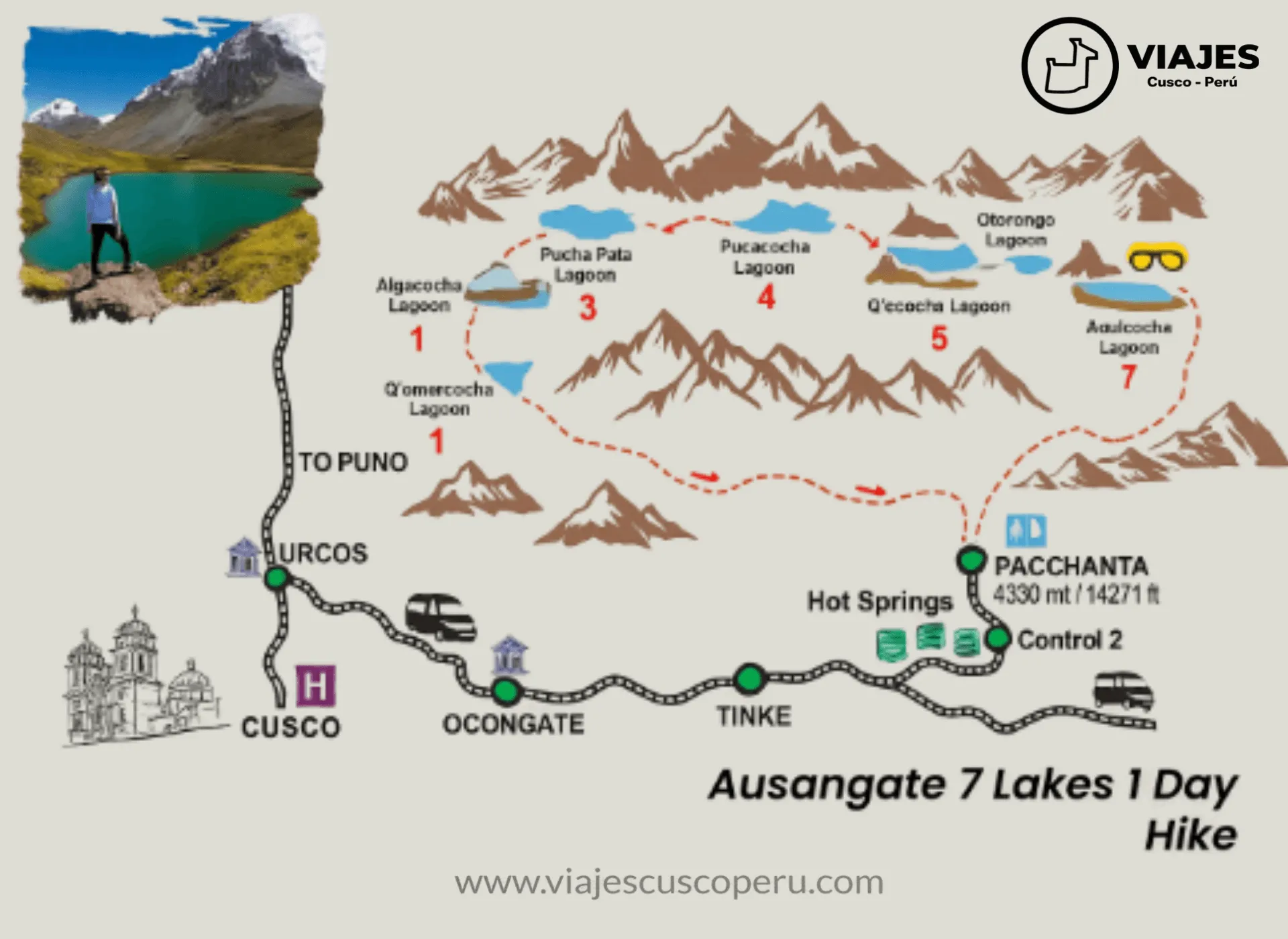
The adventure begins with passenger pickup between 04:00 a.m. and 04:30 a.m. from your hotels in Cusco, heading toward the community of Pacchanta (4,200 m a.s.l.), where we will enjoy breakfast before starting the hike. Along the route we will explore the impressive lakes Azulcocha (4,610 m), Otorongo Macho (4,620 m), Otorongo Hembra (4,620 m), Pucacocha (4,680 m), Alqacocha (4,750 m), Q'omercocha (4,666 m), and Patacocha (4,860 m), surrounded by the imposing Ausangate Snow-Capped Mountain (6,384 m) and the spectacular scenery of the Vilcanota Mountain Range.
At the end of the hike we will return to Pacchanta, where we will enjoy a traditional Andean lunch and, optionally, you may relax in the hot springs with a privileged view of the Ausangate Snow-Capped Mountain. Afterward we will begin the return trip to Cusco, arriving approximately between 17:00 and 18:00 hours, with drop-off near the Plaza de Armas, culminating an unforgettable trekking experience through one of the most spectacular natural landscapes in the Peruvian Andes.
What is included
- Tickets Entrance ticket for the Ausangate 7 Lakes circuit
- Meals Breakfast and lunch during the tour.
- Service and safety Pre-departure briefing, official certified bilingual and experienced guides, a medical kit with available oxygen, and 24/7 customer support.
- Transportation Private ground transportation for the itinerary.
What is not included
- Entrance to the Pacchanta hot springs.
- Dinner.
- Personal gear (clothing, boots, etc.).
- Personal Expenses, Tips, and Travel Insurance Personal clothing and hiking equipment. Tips for guides, drivers, and service staff (optional but recommended).
- Possible Costs or Delays Beyond Our Control Landslides, bad weather, itinerary modifications for safety reasons, strikes, or other unforeseen events.
Frequently asked questions
How many lakes does the Ausangate 7 Lakes tour visit?
The tour visits 7 uniquely colored lakes formed by the snowmelt of Mount Ausangate (6,384 m / 20,945 ft). Each lake has a distinct color thanks to glacial minerals.
What is the maximum altitude of the route?
The highest point is approximately 5,100 m / 16,730 ft. We recommend being well-acclimatized in Cusco for at least 2, 3 days before the tour.
How long is the hike?
The hike is approximately 14 km round trip, with 5, 7 hours of trekking. The full tour from Cusco takes around 14 hours.
What gear do I need for Ausangate?
Thermal layers, a windbreaker, rain jacket, gloves, beanie, trekking poles, mountain boots with good grip, high-SPF sunscreen and sunglasses. Temperatures can drop below 0 °C / 32 °F.
Are lunch and transport included?
Yes, transport to and from your hotel in Cusco and a field-base lunch are both included in the tour price.
What is Mount Ausangate and why is it sacred?
Mount Ausangate (6,384 m / 20,945 ft) is the highest mountain in the Cusco region and one of the most revered "Apus" (mountain spirits) in the Peruvian Andes. For Quechua communities, Ausangate is a protective deity that regulates rainfall, harvests and the wellbeing of Andean peoples. The Qoyllur Riti, one of the largest Andean rituals in the world, is celebrated in its honor each year.
Why do the Ausangate lakes have different colors?
The 7 lakes on the Ausangate circuit owe their unique colors to different minerals in the glacial sediments. Iron produces reddish-rust tones, copper gives blues and greens, and white clay sediments create milky waters. Variations in depth and light also alter the colors, making each lake visually distinct.
What animals can I see at Ausangate?
The Ausangate circuit crosses high-mountain habitats where it is common to see vicuñas (the slimmest and most elegant Andean camelid), alpacas, llamas and Andean condors soaring over the peaks. Andean foxes, viscachas (a chinchilla-like rodent) and a variety of high-altitude birds such as the torrent duck are also frequently spotted.
What is the best time to visit Ausangate?
The dry season (May, October) is ideal, with clear days and more stable temperatures. June and July offer the best conditions. In the rainy season (November, April) the mountains may be misty or freshly snow-covered, though the landscape with white glaciers can also be spectacular on clear days.
Is the Ausangate tour safe?
Yes. The tour is operated by certified bilingual guides experienced in high-altitude mountain conditions. A first-aid kit and altitude medication are carried. The route is well established. We strongly recommend 2, 3 days of acclimatization in Cusco before the tour and consulting a doctor if you have heart or respiratory conditions.
Related tours
- Huchuy Qosqo Trek, from US$177 per person
- Humantay Lake Day Trek from Cusco, from US$137 per person
- Palccoyo Rainbow Mountain Day Hike, from US$137 per person
Read before you book
- Things to Do in Cusco: 10 That Are Worth It, and How Many Days You Need
- First Time in Cusco? Essential Tips for Altitude Acclimatization and High-Altitude Treks
- Vinicunca, Palcoyo, or Pallay Punchu: Which Cusco Rainbow Mountain is Best for You?
- Humantay Lake Guide: Altitude, Hike, Fee and Best Time
- Rainbow Mountain Peru: Vinicunca Hike Hour by Hour
- Peru Food Tours and Cooking Classes in Cusco and Lima