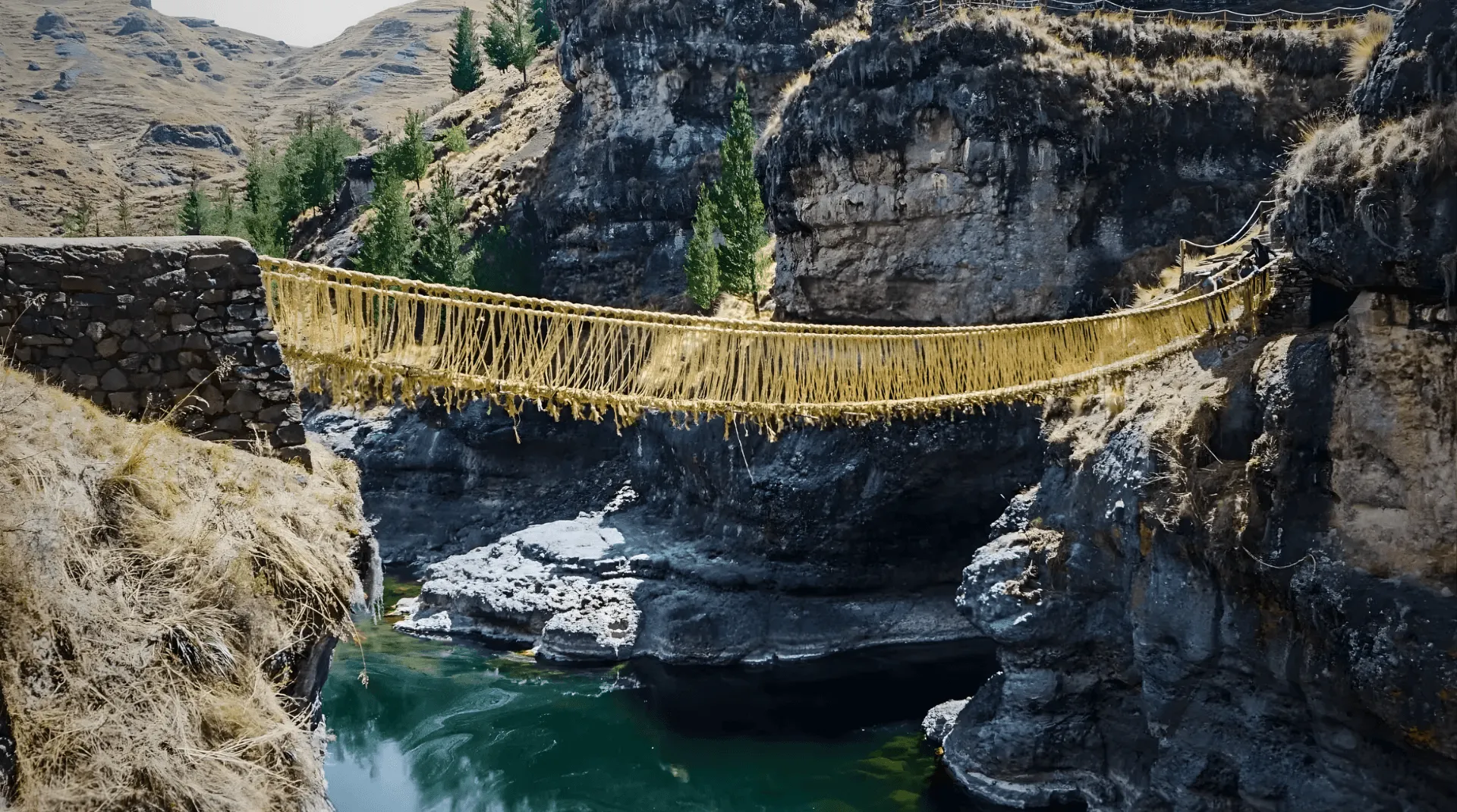
From US$137 per person.
Qeswachaka Bridge + 4 Lakes Pull
- The last living Incan bridge: Walk across a remarkable suspension bridge made entirely of hand-woven grass ropes, renewed annually since ancient times.
- UNESCO cultural heritage: Learn firsthand about the traditional collective work used to build and maintain this engineering marvel with local plant fibers.
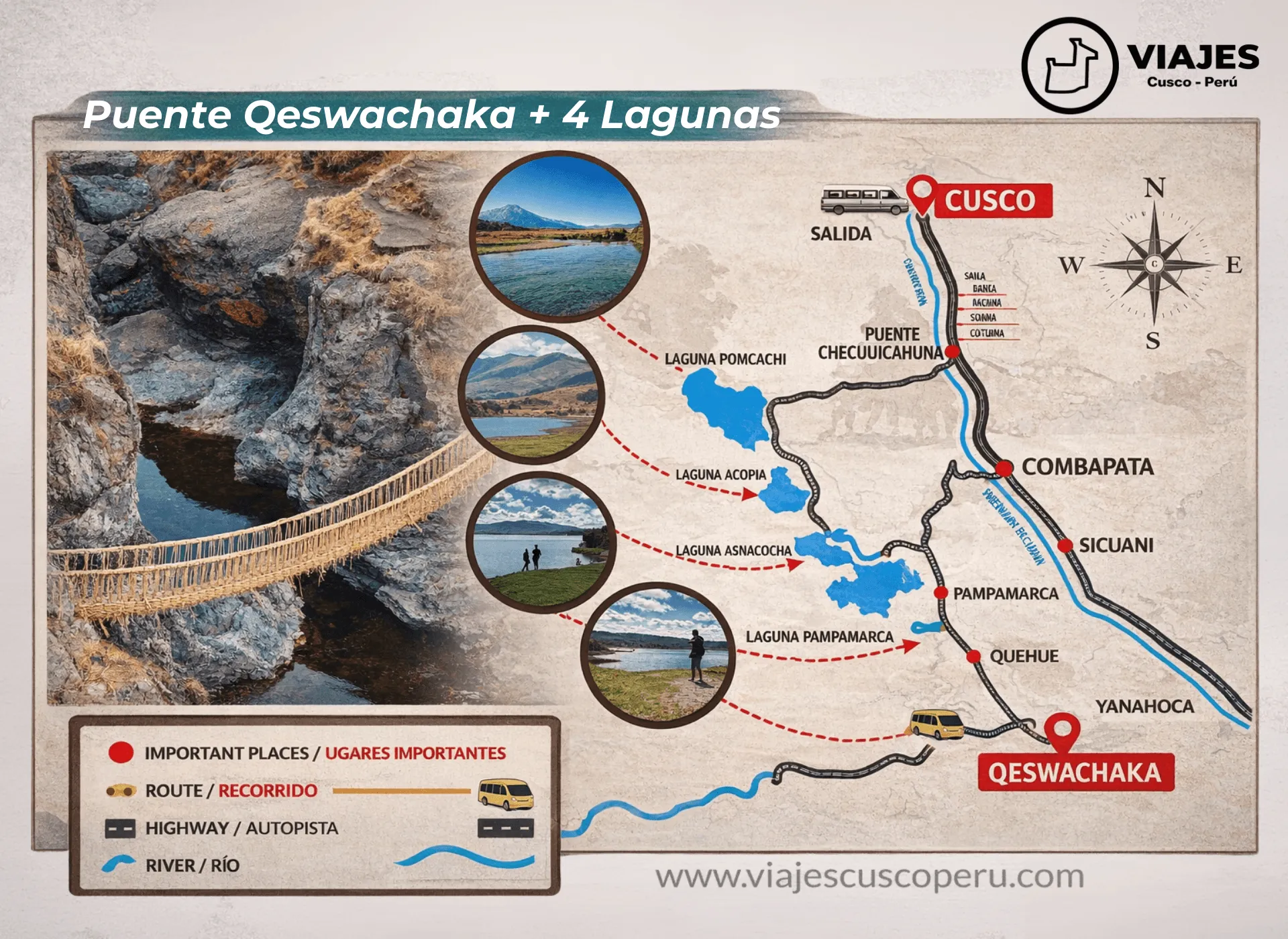
- Scenic 4 lagoons circuit: Enjoy a beautiful, relaxing drive alongside the scenic waters of Pomacanchi, Acopia, Asnaqocha, and Pampamarca lakes.
- Authentic crowd-free journey: Discover Cusco's southern route away from traditional tourist traps, experiencing genuine local culture at your own pace.
Discover one of the most authentic cultural and scenic circuits in Cusco with the Q'eswachaka Inca Bridge and Four Lakes tour. Travel through impressive Andean scenery while learning about the last plant-fiber suspension bridge used since Inca times, declared an Intangible Cultural Heritage of Humanity by UNESCO. During the tour you will visit the lakes of Pomacanchi, Acopia, Asnaqocha, and Pampamarca, surrounded by mountains, traditional communities, and a unique biodiversity that reflects the essence of southern Peru.
This one-day tour combines history, living culture, nature, and spectacular landscapes, making it an excellent alternative for those who want to explore less crowded places near Cusco. Enjoy a trip with tourist transportation, a professional bilingual guide (Spanish and English), constant assistance, and landscapes ideal for photography, while discovering one of the most important living traditions of the Andes. A perfect experience for travelers who want to learn about the authentic legacy of the Inca Empire and the natural beauty of the Cusco region.
At a glance
- Days: 1
- Highest point: 3700 m
- Price: From US$137 per person
Itinerary
Day 1: Cusco Q'eswachaka Cusco
Altitude: 3400 a 3700 m · Meals: Breakfast and lunch · Overnight: Cusco (3400 m)
Pick-up from your hotel around 4:00 a.m. to travel south, passing traditional villages and farms, alpacas and llamas grazing, Andean mountains and the Four Lakes (Pomacanchi, Acopia, Asnaqocha and Pampamarca), with a stop in a village for a hot breakfast. After 3.5 hours of travel, we arrive at Q'eswachaka, the last Inca hanging bridge woven entirely by hand with ichu (Andean straw), suspended 15 meters above the Apurímac River and rebuilt every year by four local communities following a unique ancestral tradition.
You will have time to walk across the bridge (if you dare), take photos of the deep canyon beneath your feet, and learn about its Inca weaving process and its cultural role as Cultural Heritage, while your guide explains the annual rebuilding ritual. Afterward we will visit a local restaurant for a traditional Andean lunch, returning to your hotel in Cusco approximately between 17:00 and 17:30 hrs.
What is included
- Pick-up from your hotel in Cusco.
- Tourist transportation round trip.
- Professional bilingual guide.
- Hot breakfast in a local village.
- Andean lunch at a local restaurant.
What is not included
- Dinner.
- Personal trekking gear.
- Travel insurance.
- Tips.
- Additional personal expenses.
Frequently asked questions
What is the Qeswachaka Bridge?
It is the last Inca woven-rope bridge in the world, renewed each year by the Huinchiri community using 500-year-old ancestral techniques. It is listed as UNESCO Intangible Cultural Heritage of Humanity.
How many lakes are visited on the tour?
The tour combines the Qeswachaka Bridge with 4 differently colored high-altitude lakes (Pampamarca, Asnacocha, Pomacanchi and Acopia), plus a panoramic viewpoint.
How long does the tour last?
The tour lasts approximately 12, 13 hours in total, departing at 5:00 AM from Cusco. The walks at the bridge and lakes are low to moderate difficulty.
Is lunch included?
Yes, lunch at a local restaurant in the area is included in the price. Transport to and from Cusco and guiding are also included.
Can I cross the Qeswachaka bridge?
Yes, visitors are allowed to cross the rope bridge. It spans about 28 meters over the Apurímac River and the experience is thrilling, though not recommended for those with a fear of heights.
Where is the Qeswachaka Bridge located and how do you get there?
The Qeswachaka Bridge spans the Apurímac River in the Quehue district, Canas province, about 100 km south of Cusco (approximately 2.5 hours by car). Our tour includes round-trip transport from Cusco, with additional stops at the high-altitude lakes.
When is the Qeswachaka Bridge renewed and can visitors witness it?
The bridge renewal ceremony takes place every year during the second weekend of June, when hundreds of members from the communities of Huinchiri, Ccollana Quehue, Chaupibanda and Choccayhua gather to weave the bridge using ichu (Andean straw). If your visit coincides with that date, it is a once-in-a-lifetime experience. For the rest of the year, the bridge remains visible and visitable.
Is the tour suitable for all ages?
Yes. The walks at the Qeswachaka Bridge and the lakes are low to moderate level with no technical sections. Older adults and families with children over 8 can enjoy it without difficulty. The high-plateau altitude (approx. 3,700, 3,900 m / 12,140, 12,800 ft) may require 1, 2 days of prior acclimatization in Cusco.
What makes Qeswachaka unique in the world?
Qeswachaka is the only braided-rope suspension bridge of Inca origin still renewed annually using ancestral techniques, in the same location and by descendants of the same communities that built it over 500 years ago. This uninterrupted cultural continuity led UNESCO to declare it an Intangible Cultural Heritage of Humanity in 2013.
What is the best time to visit the Qeswachaka Bridge?
The bridge can be visited year-round. The best time to see it in perfect condition is just after the renewal ceremony (June). The dry season (May, October) also makes access easier via the high-plateau roads. In the rainy season the secondary roads can be challenging, but the tour still operates with 4x4 vehicles.
What is the difference between the Qeswachaka Bridge tour and the Huchuy Qosqo tour?
The Qeswachaka Bridge is a unique cultural experience: the last Inca rope bridge made of ichu grass still in continuous use, declared UNESCO Heritage. The visit is mainly observation-based with little trekking (vehicle access to the bridge point). Huchuy Qosqo is an Inca archaeological site that requires a 3, 4 hour hike along an Inca trail. If you are interested in engineering and living Andean traditions, choose Qeswachaka. If you prefer trekking to rarely visited Inca ruins, choose Huchuy Qosqo. Both are full-day tours from Cusco.
Related tours
- Ausangate 7 Lakes, from US$147 per person
- Huchuy Qosqo Trek, from US$177 per person
- Humantay Lake Day Trek from Cusco, from US$137 per person
Read before you book
- Things to Do in Cusco: 10 That Are Worth It, and How Many Days You Need
- First Time in Cusco? Essential Tips for Altitude Acclimatization and High-Altitude Treks
- Vinicunca, Palcoyo, or Pallay Punchu: Which Cusco Rainbow Mountain is Best for You?
- Humantay Lake Guide: Altitude, Hike, Fee and Best Time
- Rainbow Mountain Peru: Vinicunca Hike Hour by Hour
- Peru Food Tours and Cooking Classes in Cusco and Lima