From US$147 per person.
Waqrapukara Trek
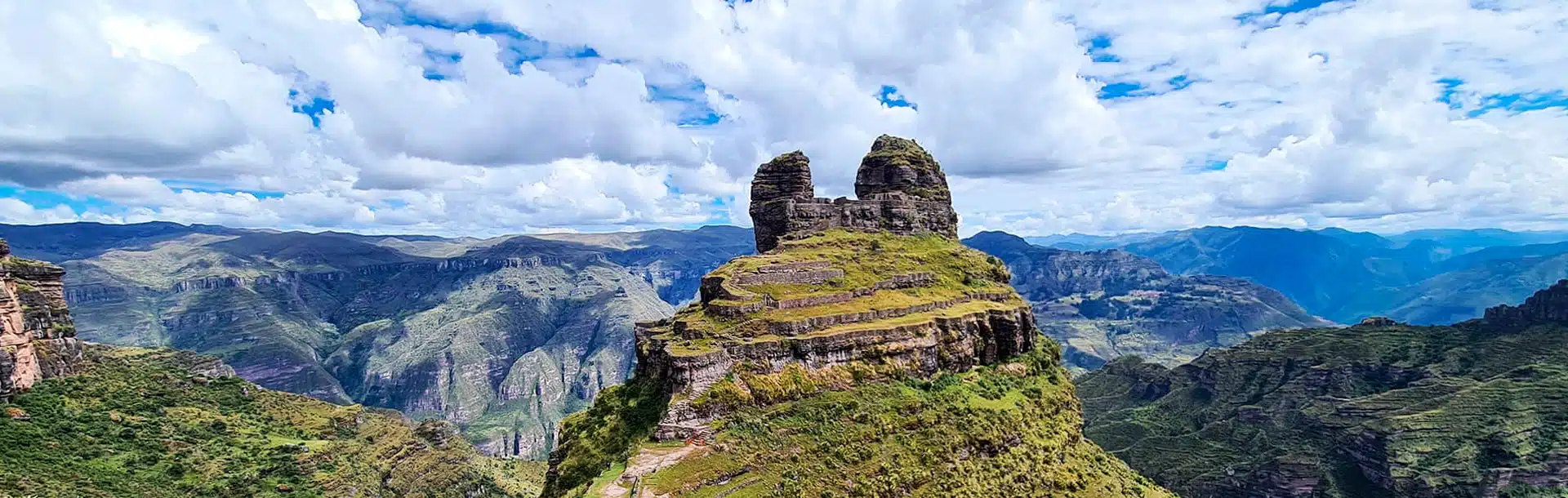
- The horn-shaped fortress: Marvel at an impressive and imposing Incan sanctuary dramatically built right on the crest of a massive rocky abyss.
- Wild canyon landscapes: Hike surrounded by surreal geological rock formations and breathtaking deep views over the Apurímac River canyon.
- Mystical and military shrine: Discover ancient stone altars dedicated to the sun, the moon, and sacred huacas with your expert local guide.
- Crowd-free hidden gem: Explore one of the best-kept secrets in the Andes, experiencing the archaeological ruins with absolute peace.
Waqrapukara, which means "Horn-shaped Fortress" in Quechua, is a spectacular, less-visited Inca archaeological complex located at 4,300 m.a.s.l. This ceremonial site stands out for its enormous stone walls that emerge from a rocky hill with impressive natural formations.
The hike takes you through unique Andean landscapes, crossing the Apurímac River and alpaca-herding communities. It is a less crowded alternative to Rainbow Mountain but equally impressive, ideal for those seeking authenticity and adventure away from the crowds.
At a glance
- Days: 1
- Highest point: 4300 m
- Price: From US$147 per person
Itinerary
Day 1: Cusco Waqrapukara Cusco
Altitude: 3400 a 4300 m · Meals: Breakfast and lunch (box lunch) · Overnight: Cusco (3400 m)
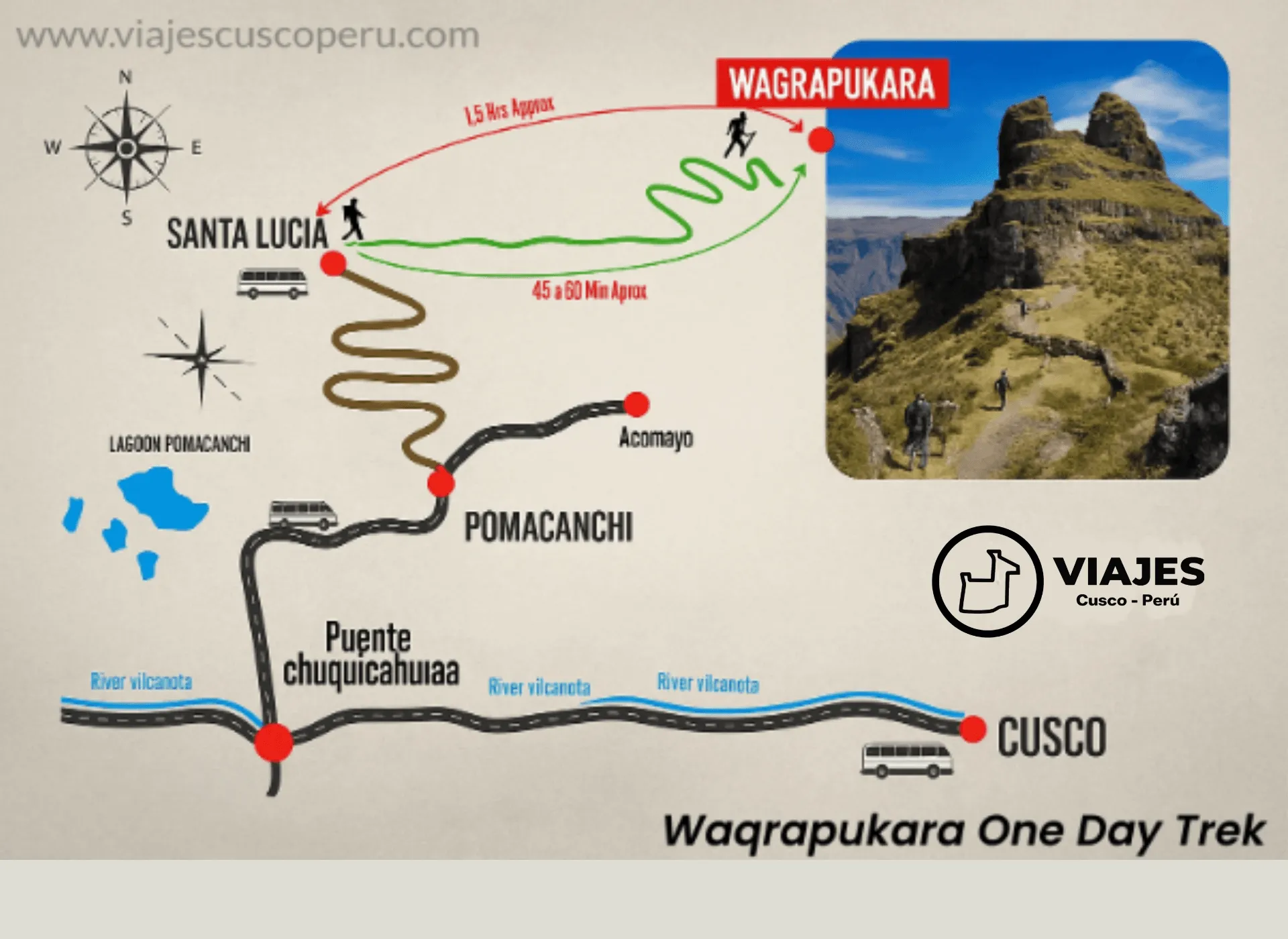
The tour begins with passenger pickup between 04:00 a.m. and 04:30 a.m. from your hotels in Cusco. We will travel to the province of Acomayo, where we will enjoy breakfast before starting the hike toward the impressive archaeological complex of Waqrapukara. Along the way we will cross high-mountain landscapes, Andean valleys, and natural viewpoints until reaching this ancient fortress and ceremonial sanctuary, built on a spectacular horn-shaped rock formation, from where magnificent views of the Apurímac River canyon can be seen.
After exploring the archaeological site and having time to rest and take photographs, we will begin the return along the same trail to the starting point, where transport will be waiting to enjoy a traditional lunch. Finally, we will begin the return trip to Cusco, arriving approximately between 16:00 and 17:00 hours, with drop-off near the Plaza de Armas, culminating an unforgettable adventure, history, and nature experience in the Peruvian Andes.
What is included
- High-quality service and safety Professional bilingual guide, first aid kit and assistance throughout the tour.
- Meals Breakfast and box lunch.
- Transportation Pick-up and drop-off at your hotel in Cusco, round-trip tourist transportation to the trailhead.
What is not included
- Personal equipment and travel insurance Trekking poles, warm clothing and travel insurance.
- Dinner Not included.
- Tips Optional but appreciated.
Frequently asked questions
What is Waqrapukara and where is it located?
Waqrapukara (in Quechua: "horned fortress") is an Inca citadel shaped like horns at 4,300 m / 14,110 ft, about 4 hours from Cusco by car. It is a low-tourism, well-preserved site, ideal for travellers seeking off-the-beaten-path experiences.
What is the difficulty level of the trek?
High. The hike is about 12 km round trip with steep sections above 4,000 m / 13,120 ft. At least 3 days of acclimatization in Cusco and good fitness are recommended. There are no services on the route, so you must carry water and snacks.
What is included in the Waqrapukara tour?
Includes round-trip transport from Cusco, bilingual guide specialized in archaeological sites, field breakfast, lunch and travel insurance. Trekking boots and warm clothing are the traveller's responsibility.
How many people usually visit Waqrapukara?
Very few. Waqrapukara is one of the least-known archaeological sites near Cusco. On a normal day you might find fewer than 20 people, making it an intimate and authentic experience, very different from Machu Picchu.
Is it possible to combine Waqrapukara with other tours?
Yes. Many travellers combine Waqrapukara with the Cusco City Tour or the Valle Sur as part of a multi-day itinerary. Check with our team to put together a personalized program that includes this unique destination.
Why visit Waqrapukara if Machu Picchu already exists?
Waqrapukara offers what Machu Picchu can no longer provide: solitude, authenticity and the feeling of discovering something secret. At Machu Picchu there are thousands of tourists; at Waqrapukara you could be practically alone at an equally impressive Inca site. It is ideal for travellers seeking genuine experiences beyond the mass circuit.
What is the best time for the Waqrapukara trek?
The dry season (May, October) is ideal for the trek: sunny days, dry paths and clear views. In the rainy season (November, April) the paths become muddy and rain risk is high, although the green landscapes are beautiful. June, August is the peak of best weather.
Is the Waqrapukara trek safe?
Yes, with the right precautions. The trek follows well-defined, though isolated, paths. Our guide knows the route perfectly and carries a first aid kit. We recommend bringing warm clothing, hiking boots, sunscreen, enough water (at least 2 liters) and energy snacks.
What animals can be seen on the Waqrapukara trek?
The path to Waqrapukara crosses Andean puna where it is possible to spot vicuñas, Andean condors, wild ducks at the lagoons and various high-altitude birds such as the Andean flicker and the giant hummingbird. The wildlife is a significant bonus of the trek that many travellers do not expect.
What to bring for the Waqrapukara trek?
Essential: trekking shoes with good grip (terrain can be uneven), layered clothing (temperature varies between 5, 20°C / 41, 68°F), waterproof jacket, sunscreen and sunglasses, at least 2 liters of water, energy snacks. The guide carries a first aid kit. Don't forget your camera: the landscapes and the horn-shaped fortress are incredibly photogenic.
How does Waqrapukara differ from Choquequirao? Which should you choose?
Waqrapukara and Choquequirao are the two most remote and least visited destinations in the Cusco region. Waqrapukara is a full-day tour (1 day): a round-trip hike to an Inca bull-horn-shaped fortress at 4,300 m / 14,100 ft, with fewer than 20 visitors per day. Choquequirao is a 4-day trek (60 km / 37 mi round trip), with fewer than 50 visitors per day, very demanding terrain but with colossal Inca terraces and the status of "Machu Picchu without tourists." If you want remote adventure with only 1 free day, choose Waqrapukara. If you can dedicate 4 days and seek the most extreme Cusco adventure, choose Choquequirao.
Related tours
- Ausangate 7 Lakes, from US$147 per person
- Huchuy Qosqo Trek, from US$177 per person
- Humantay Lake Day Trek from Cusco, from US$137 per person
Read before you book
- Things to Do in Cusco: 10 That Are Worth It, and How Many Days You Need
- First Time in Cusco? Essential Tips for Altitude Acclimatization and High-Altitude Treks
- Vinicunca, Palcoyo, or Pallay Punchu: Which Cusco Rainbow Mountain is Best for You?
- Humantay Lake Guide: Altitude, Hike, Fee and Best Time
- Rainbow Mountain Peru: Vinicunca Hike Hour by Hour
- Peru Food Tours and Cooking Classes in Cusco and Lima